Unique Cremation Urn Designs: How to Choose a Personal Tribute That Feels Right
Choosing a cremation urn is no longer only a practical decision. For many families in the United States and the United Kingdom, it has become a deeply personal part of remembrance. An urn is not simply a container for ashes. It may become part of a home memorial, a quiet daily presence, a meaningful object on a shelf, or a carefully chosen tribute that reflects the personality of someone who has died.
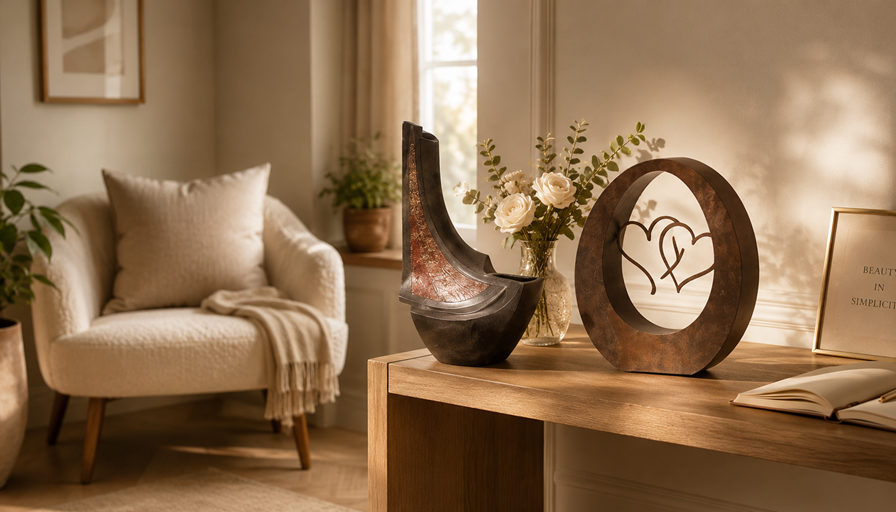
Traditional urns still hold an important place, especially for formal services, cemetery placement, or families who prefer a classic memorial style. Yet more people are now looking for unique cremation urn designs that feel less standard and more connected to the person being remembered. These designs may be artistic, minimalist, sculptural, nature-inspired, symbolic, or handcrafted. Some stand out as memorial art, while others are intentionally subtle and blend naturally into a home.
A unique urn does not need to be unusual for the sake of being different. The best choice is usually the one that feels appropriate, personal, and lasting. It may reflect a loved one’s character, their taste, their connection to nature, their faith, their creativity, or simply the way the family wants to remember them.
What makes a cremation urn feel personal?
A personal tribute does not always depend on engraving, names, dates, or photographs. Those details can be meaningful, but the feeling of an urn often begins with its shape, material, color, texture, and symbolism.
Someone who loved the sea may be remembered through a blue glass urn, a wave-shaped ceramic urn, or a design with flowing lines. A person who preferred simplicity may be better reflected through a clean contemporary urn in stone, wood, ceramic, or metal. Someone with a love of gardens may be remembered through floral details, leaf patterns, tree symbolism, or earthy finishes.
The question is not only, “Does this urn look beautiful?” A better question is, “Does this design say something true about the person we are remembering?”
That distinction matters. A unique cremation urn should not feel like decoration alone. It should help create a connection between memory, place, and identity. When chosen carefully, an urn can make remembrance feel more natural, especially when it is kept at home or placed somewhere the family sees regularly.

Why families choose unique urns instead of standard designs
Many families choose a standard urn immediately after the cremation because decisions often need to be made quickly. At that moment, the priority may be collecting the ashes, arranging a memorial service, or making sure everything is handled respectfully. Months later, when there is more space to think, some families realise they would prefer a more permanent urn that feels closer to their loved one’s personality.
This is one reason unique urn designs have become more important. They allow families to move beyond a purely formal object and choose something with emotional and visual meaning.
A unique urn may be chosen because:
- The original urn was temporary or too plain
- The family wants an urn that fits a home interior
- The person being remembered had a strong personal style
- A symbolic design feels more comforting than a traditional shape
- Several relatives want matching keepsake urns
- The urn will be part of a visible memorial space
- The family wants a handcrafted or artistic piece
For some people, a traditional urn feels appropriate. For others, it may feel too formal, too impersonal, or too clearly associated with loss. Unique urns can offer another way to remember, one that feels more connected to daily life.
Popular types of unique cremation urn designs
Unique urns come in many forms. Understanding the main design categories can make the choice easier, especially when comparing options online. Modern urn collections now include a wide variety of artistic and personalized styles. Understanding these categories can help narrow your search.
Artistic and sculptural urns
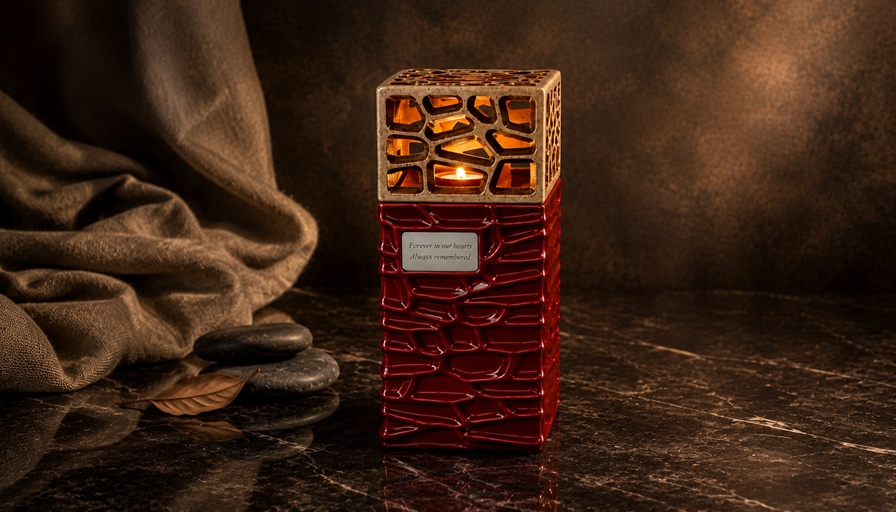
Sculptural urns are designed to resemble art objects rather than traditional funeral urns. They may have abstract shapes, flowing curves, soft forms, hand-finished surfaces, or symbolic figures. Some are made from ceramic, others from bronze, glass, stone, resin, or mixed materials.
These urns are often chosen for home display because they can sit naturally in a living room, bedroom, study, or memorial corner without looking overly formal. A sculptural urn may be visible, but not immediately recognisable as an urn to visitors. For some families, that discretion feels important.
Artistic urns are especially suitable when the person being remembered appreciated design, creativity, architecture, art, or distinctive objects. They can also work well when the family wants the urn to become part of the home rather than something hidden away.
The main point to check is capacity and closure. A sculptural design can be fully functional, but not every artistic piece holds the same amount of ashes. Some are full-size adult urns, while others are keepsake urns intended for a smaller portion of ashes.

Nature-inspired urns
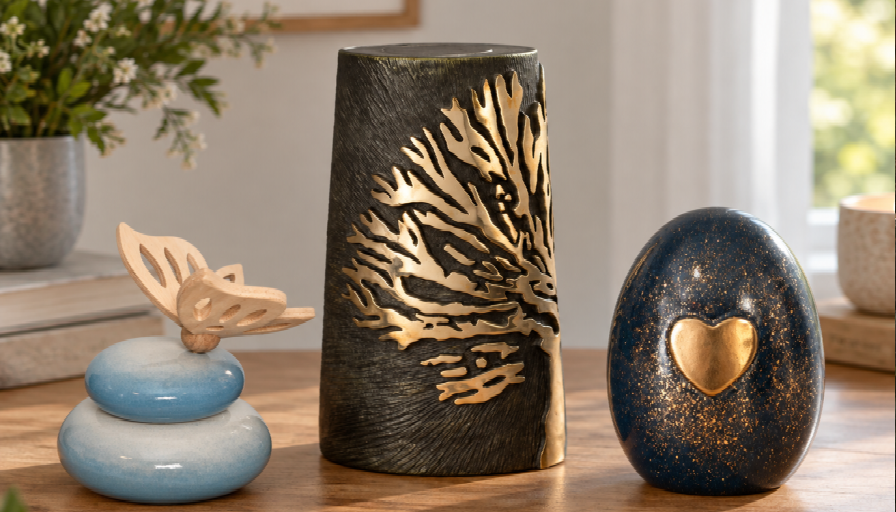
Nature-inspired urns are among the most meaningful choices for many families. They can reflect a connection to landscapes, seasons, gardens, animals, water, trees, flowers, birds, butterflies, or natural textures.
Common nature-inspired designs include:
- Tree of life urns
- Floral ceramic urns
- Bird or dove urns
- Butterfly urns
- Ocean and wave-inspired urns
- Leaf-patterned urns
- Stone-effect urns
- Earth-toned ceramic urns
- Wooden urns with natural grain
These designs often feel personal because nature is closely linked to memory. A garden, lake, coastline, forest walk, favourite hiking trail, or family home outdoors can all become part of how someone is remembered.
For families in both the US and the UK, nature-inspired urns can also work well in different settings. Some are suitable for indoor display, while others may fit a garden room, covered porch, conservatory, memorial shelf, or natural-style remembrance area. If an urn will be placed outdoors, always check whether the material is suitable for long-term exposure to weather.
Contemporary minimalist urns
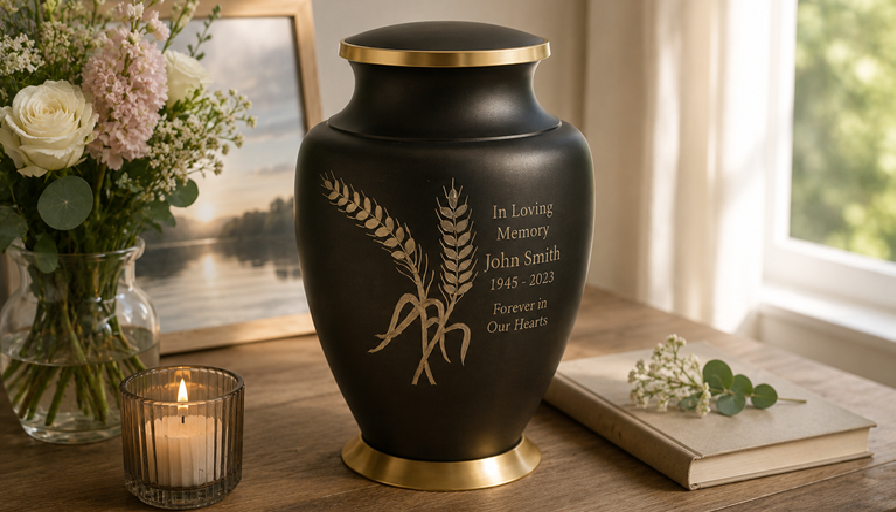
Minimalist cremation urns are chosen by families who prefer simplicity, balance, and understated design. They often have clean lines, smooth surfaces, matte finishes, neutral colors, and little or no ornamentation.
These urns are not cold or impersonal when chosen well. In fact, their simplicity can make them feel respectful and easy to live with. A minimalist urn can suit a modern apartment, a design-focused home, a quiet memorial shelf, or a family that does not want the urn to dominate the room.
Popular materials for contemporary urns include ceramic, stone, glass, wood, and metal. Matte black, white, grey, sand, bronze, deep blue, and natural wood finishes are often selected because they feel timeless rather than trend-driven.
Minimalist urns are particularly useful when the family wants the memorial to be present but discreet. The urn does not need to explain everything visually. Its strength lies in restraint.

Symbolic memorial urns
Some cremation urns carry strong symbolic meaning. These designs are often chosen when families want the urn to express love, protection, faith, continuity, or connection.
Common symbolic elements include:
- Hearts
- Angels
- Doves
- Birds in flight
- The tree of life
- Infinity symbols
- Hands
- Embracing figures
- Stars
- Crosses or spiritual motifs
- Flowers with specific meanings
Symbolic urns can be powerful because they communicate emotion without needing many words. A heart-shaped urn may speak of love and closeness. A bird may suggest freedom, spirit, or release. A tree may represent roots, family, strength, and continuity.
The risk with symbolic urns is that some designs can become too sentimental or too decorative for certain families. The best symbolic urns are usually balanced. They express feeling without becoming excessive.

Handcrafted and artisan urns
Handcrafted urns are often chosen by families who want something with visible care and individuality. These pieces may show slight variations in glaze, texture, color, shape, or finish. That uniqueness can make the urn feel less industrial and more personal.
Ceramic urns, glass art urns, wood-turned urns, and hand-finished metal urns often fall into this category. For some families, the knowledge that the urn was made by hand adds emotional value. It can feel more human, especially when the design is intended for home display.
Handcrafted urns are also suitable when families want a memorial that feels exclusive or less common. However, it is important to read the product details carefully. Handmade pieces may vary slightly from the photograph, and this should be seen as part of their character rather than a flaw.
Choosing the right material for a unique urn
The material of an urn affects its appearance, weight, durability, texture, and suitability for different locations. A beautiful urn should also be practical for the place where it will be kept.
Ceramic urns
Ceramic urns are popular for unique and artistic designs because the material allows for sculptural forms, handmade textures, soft curves, glazed finishes, and detailed symbolism. Ceramic can feel personal and refined without looking overly formal.
Ceramic urns are best suited for indoor display or protected areas. They are not usually the best option for exposed outdoor placement unless specifically designed for that purpose.
Glass urns
Glass urns can create a striking memorial because of their color, depth, reflection, and light. Some glass urns look like art pieces and can be especially suitable for modern homes.
Glass can feel elegant and expressive, but it also requires careful placement. It may not be ideal for busy areas where it could be knocked or handled frequently.
Stone and granite urns
Stone (marble and granite) urns suggest permanence, strength, and dignity. They are often chosen when families want a memorial that feels substantial and lasting.
These materials may suit both traditional and contemporary designs. Depending on the finish and construction, stone urns may also be suitable for certain cemetery, niche, or memorial settings. Always check the requirements of the cemetery, crematorium, or columbarium before choosing an urn for placement outside the home.
Wooden urns
Wooden urns remain a timeless choice. They are often selected for their natural grain, simplicity, and connection to craftsmanship.
A wooden urn can be traditional or modern depending on the design. It may suit someone who loved nature, woodworking, classic interiors, or understated memorial pieces. Wood is generally best for indoor use unless it has been specifically treated and designed for another setting.
Metal urns
Metal urns, including brass, bronze, stainless steel, and aluminium, can offer strength, detail, and durability. Some metal urns are classic and formal, while others are modern, artistic, or highly decorative.
Metal can be a good option when the family wants a lasting urn with a secure feel. It may also allow detailed engraving or symbolic surface decoration, depending on the finish.
Practical details families should check before choosing
A unique urn should be meaningful, but it must also be suitable for its purpose. Before choosing a design, families should check a few practical points.
Capacity
The urn must be large enough for the amount of ashes it needs to hold. A full-size adult urn is intended for all or most of the ashes. A keepsake urn is much smaller and usually holds only a symbolic portion.
In the United States, urn capacity is often shown in cubic inches. In the United Kingdom, families may also see capacity in litres or product dimensions. When shopping internationally, it is helpful to compare both capacity and measurements rather than relying on the photo alone.
Placement
Think carefully about where the urn will be placed. A shelf, mantel, niche, cabinet, memorial table, bedroom, or living room may each require a different size and style.
An urn that looks balanced in a product photo may feel too large or visually dominant in a smaller room. Measuring the intended space beforehand is a simple but important step.
Closure
Different urns have different closure systems. Some use a threaded lid, others have a bottom opening, a sealed compartment, a stopper, or a closure plate. If the urn will be moved, transported, or placed in a columbarium, a secure closure is especially important.
Indoor or outdoor use
Not every urn is suitable for outdoor display. Ceramic, glass, and wood are often best kept indoors or in protected spaces. Stone and some metal urns may be more durable, but weather exposure can still affect appearance over time.
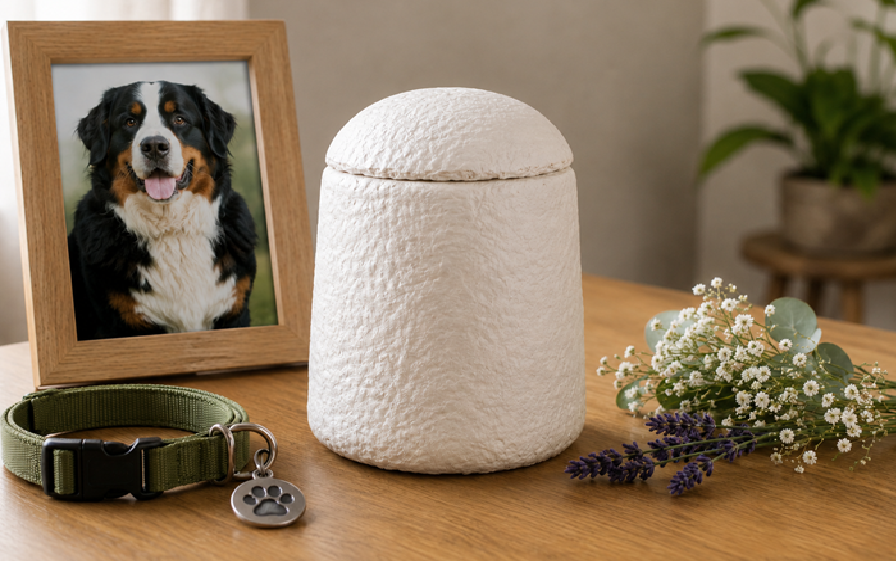
For garden memorials, burial, natural burial, or scattering, families may need a different type of urn, such as a biodegradable urn, scattering urn, or urn designed for burial.
Personalisation
Many unique urns can be personalised with engraving, a nameplate, a symbol, a short text, or matching keepsake pieces. However, not every material can be engraved in the same way.
Metal and wood are often easier to engrave. Ceramic and glass may require different techniques or a separate plaque. If personalisation is important, check what is possible before ordering.
Displaying a unique cremation urn at home
Many families in the US and UK choose to keep ashes at home, either permanently or until a later burial, scattering, or memorial placement. This has influenced the way urns are designed. More families now look for urns that feel appropriate in a home environment rather than only in a formal funeral setting.
A home memorial does not need to be elaborate. Often, the most meaningful spaces are simple and carefully chosen.
A personalised memorial area may include:
- The urn
- A framed photograph
- A candle
- Fresh or dried flowers
- A small keepsake
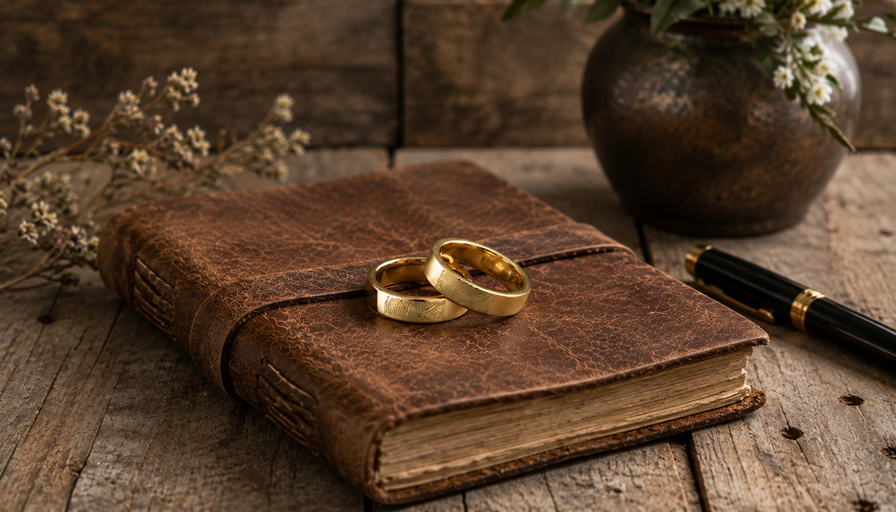
- A favourite book or object
- A handwritten note
- Cremation jewelry or ashes jewellery
- A small piece of artwork
The purpose is not to create a display for others. It is to create a place that feels right for the family. For some people, that means a visible memorial. For others, it means a discreet urn in a private room.
Both choices are valid.
Keepsake urns and shared remembrance
Not every family chooses one large urn. Keepsake urns are often used when ashes are shared between relatives, when part of the ashes will be scattered, or when a family wants a smaller memorial object alongside a main urn.
Keepsake urns may include miniature ceramic urns, small metal urns, heart-shaped keepsakes, glass memorials, cremation jewelry, ashes jewellery, or small memory boxes.
These pieces can help family members remember in their own way. One person may prefer a small urn at home. Another may choose a pendant. Someone else may want a keepsake that fits in a private drawer or on a bedside table.
This can be especially helpful when family members live in different places, which is common in both the US and the UK. Shared remembrance allows each person to maintain a personal connection without requiring one single memorial location.
Common mistakes when choosing a unique urn
One common mistake is choosing only by appearance. A design may look beautiful online but may not suit the intended space, capacity needs, or long-term use.
Another mistake is following trends too closely. A highly decorative or fashionable urn may feel appealing at first, but the most lasting choices usually have a clearer connection to the person being remembered.
Families may also overlook size. Product photos can be difficult to judge, especially when an urn is shown without scale. Always check measurements and capacity before ordering.
A fourth mistake is rushing. There is no requirement to choose the final urn immediately. Some families use a temporary container first and select a permanent urn later, when they feel more ready.
The best urn is not necessarily the most expensive, unusual, or artistic. It is the one that feels appropriate in daily life and remains meaningful over time.
FAQ about unique cremation urn designs
Are unique cremation urns suitable for formal memorial services?
Yes. Many unique urns are suitable for both a formal memorial service and long-term home display. The key is to choose a design that feels respectful in the setting where it will be used. A sculptural, ceramic, wooden, or minimalist urn can still look dignified during a service while feeling personal afterward.
Can a sculptural urn really hold ashes securely?
Yes, many sculptural urns are fully functional and designed to hold cremation ashes securely. However, the closure system and capacity differ by model. Before choosing, check whether the urn is intended for full ashes, a portion of ashes, or purely keepsake use.
What is the difference between a keepsake urn and a full-size urn?
A full-size urn is intended to hold all or most of the ashes of one adult. A keepsake urn is much smaller and is designed for a symbolic portion of ashes. Keepsake urns are often used when ashes are shared between family members or when part of the ashes will be scattered, buried, or placed elsewhere.
Which materials are best for a unique urn kept at home?
Ceramic, wood, glass, stone, and metal can all be suitable for home display. Ceramic and glass are often chosen for artistic designs, wood for natural simplicity, stone for permanence, and metal for durability. The best material depends on the room, the desired style, and whether the urn will be handled or moved.
Can unique urns be engraved?
Many urns can be engraved or personalised, but the options depend on the material. Metal and wood are often suitable for direct engraving. Ceramic, glass, or sculptural urns may need a separate nameplate, plaque, or discreet inscription. Always check the personalisation options before ordering.
Are unique urns appropriate if the family is traditional?
Yes, if the design feels right. A unique urn does not have to be bold or unconventional. Many designs are subtle, elegant, and respectful while still feeling more personal than a standard urn. Families who prefer tradition may choose a classic shape with a meaningful material, symbol, or finish.
Can a unique urn be placed in a cemetery or columbarium?
Sometimes, but requirements vary. Cemeteries, crematoria, and columbaria may have specific rules about size, material, sealing, and placement. Before ordering an urn for a niche, grave, or cemetery setting, check the measurements and local requirements carefully.
How do I know whether an urn design is too decorative?
A good way to judge is to imagine the urn in its intended place six months or a year from now. Does it still feel appropriate, or does it feel too dominant? A unique urn should support remembrance without overwhelming the room or feeling disconnected from the person’s character.
Creating a tribute that feels authentic
A unique cremation urn can help create a memorial that feels personal, considered, and connected to the life being remembered. Whether the design is sculptural, minimalist, nature-inspired, symbolic, handcrafted, or traditional with a personal detail, the right urn can become part of how a loved one remains present in daily life.
For families in the United States and the United Kingdom, the choice often comes down to balance. The urn should be beautiful, but also practical. It should feel personal, but not forced. It should suit the home, the memorial setting, or the family’s plans for the ashes.
Taking time to compare materials, capacity, symbolism, placement, and personalisation options can make the decision clearer. A well-chosen urn does more than hold ashes. It gives memory a physical place, shaped with care, meaning, and respect.
If you are unsure which urn design, material, or size would be most suitable, personal guidance can help you compare the options and choose a tribute that feels appropriate for your loved one.