Choosing a Ceramic Urn That Feels Right for Home and Memory
Ceramic cremation urns are a preferred choice for many families because they combine beauty, symbolism, and practicality in a way that feels natural. A ceramic urn can look gentle rather than severe, substantial without appearing heavy, and decorative without losing its purpose. For families in the USA and the UK who plan to keep ashes at home, place an urn in a niche, or create a dedicated remembrance space, ceramic is often one of the most balanced materials available.
That balance matters. When you are choosing an urn, you are not only selecting a vessel for ashes. You are also choosing an object that may stay in daily view for years. Its shape, finish, colour, and presence in a room all influence whether it feels comforting, appropriate, and easy to live with over time. Ceramic urns are often especially good at meeting that need because they can be understated, artistic, classic, or modern without feeling impersonal.

Why ceramic urns appeal to so many families
The main reason is simple: ceramic has warmth. Even when it has a clean or contemporary design, it usually feels softer and more human than highly industrial materials. The surface can be smooth, matte, glazed, textured, or hand-finished, and those details often give the urn a calmer, more intimate character.
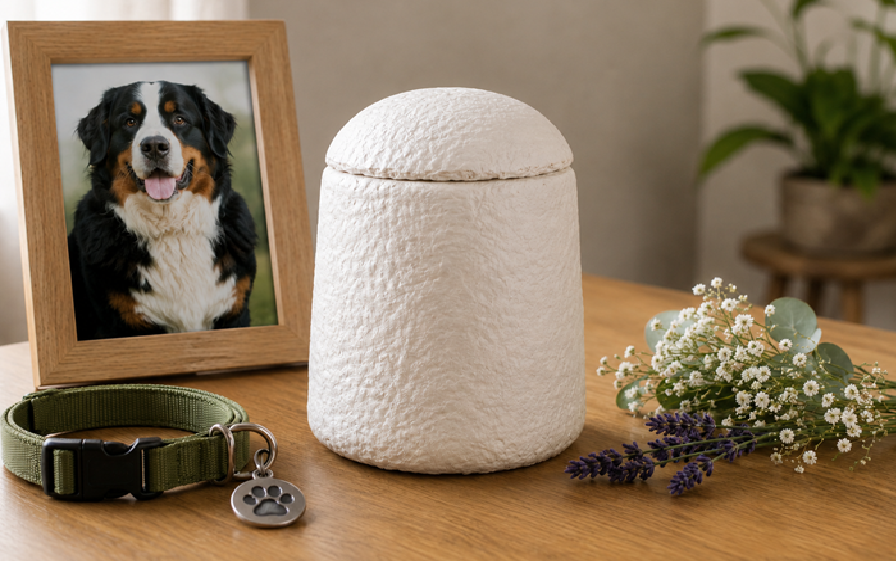
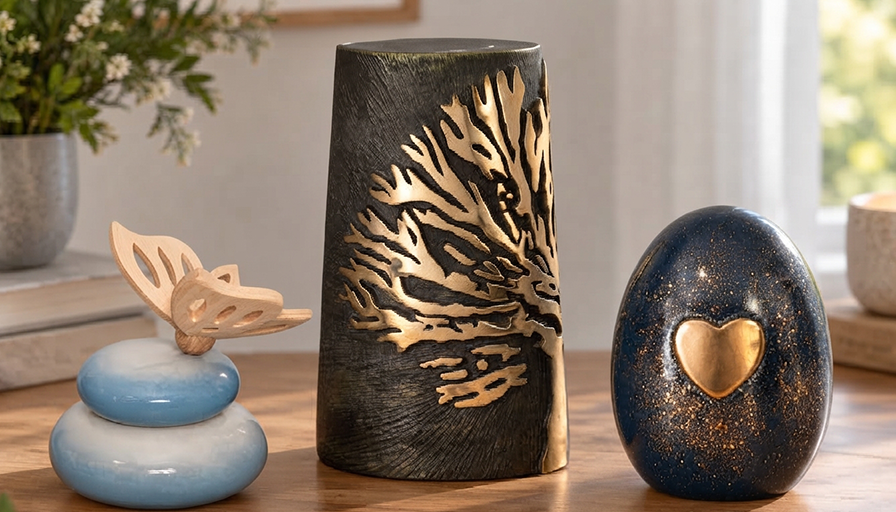
Many families also appreciate that ceramic works well in different interior settings. A ceramic urn may suit a living room, bedroom, hallway cabinet, memorial shelf, or private study without looking out of place. Some designs resemble sculpture, some resemble fine pottery, and others have a more traditional funeral style. That range makes ceramic one of the easiest materials to match to both the person being remembered and the space where the urn will rest.
Another reason for its popularity is variety. Ceramic urns are available in soft neutrals, deep earth tones, subtle whites, blues, greens, and layered glazes. Shapes can be rounded, angular, abstract, heart-shaped, floral, or minimalist. For families who want the memorial to reflect personality rather than convention alone, ceramic often gives more room to choose something that feels specific and considered.
Immediate guidance: when a ceramic urn is usually the right choice
If you are deciding quickly, ceramic is often a very suitable option in the following situations:
- When the urn will be kept indoors at home
- When appearance matters as much as function
- When you want an urn that feels calm, refined, or artistic
- When several family members want a design that does not feel too stark or formal
- When you are looking for a full-size urn, a keepsake urn, or a matching set
Ceramic may be less suitable when the urn will remain outdoors year-round in exposed weather conditions, or when maximum impact resistance is the top priority. In those cases, materials such as bronze, metal, or certain types of stone may be worth comparing. But for indoor memorial use, ceramic remains one of the most widely appreciated choices for good reason.
What makes ceramic different from other urn materials?
Every urn material creates a different impression. Wood often feels warm and traditional. Metal can feel secure, clean, and formal. Glass may look striking and artistic. Natural stone can feel weighty and timeless. Ceramic sits in a distinctive middle ground. It can be classic or contemporary, expressive or restrained, and it often carries a crafted quality that people respond to immediately.
Compared with metal, ceramic usually feels less cold visually. Compared with wood, it can offer more sculptural freedom and a wider range of finishes. Compared with resin or other synthetic materials, it often feels more substantial and enduring. And compared with stone, ceramic can sometimes offer more softness in form and colour.
That does not mean ceramic is always better. It means it is often better for the type of memorial families want to live with in the home: peaceful, attractive, personal, and quietly present.
How to choose the right ceramic urn step by step
The best approach is to make the decision in the same order that practical concerns usually arise. This prevents you from getting lost in designs too early.
Start with the correct size
Size comes first because even the most beautiful urn is not suitable if it does not hold the required amount of ashes. As a general guide, adult cremated remains typically require a full-size urn, while smaller keepsake urns are designed to hold only a portion. Families sometimes choose a main urn for the home and one or more keepsake urns so ashes can be shared in a considered way.
If you are uncertain, it is sensible to check the urn’s stated capacity rather than rely on appearance alone. Ceramic designs can be wider, taller, or more sculptural than expected, and their visual proportions do not always reveal internal volume clearly.
Think about where the urn will be placed
This question is often more important than people expect. An urn placed on a shelf in a living room may need a different design from one kept in a bedroom, memorial cabinet, or columbarium niche. Look at the intended space and ask a few simple questions. Will the urn be visible every day? Is the room modern or traditional? Do you want the urn to stand out, or blend in more quietly?
A glossy glazed ceramic urn can catch the light beautifully in a bright room. A matte or softly textured finish may feel more restrained and private. Rounded shapes often feel gentler in domestic interiors, while more abstract designs may suit contemporary homes especially well.
Choose a style that reflects the person, not only the trend
It is easy to be drawn to what looks elegant in a photograph, but the most lasting choice is usually the one that feels connected to the person being remembered. That connection does not have to be literal. You do not need an urn covered in symbols to make it personal.
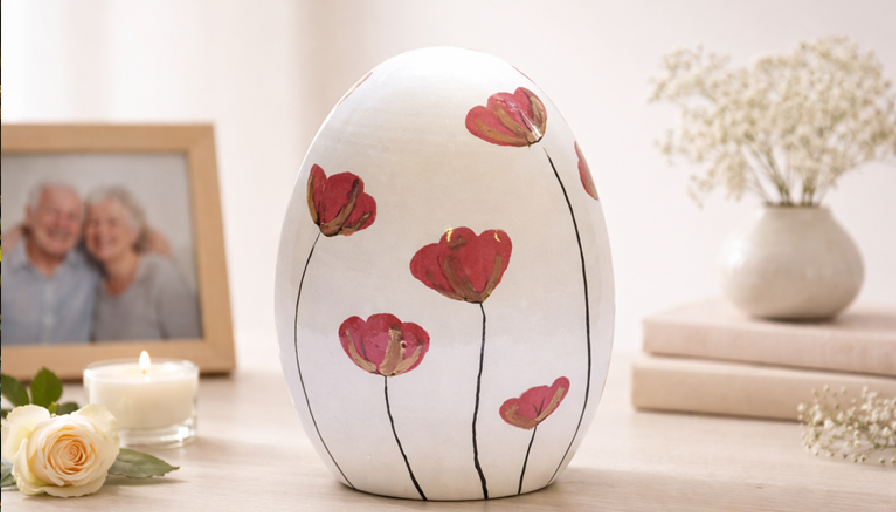
Sometimes the right ceramic urn is personal because of its colour. A deep blue may recall the sea. A soft cream finish may suit a calm interior and a gentle personality. A hand-formed floral design may echo someone’s love of gardens. A sculptural modern urn may feel fitting for someone with strong design taste. The point is not to search for perfection. It is to choose a form that still feels meaningful after the first difficult weeks have passed.
Consider the finish and how it will feel over time
Ceramic urns are not all alike in finish. Some are highly polished and reflective. Others have a more natural, almost stone-like surface. Some are smooth and minimalist, while others include layered glazing, pattern work, crackle effects, metallic accents, or hand-painted details.
Ask yourself whether you want the urn to read more like a memorial object or more like part of the home. Neither approach is wrong, but they create different emotional effects. Families who want a more private, integrated memorial often prefer ceramic urns that resemble decorative art or high-quality pottery. Families who want the urn to feel more ceremonial may prefer stronger symbolism or a more classic silhouette.
Think about whether you want matching memorial pieces
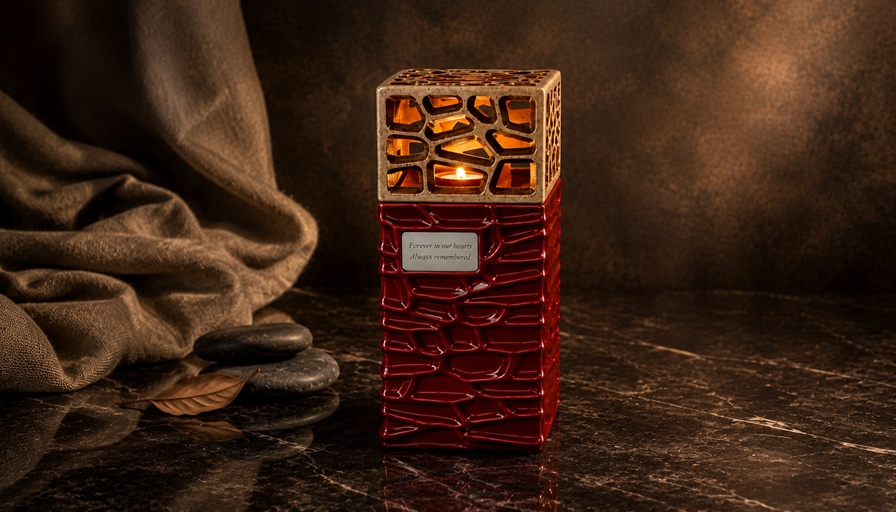
One practical advantage of ceramics is that it is often available across coordinated product types. A family may choose a full-size urn, matching keepsakes, a candle holder keepsake, or another small remembrance item in a similar style. This can be helpful when ashes will be shared among close relatives or when one person wants the main urn, and others would like a smaller private memorial.
When this matters, it is worth looking beyond the single urn and checking whether the collection includes related pieces. It can make future decisions easier and create a more coherent memorial arrangement.

Why ceramic works especially well in the home
Home memorials are now a very familiar choice in both the USA and the UK. Some families intend to keep the urn permanently at home. Others keep it there for a period before burial, interment, or scattering. In either case, the urn becomes part of the living environment.
This is where ceramic often stands apart. It can hold emotional weight without dominating the room. It can sit among books, photographs, flowers, candles, or framed notes and still feel harmonious. For many people, that matters more than they expected. They do not necessarily want a memorial object that looks overtly funeral-related every time they enter the room. They want something respectful that also sits calmly within ordinary life.
Ceramics often provide that middle ground. It can look purposeful and dignified while still contributing to a peaceful interior. For those who value privacy, this can be especially important.
Common concerns about ceramic urns
One of the most common doubts is whether ceramic is durable enough. High-quality ceramic urns are generally robust for normal indoor use, but they are not the same as metal in terms of impact resistance. That simply means the urn should be placed thoughtfully: on a secure surface, away from unstable edges, active pets, or areas where it may be knocked over.
Another concern is whether the ceramic feels too decorative. In practice, that depends entirely on design. Some ceramic urns are intentionally artistic, while others are very simple and understated. Decorative does not have to mean showy. In many cases, it means the urn has been designed with beauty as part of remembrance rather than as an afterthought.
Some families also worry that a ceramic urn may look delicate or feminine. Again, this comes down to style. Ceramic can be soft and organic, but it can also be clean-lined, architectural, earthy, or bold. There are ceramic urns that suit a wide range of personalities and interiors without leaning too far in one direction.
Mistakes to avoid when choosing a ceramic urn
The first mistake is buying based on appearance alone. A beautiful urn may still be the wrong choice if the capacity, location, or type of closure does not suit your needs.
The second is ignoring placement. An urn that looks perfect online may feel too large, too glossy, or too formal once it is in the room where it will actually be kept.
The third is choosing in a rush without comparing at least a few styles. Even when time is limited, it helps to compare traditional, modern, and more art-led designs before deciding. Families often discover that their first instinct changes once they see what is available.
The fourth is overlooking smaller matching memorial options. Keepsakes or companion pieces can be helpful, especially in close families or where ashes may be divided.
The fifth is assuming the “best” urn is the most expensive one. Price can reflect workmanship, finish, origin, and complexity, but the most suitable urn is the one that meets the practical requirements and feels right in daily life.
USA and UK considerations that may help
For readers in the USA and the UK, the practical questions are usually very similar: where will the urn be kept, what size is needed, and will the ashes stay together or be shared? The biggest differences tend to be about setting and memorial preference rather than the urn itself.
In both countries, many families now choose urns that are appropriate for the home as well as for a formal memorial setting. In the USA, larger home spaces may allow for more statement pieces or dedicated memorial furniture. In the UK, where interiors can be smaller, compact ceramic urns and coordinated keepsakes may be especially useful. These are broad tendencies rather than rules, but they can help when thinking about proportion and placement.
If the urn may later be placed in a niche or another fixed memorial space, it is sensible to check any size requirements in advance before committing to a specific ceramic design.
FAQ: ceramic cremation urns
Are ceramic cremation urns a good choice for ashes?
Yes. For indoor use, ceramic urns are often an excellent choice because they are dignified, visually warm, and available in many styles. They are especially suitable for families who want an urn that feels both respectful and beautiful in the home.
Are ceramic urns durable?
They are generally durable for normal indoor placement, but they should be handled with care. Ceramic is sturdy in everyday memorial use, though it is more vulnerable to impact than metal.
Can a ceramic urn be personalised?
Many ceramic urns can be personalised directly or paired with personalised memorial elements, depending on the design. Some families choose personalisation through engraving, a custom plaque, or a memorial display that includes photographs and other meaningful objects.
Are ceramic urns suitable for display at home?
Very much so. This is one of their strongest advantages. Ceramic urns often blend naturally into a home setting and can look more like fine art or pottery than a purely functional container.
Do ceramic urns come in keepsake sizes?
Yes. Many ceramic collections include keepsake urns or matching mini urns for families who want to share ashes or keep a smaller private memorial.
Is a ceramic urn better than wood or metal?
Not universally. It depends on where the urn will be kept and what kind of appearance you want. Ceramic is often preferred for indoor memorials because it offers warmth and design flexibility. Wood may feel more traditional, while metal may be better where higher impact resistance is needed.
Making a choice that remains comforting over time
The most helpful way to think about a ceramic urn is this: it should meet the practical requirements first, and then it should feel calm and fitting in the space where memory now lives. A good ceramic urn does not need to make a strong statement. Often, its value lies in the opposite. It sits quietly, holds meaning with dignity, and becomes part of the way someone is remembered at home.
If you are comparing options, it may help to start with full-size cremation urns for ashes and then narrow your choice by style, colour, and intended placement. If several family members would like a smaller memorial, keepsake urns for ashes can also be worth exploring. And if you would like guidance before deciding, a helpful next step is to read more about what size urn you need or contact a specialist for personal support.
A ceramic urn is often chosen not because it is the most dramatic option, but because it feels balanced, enduring, and quietly right. For many families, that is exactly what makes it the preferred choice.
If you feel certain information is missing or you have questions after reading this post, please feel free to contact us via the contact form.