Funeral Processions Explained: A Respectful and Practical Guide for Families and the Public
You notice it before you fully understand it, a steady line of cars with headlights on, moving calmly, leaving extra space, no hurry, no noise. A funeral procession is one of the few moments of grief that passes through everyday public life. For families, it can bring structure, togetherness, and a sense of closure. For everyone else on the road, it is a quiet reminder to slow down and show consideration.
This guide explains how funeral processions usually work, what respectful behavior looks like, and how participants and the public can help keep the journey safe and dignified. Customs and traffic rules vary by location, so the focus here is practical etiquette and safety-first guidance.
The Meaning of a Funeral Procession
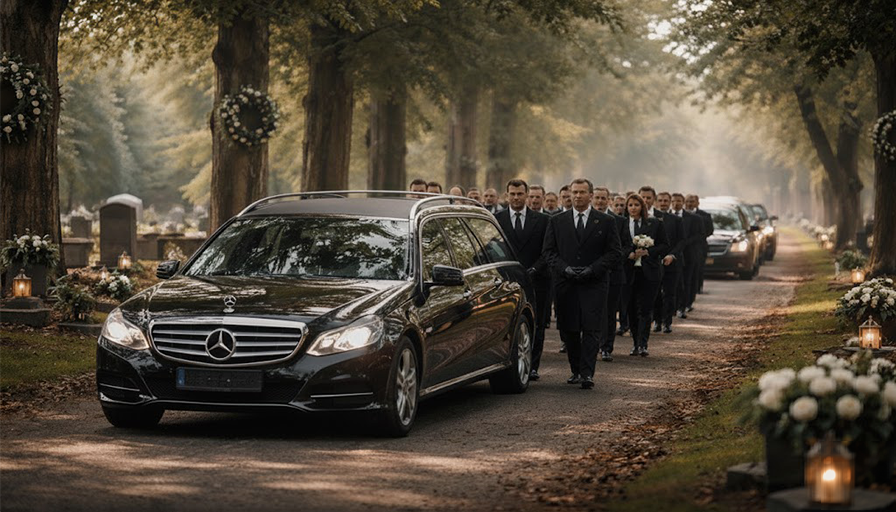
A funeral procession is the organized movement of vehicles, and in some traditions people on foot, as part of a funeral service. It typically travels from a funeral home or place of worship to a cemetery, crematorium, columbarium, or another memorial location. Some families choose a route that passes a meaningful place, such as a neighborhood street, a workplace, or a favorite spot connected to the person who died.
More than a transfer between locations, a procession is symbolic. It is a final act of care, a visible gesture of respect, and a moment of shared presence when words often feel insufficient.
Typical Structure and Order
Many funeral processions follow a familiar sequence, though details vary by tradition and location:
- A lead vehicle or escort, when used
- The hearse carrying the deceased
- Immediate family vehicles
- Officiant or clergy, when applicable
- Friends and extended family vehicles
In busier areas, escorts or traffic support may help the group remain together. In quieter settings, clear instructions and considerate driving are usually enough.
How a Funeral Procession Is Recognized
Procession vehicles are often marked so other road users can recognize them. Common indicators include:
- Headlights turned on during daylight hours
- Small flags, dashboard cards, or temporary window signs
- A steady line of vehicles moving together at a calm pace
These signals are not about demanding priority, they are about visibility and preventing confusion.
Safety and Road Awareness
Traffic laws relating to funeral processions are different in the United Kingdom and the United States, and the legal expectations for participants and other road users are often misunderstood.
In the United Kingdom, there are no special statutory exemptions for funeral processions under the Highway Code or other UK traffic regulations. Vehicles in a procession must obey all normal traffic rules, including traffic signals and stop signs. Any courtesy shown by other road users, such as waiting at junctions or slowing down to keep the procession together is a matter of social etiquette, not a legal obligation.
In the United States, traffic laws about funeral processions vary by state. Many states have statutes that give a funeral procession a degree of right-of-way if it is clearly identified. For example, in some states, once the lead vehicle has lawfully entered an intersection, the rest of the procession may proceed through that intersection without stopping and other drivers are prohibited from entering between vehicles. In other states, all vehicles, including those in the procession, must obey standard traffic controls unless there is a lawful escort (such as law enforcement) directing traffic.
What applies everywhere is simple: safety comes first. Even where funeral processions have limited legal allowances, they do not justify rushing, risky lane changes, or ignoring traffic controls unless a properly authorised escort is actively regulating traffic. Participants and families should rely on local funeral professionals to explain applicable laws, plan the route, and provide clear instructions appropriate to the local jurisdiction.
Before departure, it helps to know:
- Whether escorts are present, and who gives directions
- The planned route and approximate travel time
- Where late arrivals should go
- What to do if someone becomes separated
- Where to park upon arrival
Participant Etiquette
If you are part of the procession, small choices help keep the moment calm and dignified.
- Arrive on time so departure is not delayed
- Follow instructions and stay in the same lane whenever possible
- Keep a safe, consistent distance from the vehicle ahead
- Avoid overtaking, weaving, or changing order within the line
- Minimize distractions, especially phone use
- Keep music off or very low if you have it on at all
- If you become separated, continue calmly to the destination, do not speed to catch up
Etiquette for Other Drivers and Pedestrians
If you encounter a funeral procession, the respectful response is patience and space.
- Do not cut into the line of vehicles
- Avoid honking, tailgating, or driving aggressively nearby
- Yield when it is safe and reasonable to do so
- Be extra alert near cemeteries, crematoria, and memorial grounds where vehicles may slow down or stop
Many people choose to briefly pause as a gesture of respect. The exact custom varies, but impatience is almost always felt by grieving families.
Arrival Etiquette at the Cemetery or Crematorium
Arrival is often the most emotional moment of the day, and it can become chaotic if people exit vehicles too quickly or park without guidance. In many cases, it is best to remain in the vehicle until everyone has parked and staff have provided instructions.
Once outside, follow the direction of funeral staff regarding where to gather and when to move. Keep phones silenced and remain attentive. This sets a respectful tone for what follows.
Cultural and Religious Variations
Funeral processions can differ widely across cultures and faiths. Some include walking routes, prayers, symbolic gestures, or specific formations. Others emphasize privacy and simplicity. Some services do not include a procession at all, with guests meeting directly at the memorial location.
If a family has specific customs they wish to honor, sharing these during planning helps funeral professionals accommodate them appropriately.
The Role of Funeral Professionals
Funeral directors and service coordinators handle the practical details that families should not have to carry in the moment. They can:
- Plan the route and timing
- Provide clear instructions for participants
- Arrange escorts when needed
- Help mark vehicles so the group is recognizable
- Coordinate arrival and parking at the destination
Their role is to reduce stress and keep the day orderly and respectful.
Modern Alternatives and Changing Practices
Not every family chooses a traditional procession. Increasing traffic, longer travel distances, and guests arriving separately have led many people to simpler options such as:
- Holding the service and gathering at one location
- A smaller, family-only procession
- Meeting directly at the cemetery, crematorium, or memorial site
- Sharing directions digitally so guests can travel calmly without pressure to stay in a tight line
There is no single correct approach, only what feels meaningful and manageable for the family.
Quick Checklist
If you are participating
- Be on time and follow the planned route
- Use the agreed visibility signal if instructed, such as headlights
- Stay in one lane and keep a steady distance
- Do not overtake or change the vehicle order
- Drive calmly, even if separated, and continue safely to the destination
If you encounter a procession
- Do not merge into the line or cut between vehicles
- Give space and avoid aggressive driving
- Yield when safe, especially near the destination
- Keep noise down and be patient for a few minutes
Frequently Asked Questions
Should I pull over when a funeral procession passes?
In many places, slowing down and giving space is a respectful gesture. Whether stopping is appropriate depends on the road situation. The safest option is to avoid sudden moves, do not create a hazard, and allow the procession to pass without interruption.
What if I need to turn, but a procession is going by?
Wait until the procession has passed rather than cutting into the line. If you are already committed to your turn, proceed safely and do not force yourself between vehicles.
What if I get separated from the procession as a participant?
Do not speed to rejoin. Continue calmly using the planned route or navigation and meet the group at the destination.
What about roundabouts and busy junctions?
Roundabouts can split a procession. Stay calm, follow normal rules unless directed otherwise, and continue to the destination if you lose sight of the group. Clear directions beforehand reduce stress in these situations.
Are escorts always involved?
Not always. Escorts are more common in busy areas, larger services, or where intersections are difficult. Many processions proceed safely without escorts when participants have clear instructions and drive carefully.
Do funeral processions happen for cremations too?
Yes. Some families travel together to a crematorium or to a memorial location where an urn will be placed or a moment of remembrance will take place.
Why Funeral Procession Etiquette Still Matters
Even as traditions evolve, the purpose remains: a funeral procession is a shared act of respect. For families, a calm, orderly journey can become a meaningful memory of togetherness. For the wider community, patience and consideration are small gestures that reflect humanity at its best.
If you are planning a funeral and feel unsure about route planning, escorts, or how to prepare guests, you can reach out via the contact form. Clear guidance beforehand can make the day noticeably calmer.