Practical Guide to Cremation Urns for Mum
Choosing an urn for a mother often feels different from choosing one for any other family member. Mothers are usually remembered through specific details: the garden she tended, the meals she prepared, the way she kept family photographs, or the jewellery she wore every day. An urn that feels right tends to connect with those details rather than simply serving as a container.
This article focuses on practical guidance. It explains materials, capacity, real-life scenarios, and country-specific considerations where relevant to families in the UK and US. It also introduces helpful categories available through legendURN, including keepsake urns, cremation jewellery, and ash scattering urns, so readers can understand when each option might be appropriate.
Understanding the First Decision: Full-Size, Keepsake, or Shared Memorial?
Before looking at specific designs, families usually need to answer one basic question:
Will all the ashes remain in one urn, or will they be divided? This decision affects everything else.
- A full-size adult urn generally holds approximately 3 to 3.5 litres (around 180 to 220 cubic inches), depending on the individual’s weight before cremation.
- A keepsake urn holds a small portion of ashes.
- Cremation jewellery contains a symbolic amount.
In both the UK and the US, it is common for crematoria or funeral homes to return ashes in a temporary container. Families then transfer them to a permanent urn. If you are planning to divide ashes, ask the crematorium or funeral director about the total volume first to avoid misjudging capacity.

1. Artistic or Sculptural Urns That Reflect Personality
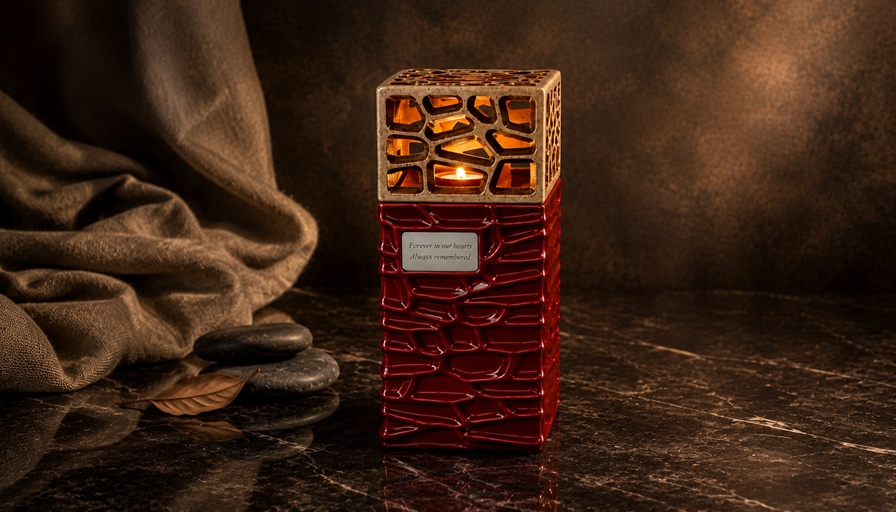
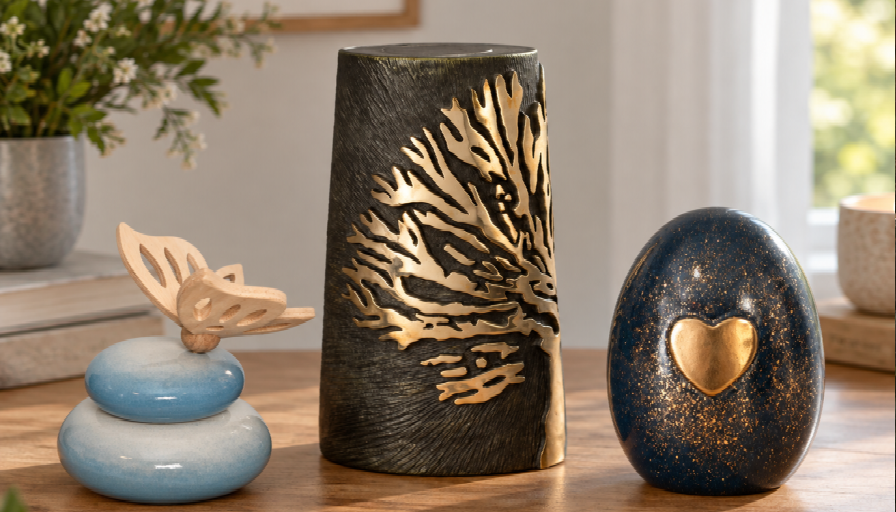
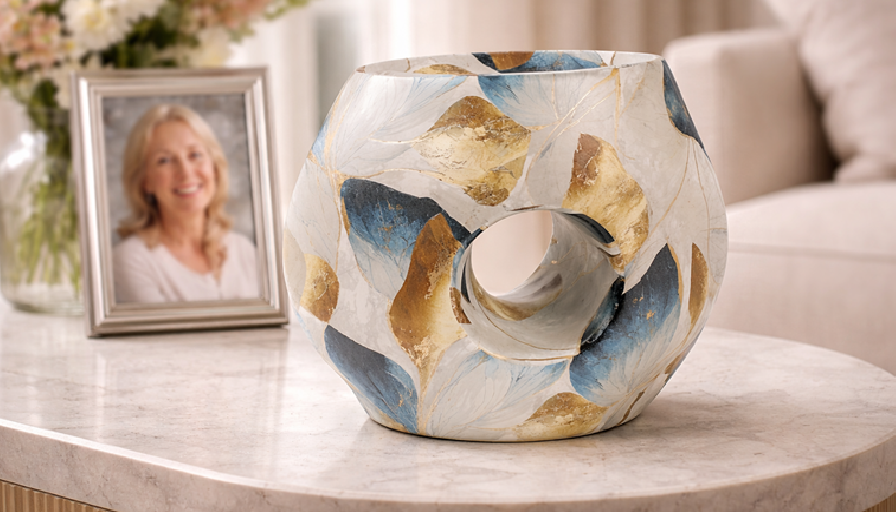
Some mothers were practical and quiet. Others were expressive, creative, or deeply spiritual. Sculptural urns are designed to reflect identity rather than tradition.
Materials and Design
These urns may be made from:
- Hand-painted ceramic
- Cast bronze
- Resin with detailed surface finishes
- Porcelain with symbolic motifs
Unlike simple cylindrical shapes, sculptural urns often feature curves, floral elements, birds, angels, or abstract forms. The goal is not decoration for its own sake, but representation.
Real-life example
A daughter once described her mother as someone who never missed a spring planting season. Rather than choosing a plain urn, the family selected a floral ceramic design in soft green tones. It sat in the sitting room, near the window overlooking the garden. The choice felt personal without being dramatic.
Practical considerations
- Ensure the urn has a secure opening, typically sealed at the base.
- Ask whether the design is suitable for indoor display only.
- Consider weight if you may need to move it later.
This type of urn is appropriate when ashes will remain at home long term.
2. Keepsake Urns for Shared Remembrance
Not every family lives in the same country or even the same city. Keepsake urns allow ashes to be divided thoughtfully. The legendURN category of keepsake urns explains how smaller urns function as companion pieces to a full-size urn.
When to consider keepsake urns
- Siblings live in different regions.
- One family member plans to keep ashes at home, while another plans to scatter part.
- Children want a symbolic portion.
Common mistake
Some families wait until after ashes are transferred into a large urn and sealed, only then realising they want to divide them. It is easier to plan division before final sealing.
Real-life example
Three sisters in different countries decided to divide their mother’s ashes equally. They selected matching small heart-shaped keepsake urns. One remained in London, one in Boston, and one in Manchester. The visual consistency gave them a sense of connection.

3. Cremation Jewellery for Close, Personal Memory
Some people find comfort in wearing a small amount of ashes close to the body. Cremation jewellery has become more common in both the UK and US over the last decade.
LegendURN’s category of ashes jewellery includes pendants, bracelets, and discreet memorial pieces.
How it works
Cremation jewellery contains a tiny compartment, usually sealed with a screw and adhesive. It holds only a symbolic amount.
When it helps
- A daughter who travels frequently may not want to carry a full urn between homes.
- A son who struggles with grief may prefer something private.
- A spouse may wear a pendant daily, rather than placing an urn on display.
Important consideration
Jewellery should be sealed carefully and checked periodically. It is not designed for immersion in water.
4. Nature-Inspired Urns for Mothers Connected to the Outdoors
For mothers who loved the sea, countryside, or woodland walks, nature-themed urns can feel appropriate.
These may include:
- Tree motifs
- Birds
- Subtle leaf engravings
- Soft earth-tone finishes
Some are biodegradable, designed for burial or water release.
UK and US differences
If you are considering burial:
- In the UK, churchyards and cemeteries may have specific material requirements.
- In the US, cemetery regulations vary widely by state and private cemetery policies.
Always check with the cemetery before purchasing a biodegradable urn intended for burial. If you are considering water scattering, review the scattering urns category for guidance on suitable containers.

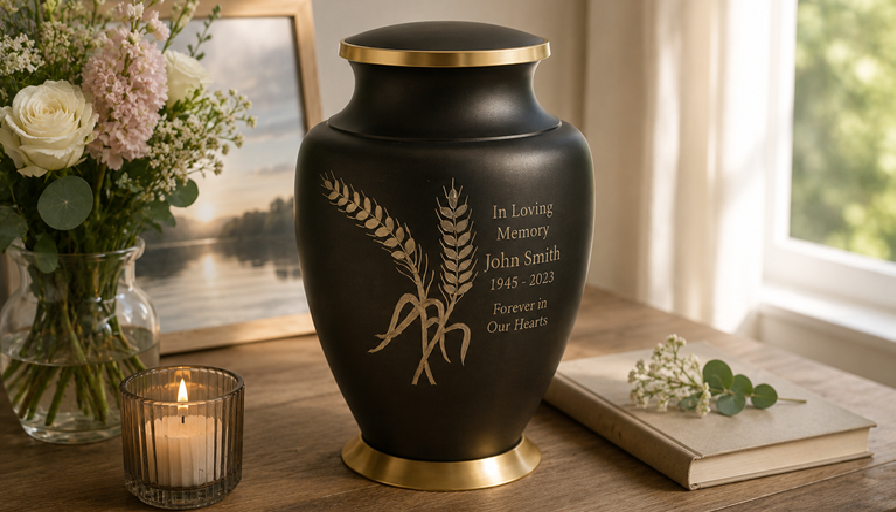
5. Custom Engraved or Personalised Urns
Personalisation often matters most when families feel that a mother’s individuality should be clearly marked.
Engraving options may include:
- Full name and dates
- A short line such as “Beloved Mum”
- A symbol meaningful to the family
Practical advice
- Confirm spelling carefully before approval.
- Review a preview image if provided.
- Check character limits.
A common oversight is selecting a long quotation that does not fit comfortably on the urn surface. Short phrases usually work best.
For many families, the right urn becomes even more meaningful when it carries something unmistakably personal. If you are considering engraving or customisation, our guide walks you through the options and the practical checks that prevent mistakes.
Real-life example
A family chose a simple white porcelain urn and engraved only their mother’s handwritten signature, taken from an old letter. The effect was subtle but unmistakably hers.
Step-by-Step: How to Choose a Unique Urn for Your Mother
1. Decide location
Home display, burial, scattering, or shared?
2. Confirm capacity
Ask the crematorium or funeral provider for ash volume.
3. Choose material based on use
Ceramic for indoor display. Metal for durability. Biodegradable for burial or water.
4. Discuss as a family
Mothers often connected families together. Involving siblings reduces later regret.
5. Take time
There is rarely a legal requirement in the UK or US to rush this decision immediately after cremation.
Common Questions Families Ask
What is the right size urn for my mother?
In general, one pound of body weight equals approximately one cubic inch of ash. For an average adult, choose 180 to 220 cubic inches. Confirm the exact volume with your crematorium.
Can we split ashes between siblings?
Yes. In both the UK and US, ashes can legally be divided. There is no national restriction against division, though you should keep records of how they are handled.
Are there rules about keeping ashes at home?
In both countries, families may keep ashes at home. There is no general prohibition. However, landlords or housing associations may have policies about permanent fixtures if you plan to install a niche or cabinet.
Is it acceptable to scatter ashes in nature?
Rules vary:
- In the UK, permission from landowners is required for private land. Coastal scattering is generally permitted, but check local guidance.
- In the US, scattering on private land requires owner permission. National parks and coastal areas may have permit requirements.
Always verify local rules before scattering.
How long can ashes stay in a temporary container?
Indefinitely, if kept dry and secure. However, temporary containers are not usually intended for display or long-term decorative use.
Practical Mistakes to Avoid
- Choosing based only on appearance without checking capacity.
- Forgetting to confirm closure type.
- Engraving errors due to rushed approval.
- Buying biodegradable urns for permanent indoor display.
A mother’s urn does not need to be elaborate. It needs to feel appropriate. For some families, that means a single sculptural piece in the home. For others, it means dividing ashes into keepsakes or jewellery so each child carries part of her memory forward.
The right choice is rarely about trend. It is about alignment with how she lived and how the family intends to remember her.
If you feel certain information is missing or have questions after reading this post, you are welcome to contact us via the contact form.