Choosing a Handmade Cremation Urn for Dad: Materials and Practical Guidance
When a father passes away, families are often faced with decisions they never expected to make. Some choices are administrative. Others are deeply personal. Selecting a cremation urn belongs to the second category. It is not just about storage but about creating a lasting and respectful place for remembrance.
Many families specifically look for handmade cremation urns for fathers because they want something that feels individual and grounded rather than factory uniform. The preference is usually not about luxury or decoration. It is about material, weight, finish, and authenticity.
Handmade urns often appeal to families who associate their father with craftsmanship, reliability, practical skills, or a quiet presence in daily life. This guide explains which handmade urn types are most often chosen for fathers, what distinguishes them, and what practical factors should guide the decision.
Before comparing styles, families should first understand size, placement, and closure safety. Those three factors determine suitability more than appearance alone.
Why Handmade Urns Often Feel More Appropriate
A handmade urn is shaped, finished, carved, fired, or treated by an individual maker rather than produced through fully automated processes. The difference is usually subtle but visible on close inspection.
Common handmade characteristics include:
- small variations in surface texture
- visible grain or tool patterns
- hand applied glaze or finish layers
- slight form differences between pieces
Families often respond positively to these details because they reflect human effort and material honesty. Many fathers are remembered through things they built, repaired, maintained, or crafted. A hand-finished object often feels consistent with that memory.
In real selection situations, families frequently describe their choice in practical terms such as "solid," "natural," "honest," or "familiar" rather than "artistic" or "symbolic."
First Practical Step: Confirm Urn Capacity
Before comparing materials, confirm the required volume.
In both the UK and the US, urn capacity is often estimated using the practical guideline of about one cubic inch of urn space per pound of body weight before cremation. As a reference point, the average amount of ash left over after the cremation of an adult is about 3 to 3.5 liters, or 183 to 213 cubic inches, which is why most standard adult urns fall in the 180 to 220 cubic inch range.
Typical decision paths include:
- one full size urn for all ashes
- one main urn plus several keepsake (mini) urns
- shared distribution among family members
- keeping part in an urn and scattering another part later, where local rules allow
Not all ashes must be placed in a permanent urn, so scattering can reduce the capacity you need for the main urn.
Even if the ashes will be divided, it still helps to estimate the total volume early, because that clarity makes every next choice easier. If you want a reliable starting point, this guide on how much ash remains after cremation and what urn size you need explains the most practical way to plan capacity. From there, you can decide whether one full-size urn makes sense or whether a more flexible plan fits your family better.
Some families choose a main urn plus one or more smaller options, such as a keepsake urn as an alternative ash destination. Others prefer to share ashes between close relatives, which can bring comfort and reduce uncertainty when everyone wants a personal place of remembrance. This article on dividing ashes after cremation, clarity in a moment of uncertainty explains the process in a calm, step-by-step way. The key is to decide on the plan first, then choose the right capacity for each chosen destination.
Always verify capacity before committing to a design. Appearance should never be the first filter.

Handmade Wooden Urns for Fathers
Wood is one of the most frequently chosen materials for fathers.
Hand-turned wooden urns are shaped on a lathe and finished by hand. Each piece has a unique grain pattern and surface tone. No two are identical.
Why families choose wood:
- warm and nonreflective surface
- visually calm in home settings
- suitable for engraving or nameplates
- fits both modern and traditional interiors
Wooden urns are often selected when the father worked with tools and enjoyed woodworking, gardening, or outdoor projects. The material connection feels natural rather than symbolic.
Practical checks:
- confirm secure base closure or threaded lid
- check humidity exposure if placed long-term in damp spaces
- Verify whether the finish is oil, wax, or lacquer-based.
Handmade does not mean loosely closed. Closure quality remains essential.
Hand Glazed Ceramic Urns
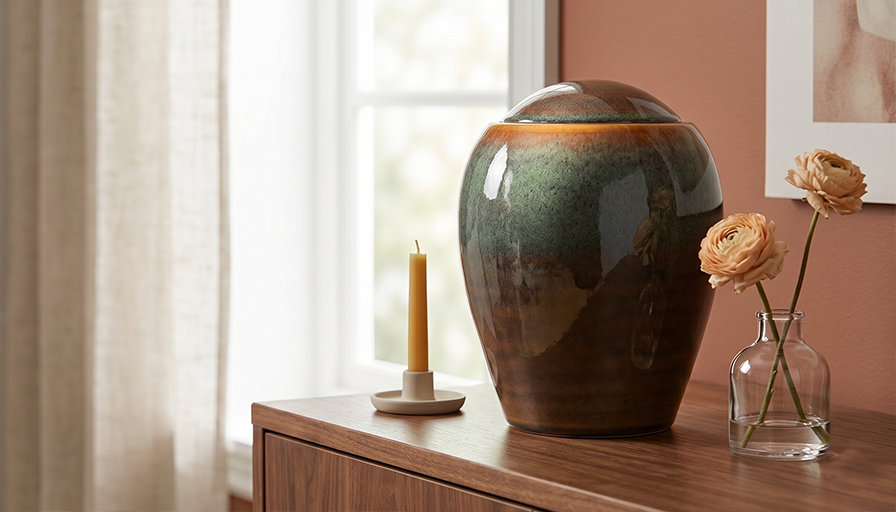
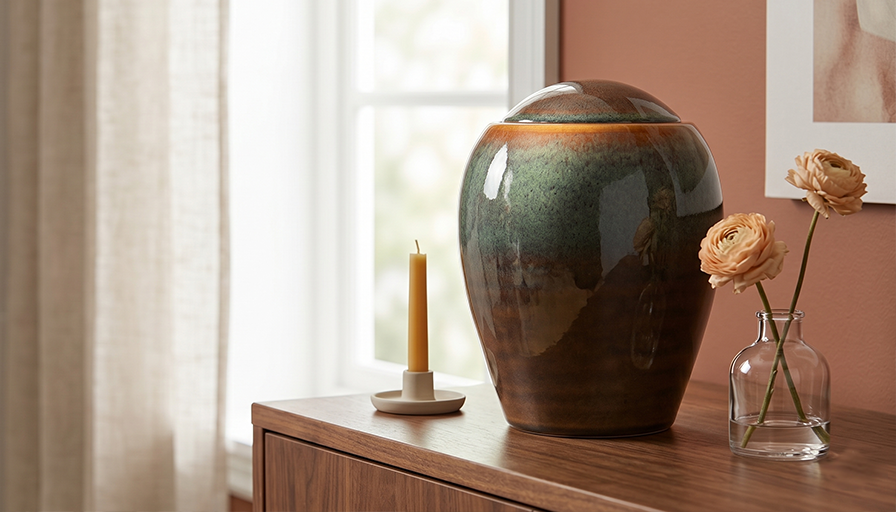
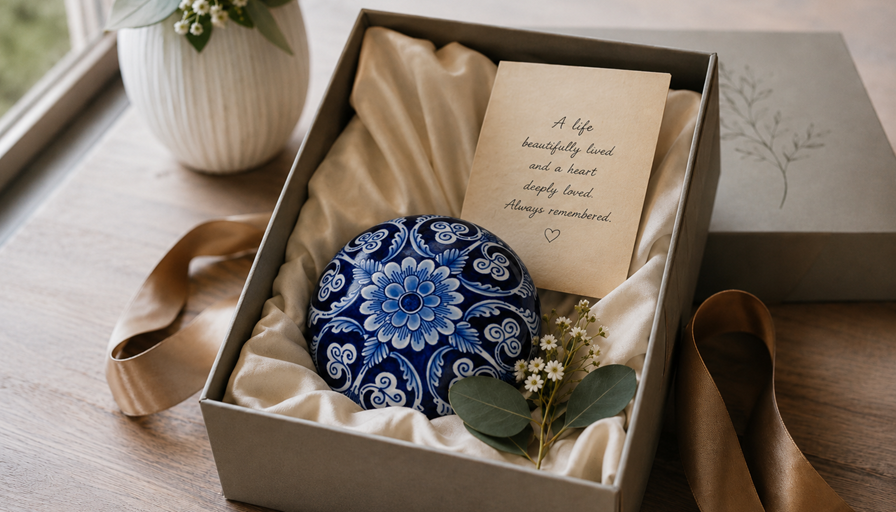
Ceramic urns are shaped from clay and kiln fired, then hand glazed. Surface depth and color variation are typical features.
What stands out:
- visible glaze layering
- subtle tone variation
- soft light reflection rather than shine
Ceramic often feels grounded and stable. Families who want a calm visual presence rather than a strong material statement often choose ceramic.
Ceramic urns are commonly selected for:
- columbarium placement
- shelf display at home
- neutral interior integration
Practical checks:
- verify niche dimensions before purchase
- confirm base padding or stability ring
- check lid seal method
Ceramic is solid but can break if dropped. Placement stability matters.

Hand Finished Metal Urns
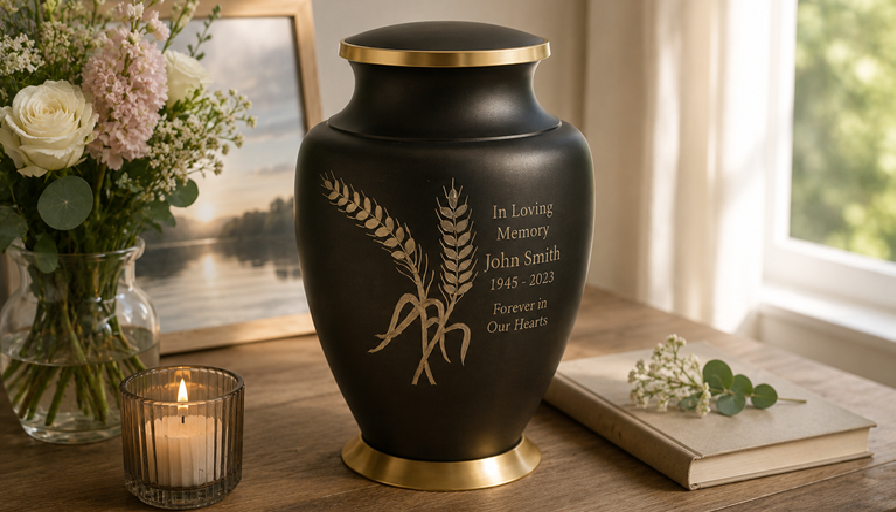
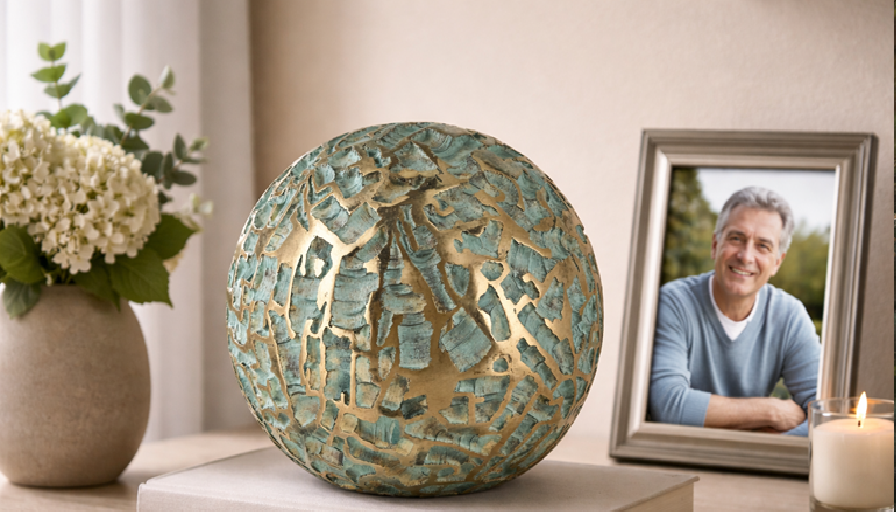
Not all metal urns are factory finished. Some are hand engraved, etched, or patinated.
Why families consider metal:
- long term durability
- burial suitability
- scratch resistant surfaces
- precise engraving options
Metal urns are often chosen when durability and structural strength are priority qualities. This is common when the father valued reliability, discipline, or technical professions.
Important question to ask:
Is the finish hand applied or sprayed coating. Hand patina ages more naturally over time.
Hand Carved Stone Urns
Stone urns are less common but strongly associated with permanence and weight.
Characteristics include:
- high physical weight
- natural texture
- minimal decorative style
- long term outdoor suitability
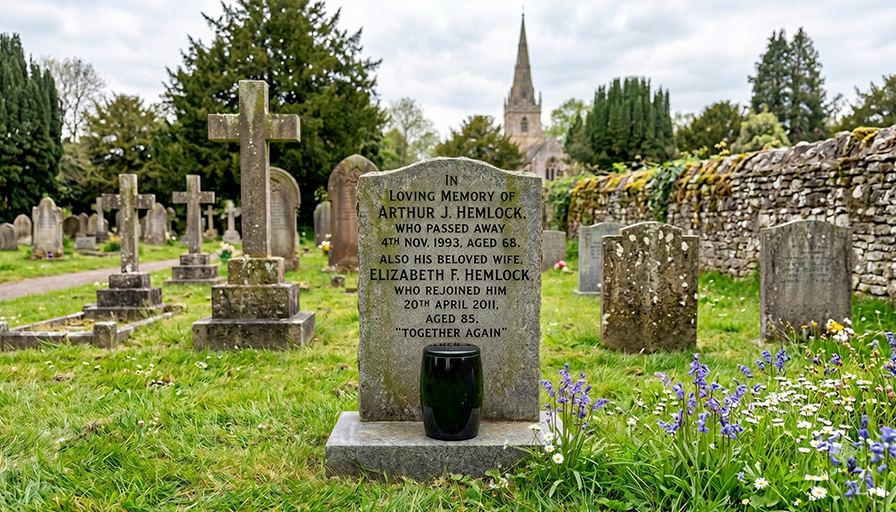
Stone is often chosen for cemetery placement or garden memorial areas. Families who prefer material honesty and permanence frequently select stone.
Practical checks:
- confirm weight handling requirements
- verify transport packaging
- check base leveling surface
Stone urns are rarely moved once placed.

Handmade Biodegradable Urns
Biodegradable handmade urns are produced from natural fibers, pressed plant material, clay blends, or paper composites. They are designed to break down naturally.
These urns are used when:
- ashes will be buried in soil
- a tree planting memorial is planned
- natural burial is preferred
- environmental values were important
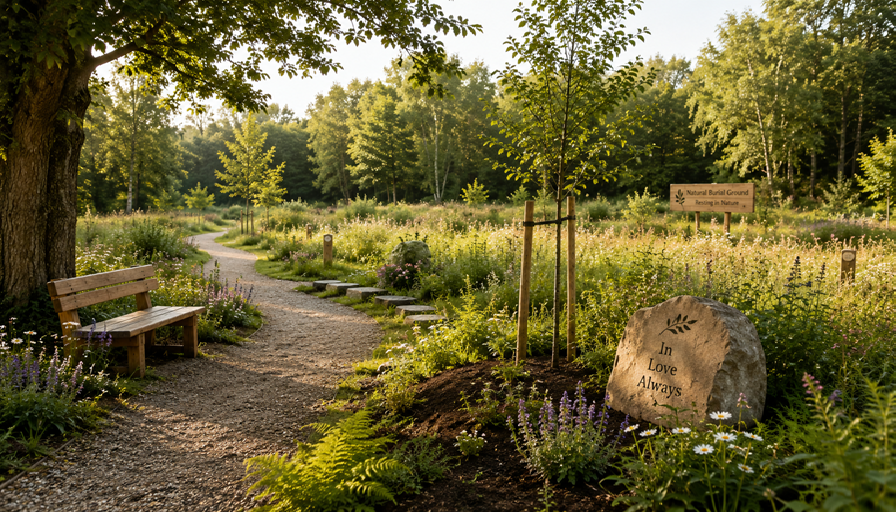
Regulations differ by location. Always confirm cemetery or water burial rules before purchase.
Practical checks:
- verify breakdown timeframe
- confirm soil or water suitability
- check seed capsule compatibility if tree urn
Hand Finished Keepsake Urns
Keepsake urns hold a small portion of ashes and are often handmade or hand finished in matching materials to the main urn.
They are useful when:
- siblings live in different cities
- several close relatives want a personal memorial
- part of the ashes remain at home
Keepsake urns reduce emotional tension around division decisions because they allow shared remembrance without conflict over the main urn location.
Always confirm the fill method and sealing type.
How Families Usually Make the Final Choice
In practice, selection often follows this order:
- confirm capacity
- confirm final placement location
- select material suited to placement
- narrow style within handmade options
- verify closure and sealing
- confirm dimensions and weight
Real examples:
A family keeping the urn at home often selects hand turned wood with a simple form that blends into the room.
A family placing the urn in a niche selects ceramic sized exactly to compartment dimensions.
A burial focused family selects stone or metal for durability.
Common Mistakes Families Mention Later
Based on repeated feedback patterns:
- choosing style before checking capacity
- not confirming closure security
- assuming handmade means fragile
- forgetting future relocation needs
- ignoring niche dimension limits
Handmade urns are still functional memorial containers. Practical verification prevents later stress.
Final Guidance
Choosing a handmade cremation urn for a father is rarely driven by decoration. Families usually respond to material feel, surface honesty, weight, and closure quality. Wood feels familiar. Ceramic feels steady. Stone feels permanent. Metal feels durable. These reactions are often immediate and practical.
Review capacity first. Confirm placement. Then evaluate material. Handmade options within broader cremation urn collections give families room to find something that aligns with both memory and function.

Frequently Asked Questions
Are handmade urns more fragile?
Not necessarily. Material determines strength, not production method. Ceramic and stone are solid. Wood and metal are durable.
Can handmade urns be buried?
Yes, depending on material. Wood, metal, ceramic, stone, and biodegradable urns can all be buried where regulations allow.
Are UK and US urn requirements different?
Capacity calculation is similar. Differences usually involve cemetery niche size rules.
Do handmade urns cost more?
Often slightly, due to labor. Price depends more on material and complexity than on handmade status alone.
Can ashes be divided across multiple handmade urns?
Yes. This is common and does not affect cremation handling.
If you feel certain information is missing or have questions after reading this post, you are welcome to contact us via the contact form.