Funerary Art Explained: How Urns Carry Meaning and Memory
Funerary art did not begin with modern memorials. For centuries, people have used crafted objects to mark loss, preserve memory, and create a lasting point of connection. In the United Kingdom and the United States today, urns have become one of the most familiar expressions of that tradition.
An urn is not simply a container for ashes. For many families, it becomes a quiet marker of remembrance, shaped by design, material, and the way it fits into everyday life. The choice is rarely abstract. It reflects how a person is remembered, where that remembrance will live, and how it may change over time.
Families often realise this only gradually. What begins as a practical decision can, over months or years, become part of daily life, personal rituals, and moments of reflection.
This guide looks at urns as part of funerary art. It explains how design choices carry meaning, how different urn types are used in practice, and which practical details are worth considering early rather than later.
What funerary art means today
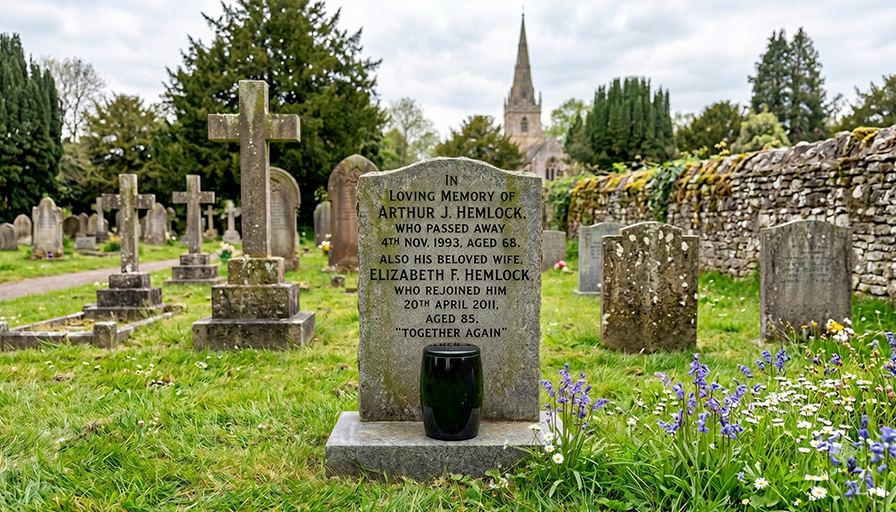
Historically, funerary art took the form of headstones, carvings, sculptures, and inscriptions. While those traditions continue, the definition has broadened. Urns, keepsakes, plaques, and memorial objects now play an equally important role.
What has shifted is not the intention, but the scale and flexibility. Many families now prefer memorials that are:
- Personal rather than monumental
- Adaptable rather than fixed
- Meaningful without being elaborate
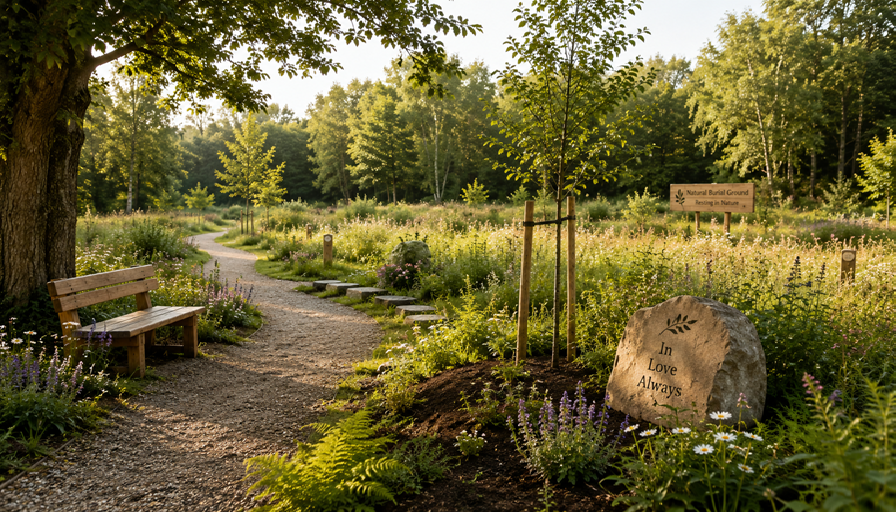
Urns naturally fit this approach. They allow remembrance to exist in a home, a shared family space, or a cemetery, without requiring immediate permanence.
Urns as functional art objects
Every urn has a practical purpose: to hold cremation ashes safely and securely. Once that requirement is met, attention often turns to how the urn looks, feels, and sits within a space.
Most design decisions come from very real questions families ask themselves:
• Will this be kept at home or placed elsewhere?
• Should it blend into its surroundings or be clearly visible?
• Does it reflect belief, personality, or shared values?
• Might it need to be moved in the future?
For those beginning their search, exploring traditional forms can help establish a sense of proportion and expectation.
Browse classic cremation urns for ashes

Because urns are often kept for many years, families tend to think about them as lasting objects rather than temporary containers.
Common urn categories and when families consider them
Early on, families usually encounter a small number of broad urn categories. Understanding why each exists helps avoid mismatched expectations later.
Traditional cremation urns
Traditional urns are designed to hold the full amount of ashes after cremation. Families usually consider them when ashes will remain together and be placed in one location.
They are commonly chosen when:
- Ashes will be kept intact rather than divided
- Placement is planned for a cemetery, columbarium, or memorial niche
- A single, central memorial feels appropriate
These urns often become part of a more formal remembrance arrangement, whether at home or in a dedicated memorial space.
Keepsake urns
Keepsake urns hold a smaller portion of ashes. They are practical solutions for families who want remembrance to be shared rather than concentrated in one place.
They are often used when:
- Ashes are divided among close family members
- One portion is kept while the rest are placed or scattered
- A discreet, personal memorial is preferred
Although smaller in size, keepsake urns often carry significant emotional weight over time.
Symbolic and themed urns
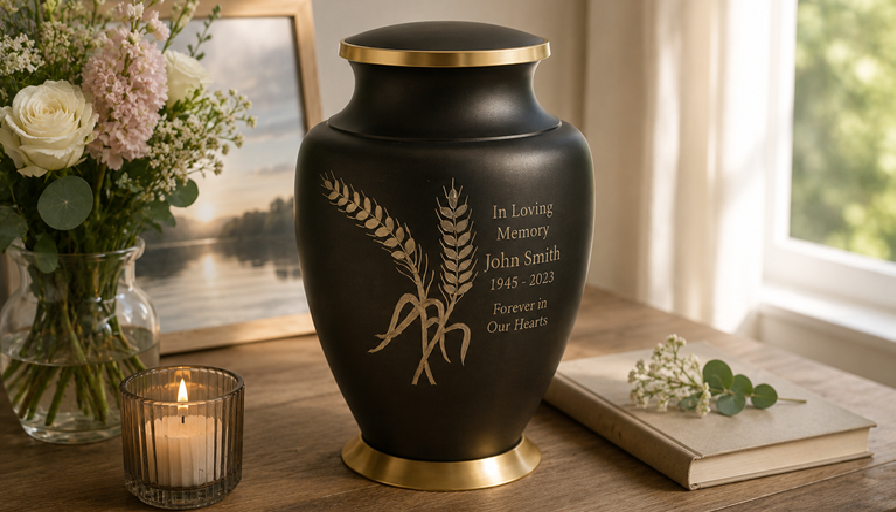
Some urns incorporate specific imagery or themes. These designs are often chosen when symbolism brings comfort or expresses meaning that words cannot.
Families may consider themed urns when:
- Spiritual or personal symbolism matters
- The urn will be visible as part of a memorial
- Imagery offers reassurance rather than explanation
For those drawn to this approach, symbolic designs can provide a sense of peace or continuity.
Browse Buddha and angel inspired urns

Materials used in funerary urns and why they matter
Material choice affects more than appearance. It influences durability, maintenance, placement options, and how the urn feels when handled.
Metal urns
Metal urns are widely chosen across the UK and US. They are valued for their strength, stability, and resistance to environmental changes.
They are often selected because they:
- Offer long-term durability
- Suit both indoor and cemetery placement
- Require minimal maintenance
Metal urns are commonly chosen when longevity is a priority.
Ceramic and porcelain urns
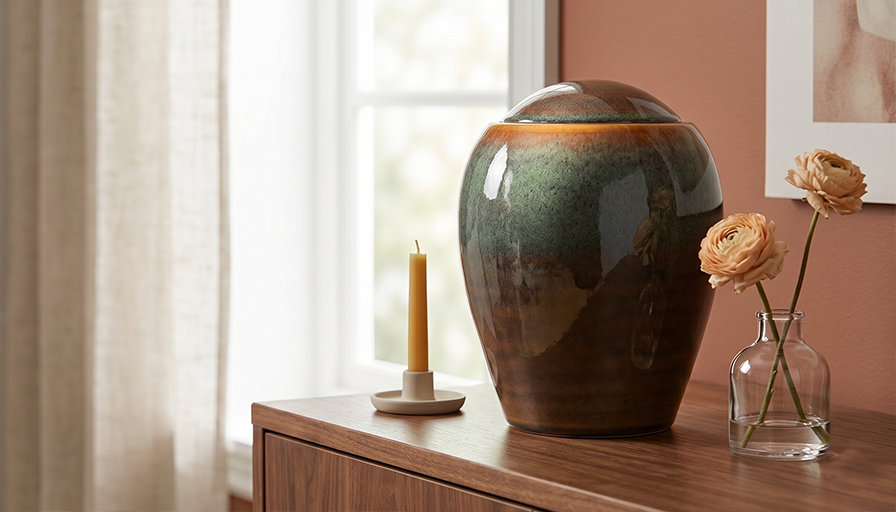
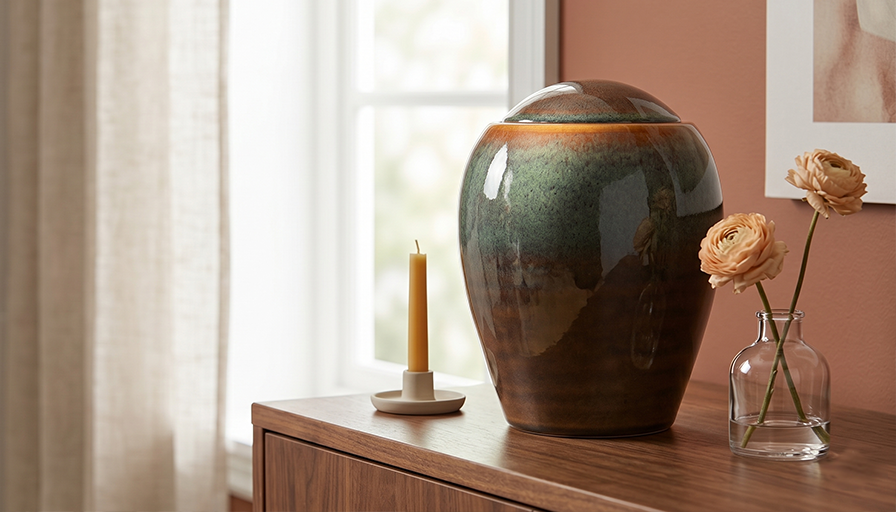
Ceramic and porcelain urns are appreciated for their craftsmanship and softer visual presence. Families often choose them when the urn will remain indoors and form part of a visible memorial setting.
They are typically selected for:
- Refined finishes and gentle colours
- Home placement
- A handcrafted, tactile appearance
These urns benefit from careful handling but often feel especially personal.
Wood urns
Wood urns bring warmth and natural texture. They are often chosen for home placement or temporary holding before burial or scattering.
Families are drawn to wood urns when they want:
- A natural, understated look
- A sense of warmth rather than formality
- An urn that blends into everyday surroundings
Wood urns are best suited to dry, indoor environments unless specifically treated.
Stone and marble urns
Stone urns feel solid and traditional. They are commonly selected for cemetery placement or formal memorial settings where permanence matters. Their weight and finish often appeal to families seeking a lasting physical presence.
Symbolism in urn design
Symbolism in funerary art is rarely chosen at random. It often reflects belief, shared values, or emotional reassurance rather than decoration alone.
Spiritual imagery
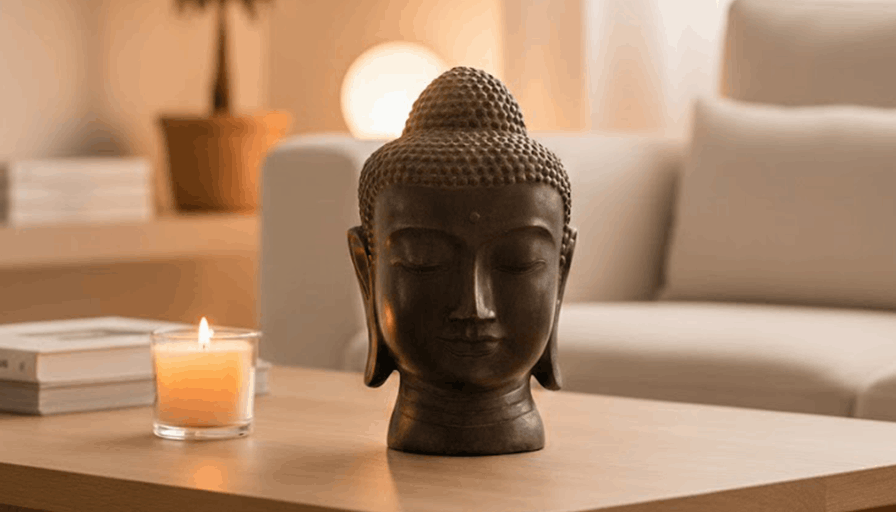
Spiritual designs are often selected for what they represent rather than for religious instruction. Buddha-inspired forms may symbolise peace or acceptance. Angel motifs are commonly associated with care, guidance, and protection.
Families often choose these designs when symbolism offers comfort rather than explanation.
Minimal and abstract forms
Not all families want visible symbolism. Many prefer urns with clean lines and minimal detail, allowing meaning to remain private.
These designs are often chosen when:
- The urn will sit in a shared space
- Personal meaning is not intended for display
- Simplicity feels more fitting than imagery
In funerary art, restraint can be as intentional as ornament.
Placement decisions that influence urn choice
Where an urn will be kept shapes nearly every decision, from size to material to design.
Home placement
When an urn is kept at home, families often consider how it will fit into daily life. Proportion, visibility, and ease of movement all matter.
A common situation: an urn is placed on a shelf “temporarily” after the service. Over time, photographs, cards, and personal items gather around it. What began as a practical decision becomes a lasting place of remembrance.
Cemetery or columbarium placement
For cemetery placement, practical limits usually come first. Size restrictions, material requirements, and long-term durability matter. Design still plays a role, but within clearer boundaries set by the memorial space.
Dividing ashes between locations
When ashes are divided, families often combine urn types. A full-size urn may be placed in a cemetery, while keepsake urns remain with family members. Thinking about this early helps maintain consistency and avoids difficult decisions later.
Common mistakes families make
Even with careful planning, a few practical points are often overlooked.
- Choosing an urn before confirming placement rules
- Misjudging size, especially with keepsake urns
- Feeling obliged to select symbolism that does not feel personal
- Treating the urn as temporary when it often becomes permanent
Taking time early usually prevents regret later.
How funerary art supports grief without words
Funerary art works quietly. An urn does not explain loss or resolve it. It offers presence.
Over time, a well-chosen urn can:
- Provide a steady focal point for remembrance
- Support personal rituals, formal or informal
- Offer continuity as circumstances change
Design matters not because it demands attention, but because it allows memory to settle gently into place.

Frequently asked questions
Is an urn considered funerary art?
Yes. While an urn serves a practical role, its design, symbolism, and placement place it firmly within funerary art.
Do families in the UK and US choose urns differently?
Differences are usually shaped by cemetery regulations rather than personal preference. Design considerations are largely the same.
Can ashes be moved later if plans change?
Yes. Ashes can be moved, divided, or placed later. A well-made, secure urn makes this easier.
Is it acceptable to choose an urn with no symbolism?
Yes. Many families prefer simple designs that allow meaning to remain personal.
Are keepsake urns only used when ashes are divided?
Primarily, although some families use them as symbolic memorials even when ashes are placed elsewhere.
Funerary art is not about finding perfect answers in a difficult moment. It is about choosing something that continues to feel right as time passes.
Urns sit at the meeting point of memory, design, and care. A well-chosen urn does not demand attention. It simply holds space.
If you feel certain information is missing or have questions after reading this post, you are welcome to contact us via the contact form.