
Honoring Faith and Love: Meaningful Christian Memorial Service Ideas That Bring Comfort
Planning a memorial service is never easy, especially when you are doing it while your heart is still catching up with the reality of the loss. If faith shaped your loved one’s life, a Christian memorial service becomes more than a moment to say goodbye. It becomes a time to place grief in God’s presence, to remember a life with gratitude, and to lean on the hope Christians hold in Christ.
A well planned service does not need to be elaborate to be deeply meaningful. Often the most comforting services are the ones that feel steady and sincere, with familiar Scripture, gentle prayer, and music that carries the room when words feel too heavy. In this guide, you will find practical Christian memorial service ideas you can truly use, whether the service is held in a church, a funeral home chapel, a home setting, or outdoors. You will also find a clear order of service, Scripture suggestions, music guidance, and a planning checklist, so you do not have to carry every detail alone while you grieve.
Memorial service vs funeral service, what is the difference?
Families often use the words interchangeably, but they can mean different things.
A funeral service is often held soon after death, frequently with the body present, and it may follow a familiar church or funeral home structure. A memorial service is often held later, sometimes days, weeks, or even months afterward, usually without the body present. That timing can give families breathing room. People can travel, emotions can settle slightly, and the planning can feel less rushed.
Both can be deeply Christian, because the heart of the service is not the timing, but the message of comfort, remembrance, and hope.
What a Christian memorial service is meant to do
A Christian memorial service holds two truths at the same time.
The first truth is that grief is real. Christian faith does not ask people to deny pain, hurry through tears, or turn a loss into a performance of strength. It makes room for sorrow, because love and loss are always connected.
The second truth is that hope is real. Christians believe death is not the end, but a passage into God’s presence through Christ. That hope does not remove the ache, but it can soften the fear and give the room a different kind of quiet, the sense that the story is not finished.
That is why Christian services usually include Scripture, prayer, and worship, while also making space for stories, tenderness, and honest remembrance. The purpose is simple: honor the person, comfort the mourners, and give God the center place.
Choosing a setting that fits the person’s faith
Many families choose a church, especially if the person was part of a congregation. A sanctuary carries its own meaning. It is a familiar place where people have prayed, sung, and heard words of comfort before. The space itself can feel like a steady frame around a day that otherwise feels unreal.
Other settings can be equally meaningful, depending on the person and the family.
A funeral home chapel can be a good choice when you want structure and support, especially if you need practical guidance with timing, seating, sound, and flow. A home or small hall can feel intimate and personal, like you are gathering around the family rather than attending a formal ceremony. An outdoor setting can be especially fitting for someone who found peace in nature, because it allows the service to echo God’s creation, open sky, trees, light, and quiet.
Whatever the location, aim for an atmosphere of reverence and calm. The details do not have to be expensive to be beautiful. Soft lighting, a simple cross, a single candle, flowers in gentle tones, and a printed program with a short verse can make the space feel grounded and comforting.
A simple order of service that works
A clear order of service helps everyone breathe. When grief is fresh, a predictable flow is kind, because it means people do not have to guess what happens next. Below are two sample programs you can copy and adjust.
Option A: 45 minute service
This format works well when you want something gentle and focused, especially with limited speakers.
- Welcome and brief opening words (2 minutes)
- Opening prayer (2 minutes)
- Scripture reading (3 minutes)
- Hymn or worship song (4 minutes)
- Short reflection or message by pastor or speaker (10 minutes)
- Two short tributes or testimonies (2 x 4 minutes)
- Prayer for the family (3 minutes)
- Closing hymn or instrumental song (4 minutes)
- Benediction or blessing (2 minutes)
- Quiet exit or final music (5 minutes)
Option B: 75 minute service
This format gives more space for stories, additional Scripture, and a slower pace.
- Welcome and opening prayer (5 minutes)
- Scripture reading 1 (3 minutes)
- Worship song or hymn (4 minutes)
- Tribute video or photo slideshow (6 minutes)
- Scripture reading 2 (3 minutes)
- Message or homily (12 minutes)
- Three tributes or testimonies (3 x 4 minutes)
- Guided prayer, including silent prayer (6 minutes)
- Communion, if appropriate to your tradition and church guidance (optional)
- Closing hymn or worship song (4 minutes)
- Benediction and closing words (4 minutes)
- Time for personal reflection, then exit (15 minutes)
A practical tip that matters more than people expect: keep tributes short. Even when everyone has a lot to say, a room full of grief gets tired quickly. Three to five minutes per speaker is usually the sweet spot. Short tributes often land deeper, and speakers feel safer knowing they do not have to carry the whole room.
A simple candle lighting moment, how it can work
A candle lighting moment can add quiet meaning without adding pressure. It works especially well after a Scripture reading or during a prayer, because the room is already in a reflective mood.
Here are three gentle ways to do it:
- One candle is lit at the memorial table, symbolizing Christ as Light and the continuing presence of love.
- Family members each light a candle, with a short phrase spoken once, such as “In gratitude, in love, in hope.”
- Guests light candles as they enter or exit, creating a slow, calm rhythm that does not interrupt the service.
- Keep it simple. The power is in the quiet, not in a long explanation.
Scripture readings that bring comfort and clarity
Scripture is often the moment when the room feels held. People may not remember every spoken word later, but they often remember the feeling of hearing familiar verses read slowly and with care.
Choose passages that speak to God’s presence, resurrection, and peace. The following are widely used because they meet grief honestly while pointing toward hope.
- Psalm 23
- John 14:1-6
- Romans 8:38-39
- 1 Corinthians 15:51-57
- 2 Corinthians 1:3-4
- Revelation 21:1-5
When choosing readings, think in a personal way. Was there a verse your loved one returned to during hard seasons, or a passage they underlined, quoted, or asked for in prayer. Including something that mattered to them makes the service feel true, not generic.
A helpful balance is to include one passage that comforts the heart, and one that speaks clearly about hope. For example, Psalm 23 and John 14 sit beautifully together in many services.
Worship music and hymns
Music does something words cannot. It lets people participate even when they feel too fragile to speak. A hymn can become a shared prayer, especially when the room knows the melody and the first notes already bring back a memory of church, of family, of a steadier time.
Traditional hymns remain deeply meaningful for many families, including:
- Amazing Grace
- How Great Thou Art
- It Is Well With My Soul
- Great Is Thy Faithfulness
- Be Thou My Vision
Contemporary worship songs can also be fitting if they match the person’s faith background and the congregation’s style. If you are unsure, ask the pastor or worship leader what feels natural for that setting. The goal is not to impress, it is to comfort.
Live music can be beautiful, but recorded music is perfectly acceptable. What matters is that the message and tone support the moment.
Tributes and testimonies that feel Christ centered and human
Personal reflections help everyone remember the person as a real human being, not only a role, not only “the one who died”. The most healing tributes usually include one simple story, something ordinary and true, because ordinary love is what people miss.
A tribute often feels strongest when it carries gratitude, not just praise. You can acknowledge personality and imperfections with gentleness, because honesty is comforting. It helps the room feel like they are remembering a real life, not presenting a polished version.
If you want an easy structure for speakers, here is a natural flow that keeps tributes grounded:
Begin with who they were to you, then share one memory that shows their character, then name one way their faith or values shaped others, and close with a simple line of gratitude.
If the family prefers fewer speakers, one person can read a handful of short messages from others. This can be especially kind when many guests want to contribute, but not everyone feels able to speak publicly.
Prayer as the anchor
Prayer can open the service like a door into God’s presence, and close it like a gentle hand on the shoulder. Good memorial prayers do not deny pain. They name it, and they ask for comfort in a way that feels personal.
Many services include an opening prayer, a prayer of thanksgiving for the person’s life, and intercession for the grieving family, especially children, close friends, and those who feel lost without routines. A short moment of silence can be powerful too, because people often need a few quiet seconds to breathe, to weep, or to pray privately.
If your loved one had a favorite prayer or a verse they often returned to, weaving that into the prayers can make the service feel like it carries their voice.
Communion, a meaningful option, with tradition in mind
Some families consider including Communion because it feels like the deepest expression of faith and unity. In certain traditions it is common, in others it is reserved for specific services or requires particular pastoral guidance.
If Communion is important to your family, speak with the pastor or church leadership early. They can advise what is appropriate, who may participate, and how it can be offered respectfully, especially when guests come from different faith backgrounds.
Visual elements that quietly communicate hope
Visuals should not compete with the moment, they should support it. A simple memorial table with a framed photo, a Bible, a cross, and a single candle can give the room a focal point. Candles often symbolize Christ as Light, and that symbolism can feel especially gentle on a day when the future feels dark.
A small photo display that shows different seasons of life can help people smile through tears. A memory book where guests write short prayers, verses, or encouragement can become one of the most cherished keepsakes afterward, because it holds the voices of the community in one place.
Fellowship after the service, how to keep it gentle and meaningful
For many families, the most comforting moments happen after the formal service ends. A simple reception, sometimes called fellowship, gives people space to speak softly, share stories, and support one another without the pressure of a program.
Keep it simple and calm. Coffee and tea, a few light foods, a table for cards, and a quiet corner for close family can be enough. If you want a meaningful touch, you might place a small card on each table with a short verse or a single question that invites gentle remembrance, such as “What is one moment you will always remember?”
Honoring their faith through giving and service
For many Christians, faith was never only something they believed, it was something they lived. If your loved one served faithfully, you can honor that part of their life in a way that continues their impact.
Some families invite donations to a church ministry, mission, or charity the person supported. Others collect cards or items for a local shelter, or plan a small service project later, once the first wave of grief has passed. These choices can help love move outward, which often brings a quiet kind of healing.
Closing with hope, not heaviness
The closing moments matter. People will carry them into the car ride home, into the quiet of the next day, into the first night without the person.
A final hymn, a short Scripture reading, and a spoken blessing can help people leave feeling steadier. Many services close with a benediction, not as a formal tradition only, but as a moment that says: you are not alone, God remains near, and hope still holds.
Planning checklist
When you are grieving, even small decisions can feel heavy. This checklist is meant to reduce stress, not add pressure.
Start with the basics, choose the location and date, decide who will lead the service, and settle on a realistic length. Then choose the core elements, two Scripture readings, two to three songs, one reflection, and a small number of speakers with clear time limits. After that, handle practical details like photos, a simple memorial table, programs, and livestream consent if needed. Finally, protect the family on the day itself by assigning one point person for logistics, arranging support for children, and planning a quiet space where someone can step out if emotions become overwhelming.
Frequently asked questions
Can a Christian memorial service be held outside a church?
Yes. A memorial service can be held in many places. If you want clergy involvement, ask early, because some pastors have specific guidance for location and order of service.
How long should tributes be?
Three to five minutes per speaker is usually ideal. It keeps the service gentle, protects speakers from pressure, and helps the room stay present.
What if some guests are not Christian?
Keep the tone welcoming. Scripture and prayer can remain central, while your language stays gentle and respectful. Most people respond to sincerity more than perfection.
Can we include a slideshow or video?
Yes, as long as it fits the tone and timing. Keep it brief, usually three to six minutes is enough.
Is cremation acceptable in Christian tradition?
It depends on denomination and local church guidance. Many Christian communities accept cremation, while some traditions prefer burial or have specific pastoral guidance. If you are unsure, ask your pastor or church leadership, they can advise what fits your tradition and values.
Do we need a pastor to lead the service?
Not always. Some families ask a pastor, chaplain, or elder to guide the service, especially for Scripture and prayer. Others choose a family member to lead, with a pastor offering a short message or blessing. The best choice is the one that feels steady and respectful for your community.
How can we personalize the service without making it feel performative?
Focus on simple, sincere choices: one or two meaningful readings, one or two songs that fit the person’s faith, and a small number of short tributes with one real story each. Gentle details often feel more authentic than big gestures.
Looking for a meaningful way to keep a loved one close?
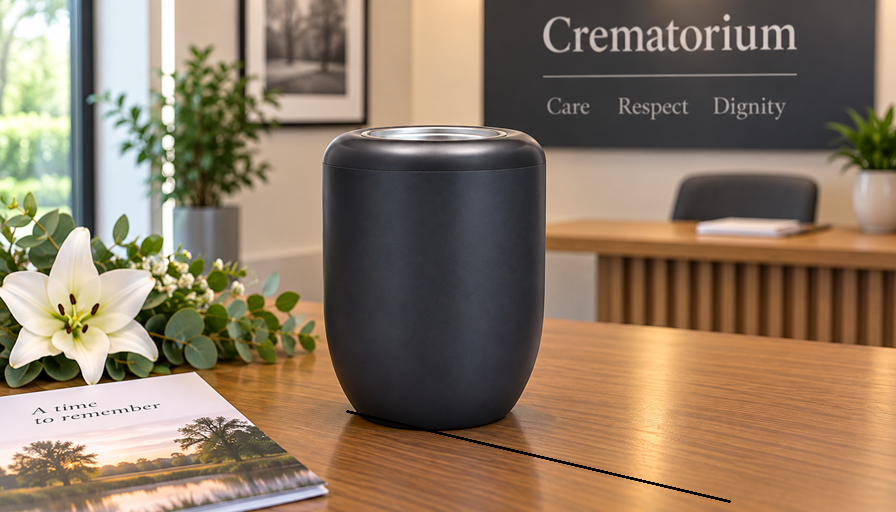
After a memorial service, many families choose a lasting keepsake that feels personal and comforting. Explore our collection of memorial jewelry and cremation urns, thoughtfully made to honor faith, love, and remembrance.
If you have any questions, comments, or feel certain information is missing after reading this post, feel free to contact us via the contact form.