
A Quiet Gift for Tomorrow: The Deeper Meaning of Leaving a Message for Loved Ones
Most of us live inside the rhythm of daily life. Focusing on what needs doing now, solving the small tasks that fill our calendars, celebrating ordinary moments, and moving forward without stopping for long reflection. Rarely do we ask what our voice might still offer to the people we love when we are no longer here to speak for ourselves.
Yet more individuals are beginning to understand the quiet power of leaving a message for their loved ones to read or hear after they are gone. Such a message is not an act of sorrow or fear, but a final gesture of clarity. It becomes a gentle bridge that carries love, wisdom, humor, and presence into a future where your physical self cannot go. It is a way of staying close when distance becomes permanent.
A message does not need to be poetic. It does not have to solve every unanswered question. It simply needs to sound like you. That authenticity is what transforms a message into a lasting gift. Something deeply personal, tender, and comforting for the people who will someday miss your voice.
This guide explores why people choose to leave messages, how these messages affect loved ones, the many different ways to create them, the questions to ask yourself while writing, and how to ensure your message is discovered at the right moment. It also touches on the emotional complexities of this choice, because leaving a message is an act of love, but also an act of honesty.
Why People Choose to Leave a Message
Every message left behind begins with affection. People want to make certain that their family and friends continue to feel connected to them after the final chapter of their life has been written. A message becomes a reminder that love does not dissolve, it changes form, but it does not disappear.
A Message Offers Emotional Clarity
Life moves quickly. Many of us carry unsaid thoughts, unfinished conversations, or a desire to express gratitude that never finds the right moment. A message provides emotional closure for the writer and the recipient. It fills the space that silence would otherwise leave behind.
A Message Preserves Personal Legacy
A legacy is not defined by money or possessions. It lives in the values you upheld, the beliefs that guided you, the stories that shaped your character, and the lessons you learned through joy and difficulty. When placed in writing or spoken aloud, these elements become part of the emotional inheritance you pass down.
A Message Brings Peace of Mind
For some, the act of writing or recording a message brings a sense of relief. It reduces the fear of leaving things unsaid. It provides reassurance that, even in absence, their voice can still soothe, guide, or inspire someone they love.
The Emotional Impact on Loved Ones
Grief unfolds differently for each person. Some grieve loudly. Others privately. Some become still, and others seek distractions. A message left behind can act as an anchor during the emotional turbulence that follows loss.
Your Voice Becomes a Touchstone
Hearing your voice or reading your handwriting can bring immediate calm. It is a reminder that although life has changed, the relationship continues in another form, what psychologists call a continuing bond. Your message becomes a stable source of comfort that loved ones can return to again and again.
Messages for Children Become Lifelong Companions
Parents who leave messages for their children often create letters or recordings that the child can revisit at different stages of life. A message written for a five-year-old may carry new meaning at age fifteen, and again at age thirty. The message matures with the child, becoming a companion rather than a relic.
Messages Can Accelerate Healing
Some people report that a heartfelt message helped them grieve more gently. A message can answer unspoken questions, ease emotional tension, or reaffirm a bond that fears to fade. It does not remove grief. Nothing can, but it can soften the sharpest corners of it.
Different Ways to Leave a Message
There is no single correct way to leave a message. What matters is choosing a form that matches your personality and your relationship with the recipient.
Handwritten Letters
A letter feels intimate. Your handwriting, your pacing, the imperfect lines that make the message uniquely yours.
Recorded Videos
A video captures your expressions, gestures, pauses, and smile. It can feel like sitting together again, even years later.
Audio Messages
For people who feel shy on camera, a warm voice recording can feel natural and soothing.
Journals or Notebooks
Some individuals create a longer collection of memories, reflections, or advice. A written legacy that can be passed down through generations.
Milestone Messages
Messages to be opened at specific life events:
- birthdays
- weddings
- graduations
- first day of school
- first heartbreak
- buying a first home
- difficult moments when your advice might be needed
These messages often become cherished keepsakes.
Digital Messages
Voice notes, scheduled emails, cloud-stored documents, or digital memory vaults allow you to update your message over time.
Incorporating Messages into Memorial Objects
Many families choose to keep handwritten notes or small letters inside:
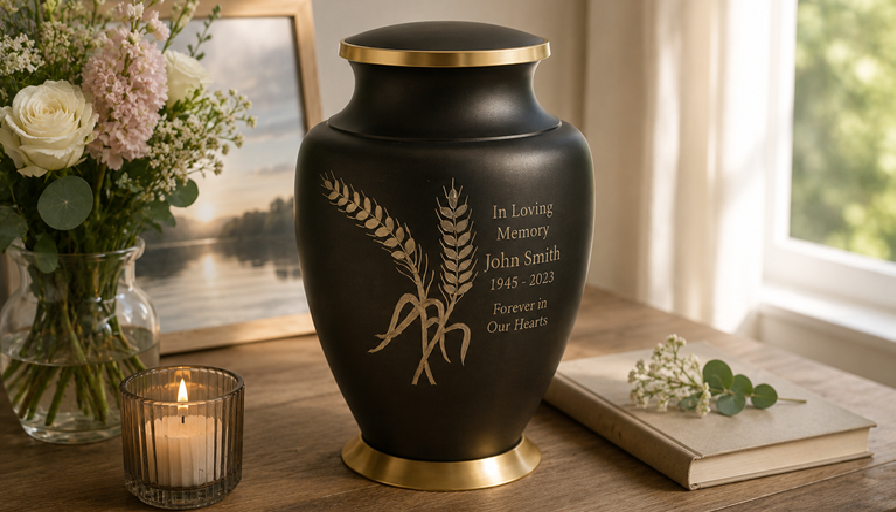
- keepsake urns
- urns with compartments
- memory boxes
- cremation jewelry that holds a short written line
This transforms the message into a physical part of a lasting memorial.
How to Begin When You Don’t Know What to Say
Most people feel pressure to write something profound. But messages that are simple, sincere, and imperfect often make the greatest impact.
Here are guiding prompts to help you begin:
- What is one thing you want your loved one to always remember?
- Which moment defines your bond?
- What part of your personality do you hope will stay with them?
- What would you say if you could offer comfort on a difficult day?
- What do you admire about them but never said out loud?
- What belief or value shaped your life and deserves to be passed on?
- What misunderstanding or silence would you like to soften or resolve?
Your message does not need to be long. Sometimes one honest paragraph carries more emotional truth than a carefully crafted essay.
When Is the Right Time to Create Your Message?
There is no ideal moment. Some people write theirs during peaceful times. Others feel inspired during major life transitions. Beginning early allows your message to evolve naturally and prevents the pressure of urgency.
Writing a message does not invite misfortune. It is an act of care, a way of organizing your thoughts and strengthening your legacy while you are still fully present.
How to Safely Store and Deliver Your Message
A message is only meaningful if it can be found.
Consider These Options:
- Keep it with your advance directives or end-of-life documents.
- Place it in a sealed envelope inside a memory box or keepsake urn.
- Store digital files in a password manager with a designated contact.
- Ask a trusted friend, relative, or executor to deliver it when the time is right.
- Speak to your funeral provider about including a message with memorial plans.
The goal is not secrecy, it is timing.
Potential Challenges: Emotional Nuance Matters
It is important to acknowledge that not every message will be received in the same way. Grief is complicated and relationships are layered.
Consider These Emotional Realities:
- A message may arrive before someone is ready to read it.
- Old conflicts or misunderstandings may color how your words are interpreted.
- A message that contains unexpected revelations may cause confusion rather than comfort.
- Humor may land differently when someone is grieving.
This does not mean your message should be avoided, only that it should be crafted with empathy, honesty, and awareness of your relationship.
The Beauty of Leaving Something Behind
Leaving a message is not about finality. It is about continuity, the continuation of your voice, your presence, and your influence in the lives of the people you cherish. Your words become a quiet companion on difficult days, a source of reassurance during uncertain moments, and a reminder that relationships do not end. They evolve.
A simple message, written or spoken with sincerity, can become a lifelong treasure.
If you have questions or feel something is missing, please reach out to us. We are here to guide you with compassion and clarity.
FAQ
Should I tell my family I created a message?
You can, but you don't have to. Some prefer the message to be a surprise; others feel better knowing it will be safely discovered.
Is a message the same as a legal document?
No. Emotional messages are not legally binding. They complement, but do not replace wills or official documents.
How long should my message be?
Length does not matter. Authenticity does.
Can I include the message with the urn or memorial object?
Yes. Many families keep letters or small notes inside mini urns, keepsake urns, or memory boxes.
What if I'm afraid of saying the wrong thing?
Start with kindness. Avoid unresolved conflicts if you cannot resolve them gently. Honest warmth rarely lands incorrectly.
Can I create multiple messages?
Absolutely, especially for milestones such as birthdays, graduations, or life transitions.
If you have any questions, comments, or feel certain information is missing after reading this post, feel free to contact us via the contact form.