Urns and Ashes in Cemeteries: A Clear Guide for Families
Where do ashes go after cremation?
After cremation, families are faced with a quiet but important decision: where the ashes should be placed. Some families choose to keep them at home. Others decide to scatter them in a place that held meaning. Many families choose a cemetery, where ashes can be buried, placed in a niche, or interred in a memorial garden.
A cemetery offers something private locations often cannot: a permanent, maintained, and recorded place of remembrance. Even if families move away, the ashes remain in one known location that future generations can visit.
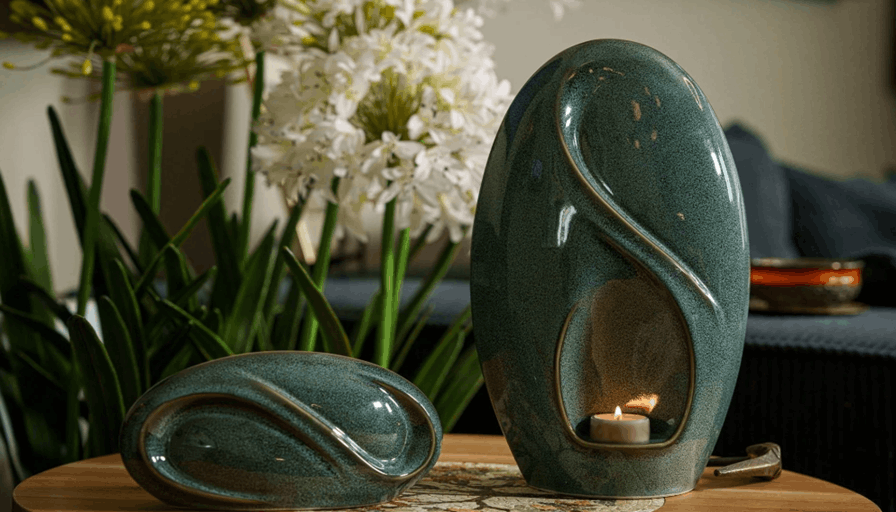
Early in this process, families usually encounter several urn types that shape what is possible later on: burial urns, columbarium urns, keepsake urns, and memorial urns. Understanding how these relate to cemetery rules helps prevent difficult or emotional changes later.
Quick answer:
After cremation, ashes can be buried in a cemetery grave, placed in a columbarium niche, or interred in a memorial garden. The urn used must meet the cemetery’s rules for size and material.
What does it mean to keep ashes in a cemetery?
Keeping ashes in a cemetery means the cremated remains are placed in a registered and managed location overseen by the cemetery authority. This may be:
- A grave, either new or existing
- A columbarium niche, also known as an urn wall
- A memorial garden or cremation plot
- A family vault or mausoleum
In all cases, the cemetery records who is placed there and maintains the location.
For many families, this provides reassurance. Children, grandchildren, and future relatives will always know where the ashes are, even many years later.
At legendURN, we work daily with families and cemeteries in both the United Kingdom and the United States, and this long-term clarity is one of the main reasons families choose cemetery interment.
Burial of an urn in a grave
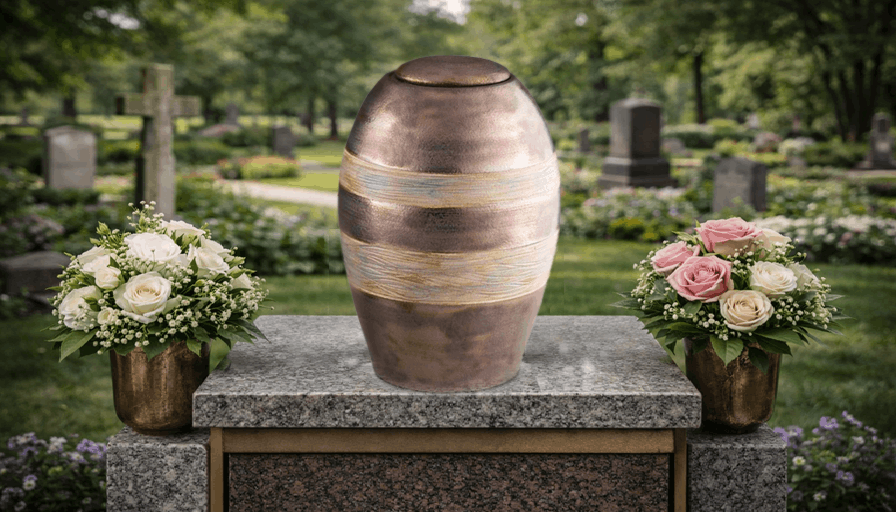
Burying an urn in a grave is one of the most traditional options. The ashes are sealed inside a burial urn and placed underground, either in a new grave or in an existing family plot.
Many graves allow multiple urns in addition to a coffin, but cemeteries usually regulate:
- How many urns may be placed in one grave
- How deep the urn must be buried
- Which materials are permitted
Because of these rules, urn material matters. Ceramic, wood, and biodegradable urns are commonly accepted for burial. Some cemeteries restrict or prohibit metal urns.
If burial is planned, choosing an urn specifically designed for underground placement helps avoid problems at the time of interment.
Browse Urns design for burials
Placement in a columbarium (urn wall)
A columbarium is a wall or building with individual niches designed to hold urns. Each niche has fixed internal dimensions and is usually sealed with a plaque.
Families often choose a columbarium when:
- Ground space is limited
- They want a visible, organised place of remembrance
- Multiple family members will be placed together over time
Because niches are small, columbarium urns are made to fit these exact dimensions. A standard urn is often too large.
Using a niche-sized urn from the start avoids the need to transfer ashes later, which many families experience as emotionally difficult.
Browse columbarium urns
Memorial gardens and cremation plots
Many cemeteries now offer landscaped areas specifically for cremation remains. These memorial gardens often feature trees, plaques, or flat markers rather than traditional headstones.
Depending on the cemetery, these plots may allow:
- Burial of a full urn
- Direct burial of ashes
- Placement of multiple family members in one plot
These areas are often chosen by families who prefer a quieter, more natural form of remembrance.
What kind of urn can be used in a cemetery?
Cemeteries are regulated burial grounds, not informal storage spaces. Their rules typically specify:
- Maximum urn size
- Approved materials
- Burial depth
- The number of urns allowed per location
- How plaques or memorials must be displayed
Most cemeteries publish these rules, and they can vary by location and type of cemetery. Always check the specific requirements before purchasing an urn.
Understanding the interment of ashes process early helps families make informed decisions.
Why urn choice matters more than families expect
The ashes themselves remain the same, but the urn determines what can be done with them.
Burial urns are made for soil and moisture.
Columbarium urns are sized for niches.
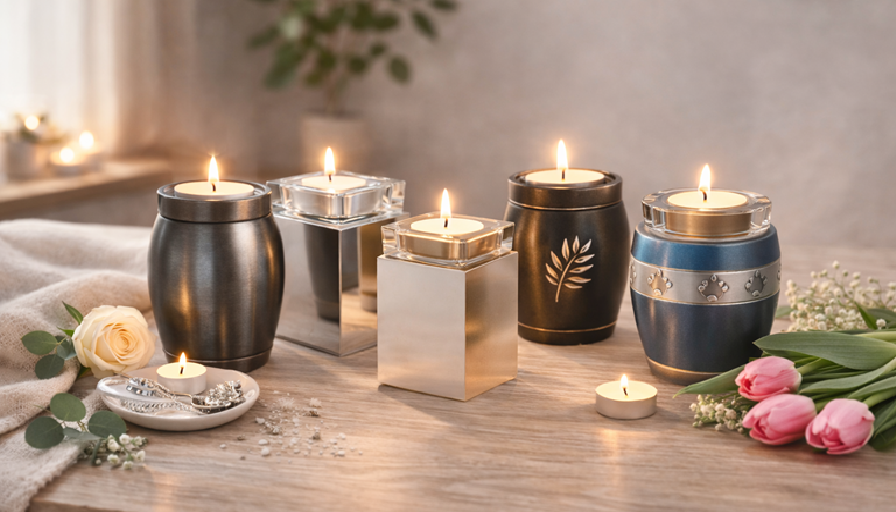
Keepsake urns hold small portions of ashes.
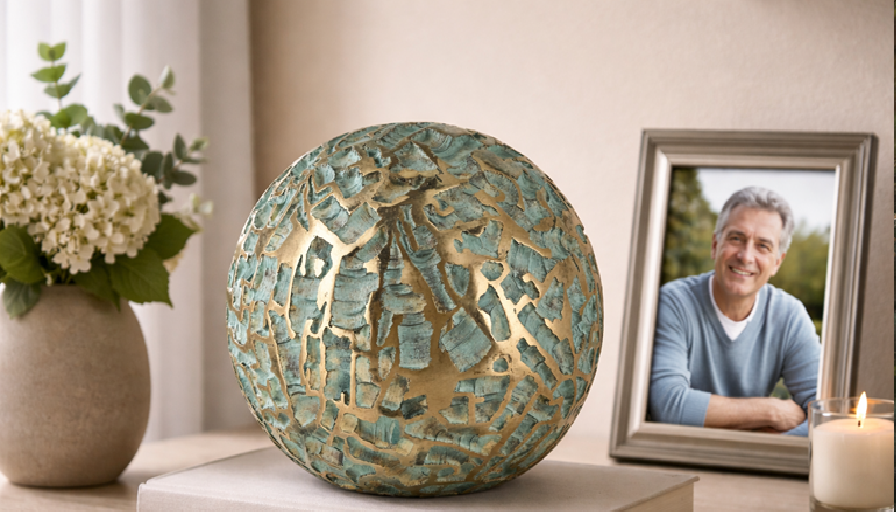
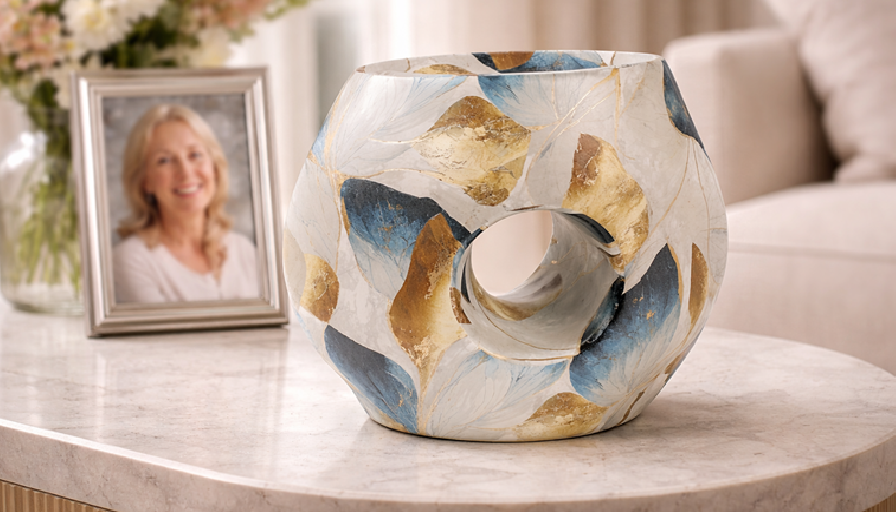
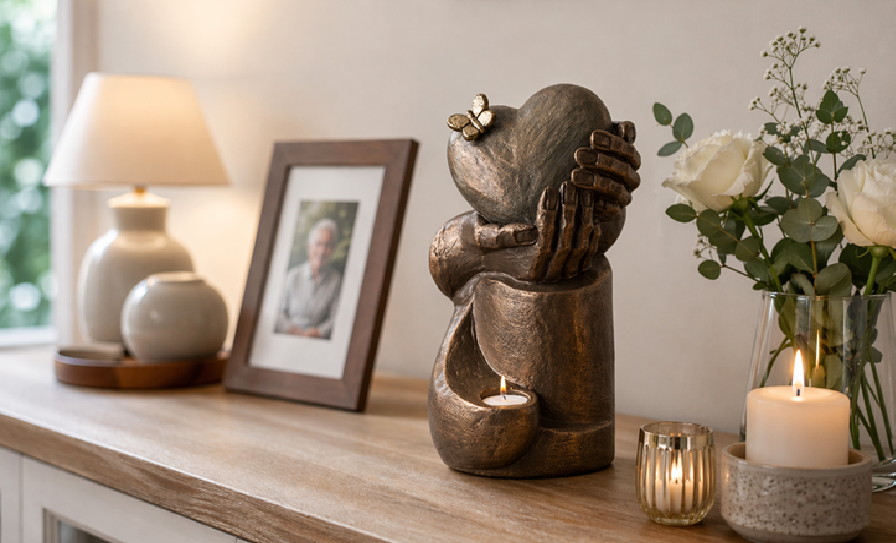
Memorial urns are designed for inscription and public display.
Choosing the right urn from the beginning prevents unnecessary handling of ashes later on.
When ashes are shared among family members
Many families choose to place most of the ashes in a cemetery while keeping a small portion at home. In these situations, a keepsake urn is often used.
A keepsake urn allows one person to keep a private remembrance while the main urn remains in the cemetery.
Browse keepsake urns
Real-life situations families often face
A widow places her husband’s ashes in a family grave and keeps a small keepsake urn at home.
Three siblings choose a city columbarium because none live near the original family plot.
A couple selects two matching burial urns for a cremation plot they plan to share in the future.
These decisions are common and meaningful, and they work best when urn choice and cemetery rules align.
Common mistakes families make
- Purchasing an urn before checking cemetery requirements
- Forgetting that columbarium niches have strict size limits
- Not planning ahead for keepsake urns
- Overlooking plaque or inscription rules
- Not considering long-term maintenance and accessibility
What happens during the interment of ashes?
- An interment date is scheduled
- The ashes are delivered in their urn
- The cemetery prepares the grave or niche
- A service may be held
- The urn is placed and sealed
- Cemetery records and memorials are updated

Frequently asked questions
Can ashes be buried in a normal grave?
In many cemeteries, ashes may be buried in a new or existing grave, but rules vary by location and grave type.
Do cemeteries accept biodegradable urns?
Most cemeteries accept biodegradable urns, especially in cremation gardens, but approval depends on local policy.
Can ashes be moved later?
Sometimes, but this usually requires cemetery permission and may be restricted by local regulations.
Is identification required?
Yes. Most cemeteries require a plaque or marker to ensure proper records.
Can families share one niche or plot?
Often yes, as long as space and cemetery rules allow it.
Keeping ashes in a cemetery gives families a stable and lasting place of remembrance. With the right urn and a clear understanding of cemetery rules, this choice remains practical, respectful, and meaningful for generations to come.
If you have any questions, comments, or feel certain information is missing after reading this post, feel free to contact us via the contact form.