
Pet Ashes Jewellery, Meaning, Practicalities and UK Guidance
The death of a pet often leaves more than sadness alone. It can also leave a quiet, difficult question in its place. How do you stay connected to a companion who shaped everyday life so deeply, once that companion is no longer there? For many people, ashes jewellery offers a gentle answer. It is personal, discreet, and easy to keep close without needing to explain it to anyone else.
For some, this kind of memorial feels more natural than a visible display at home. For others, it becomes a small and private part of daily life, something worn under clothing, held in the hand, or kept safely nearby. It does not replace grief, and it does not rush it. Instead, it offers one possible way to carry remembrance forward in a form that feels manageable and deeply personal.
This article explains what ashes jewellery for pets is, how it is used, what makes it meaningful to some people, and what practical and legal points matter in the UK.
What is ashes jewellery for pets?
Ashes jewellery is a piece of memorial jewellery designed to hold a very small amount of cremation ashes. In the case of a pet, this usually means a symbolic quantity from an individual cremation, placed inside a pendant, charm, ring, bead, or another small item intended for personal remembrance.
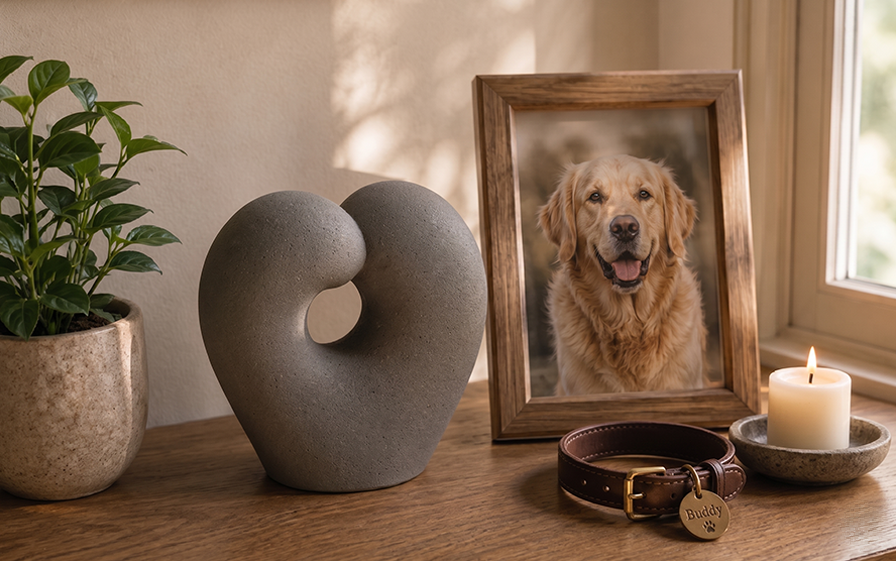
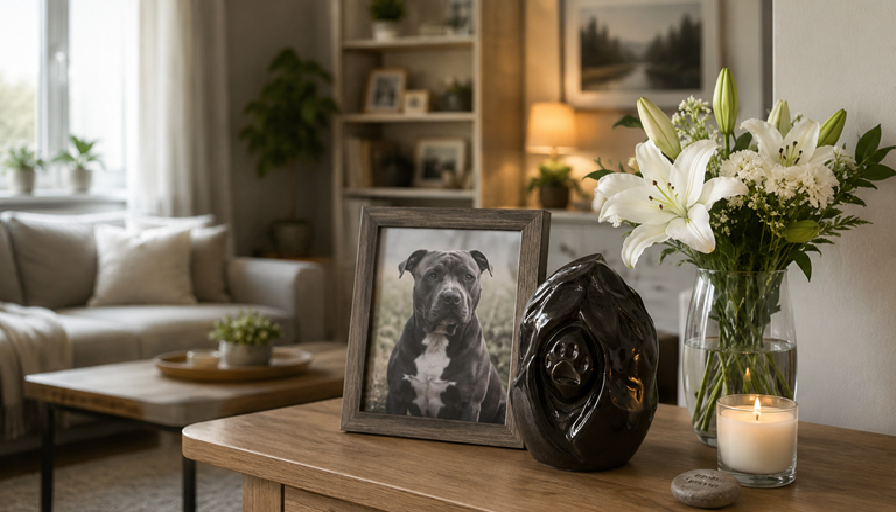
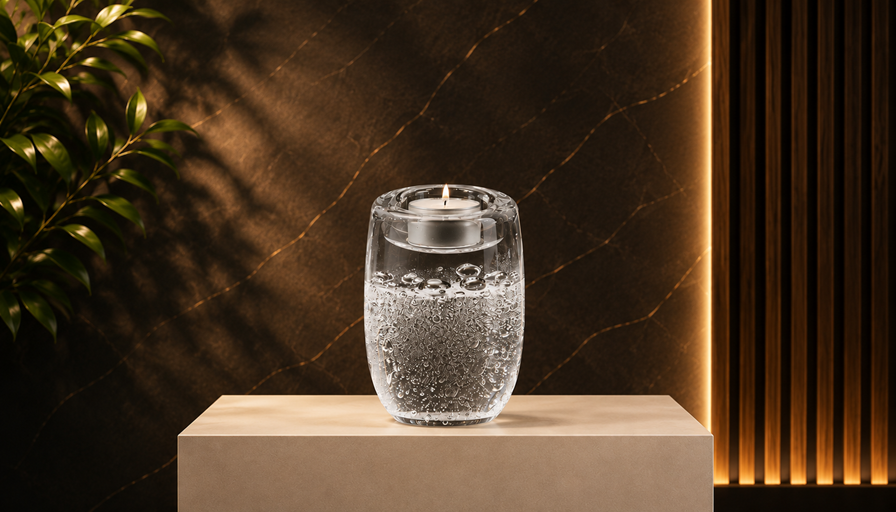
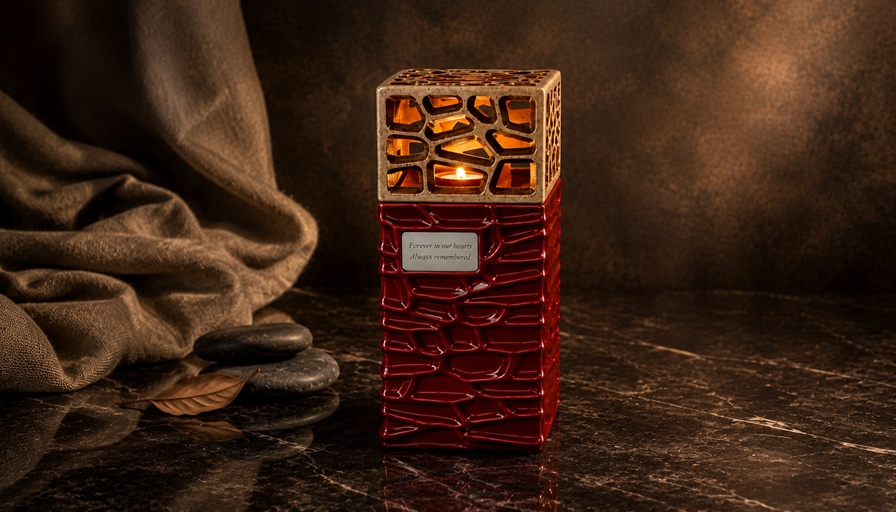
It is important to understand that ashes jewellery is not the same as a Cremation urn or an Urn for ashes. A Cremation urn is designed to hold all, or a much larger proportion, of the ashes. Ashes jewellery holds only a tiny amount. In many cases, it sits alongside other forms of remembrance, such as a full-size Cremation urn, an Urn for ashes kept at home, a keepsake urn, or another personal memorial.
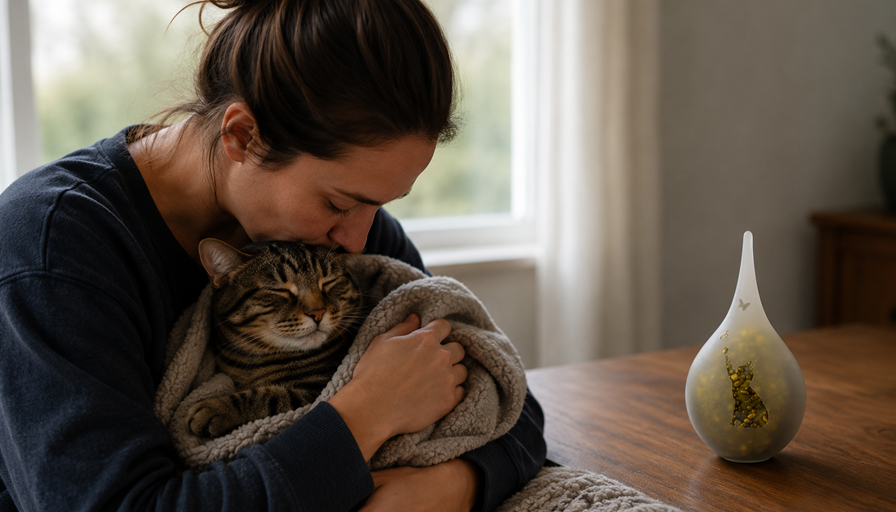
For readers exploring pet memorial jewellery more broadly, ashes jewellery is usually the most discreet and physically close form of remembrance, because it can be worn on the body or kept very near to you without drawing attention.
Why do people choose ashes jewellery after the loss of a pet?
People choose ashes jewellery for different reasons, and not all of them are easy to put into words. A pet is rarely just an animal in the background of life. A dog may have shaped the rhythm of every day. A cat may have been a constant presence in the home for years. Smaller pets can be no less important. Their absence changes the feel of ordinary life in a very immediate way.
That is one reason ashes jewellery can matter so much. It allows remembrance to move with you. It creates a sense of closeness that is quiet rather than public. For some people, it offers comfort during the return to normal routines. For others, it helps during moments that feel unexpectedly difficult, such as leaving the house alone for the first time, returning to work, or facing a familiar walk without the pet who used to share it.
What many people value is not visibility, but intimacy. Ashes jewellery tends to work inwardly rather than outwardly. To anyone else, it is often just a necklace, a ring, or a small charm. To the person wearing it, it can represent companionship, habit, affection, and the simple fact that the bond still matters.
What do a pet’s ashes actually represent?
After cremation, what remains is not soft tissue but the mineral remains of the skeleton, processed into a fine, clean material. In practical terms, pet ashes are dry, odourless, and typically pale in colour.
Emotionally, however, many people experience them very differently. Ashes often come to represent continuity rather than finality. They are not the pet as such, but they are still physically connected to the life that was shared. That is why some people find ashes more meaningful than a photograph alone, while others prefer not to keep ashes at all. Neither response is more correct than the other.
Ashes jewellery can be especially meaningful for people who want remembrance to feel present, but not necessarily visible in the home all the time.
How much ashes goes into pet ashes jewellery?
Only a very small amount of ashes is needed. In most cases, just a few grains or a fraction of a gram is enough. Emotionally, that is usually more than sufficient. The quantity may be small, but its significance is not.
This is one reason ashes jewellery works for almost any pet. Whether the ashes come from a dog, a cat, a rabbit, or another companion animal, the amount needed is so slight that the idea remains the same. It is symbolic, not practical. It represents the relationship, not the full physical remains.
The rest of the ashes can remain in a Pet urn, be placed in a keepsake urn, or be scattered or buried in a way that feels right for the owner.
Can pet ashes be shared between different memorials?
Yes. In most cases, pet ashes can be divided between several forms of remembrance.
That means a family does not have to choose only one option. Some people keep most of the ashes in an Urn for ashes at home, place a small amount in ashes jewellery, and reserve another small quantity for a keepsake urn. In families where more than one person is grieving, this can matter a great deal. One person may want a visible place of remembrance in the home, while another may prefer something more private and portable.
This flexibility is often one of the reasons ashes jewellery feels so suitable after the loss of a pet. It does not force a single way of remembering.
What type of ashes jewellery is best for a pet?
The best type depends less on fashion and more on how you want remembrance to fit into daily life.
Some people prefer a pendant worn under clothing, because it feels private and physically close. Others choose a bracelet charm or bead, especially if they already wear jewellery every day and want the memorial to blend into what they already use. A ring can feel especially personal, but some people prefer not to wear remembrance on their hands all the time. There are also small pieces of memorial jewellery that are not worn daily at all, but kept in a safe place and used only on certain days.
A helpful question is not simply, “What looks nicest?” but, “How do I want this remembrance to function?”
If you want constant closeness, a pendant is often the most natural choice. If you want something occasional and discreet, a charm or a small sealed piece kept safely at home may feel better. If you are choosing for more than one family member, different forms may suit different people.
What materials are used, and can you wear ashes jewellery every day?
Ashes jewellery for pets is often made from silver, stainless steel, gold, glass, ceramic, or a combination of these materials. Each has its own look, weight, durability, and maintenance needs.
Silver is often chosen for its classic appearance, though it may need more regular care. Stainless steel is popular because it tends to be durable and relatively low maintenance. Gold is often selected for emotional or symbolic reasons as much as for appearance. Glass and ceramic can be visually beautiful, but depending on the design, they may be better suited to careful or occasional wear rather than constant daily use.
Not every piece of ashes jewellery is designed to be worn in the shower, during exercise, or while sleeping. Water, perfume, lotions, and cleaning products can affect the material, the finish, or the seal. For that reason, many people choose to wear their jewellery only at selected times.
That is not a sign that the piece matters less. In many cases, it is the opposite. Wearing it carefully can be part of treating it with respect.
How do you fill ashes jewellery for a pet?
Ashes jewellery is usually filled with a tiny pinch of ashes through a small opening, often using a funnel, pin, or specialist filling kit. Some pieces are designed to be sealed by hand. Others are better filled by a crematorium, jeweller, or specialist memorial provider.
If you are filling it yourself, a calm setting helps. The ashes are very fine, and only a very small amount is needed. Many people place a soft cloth or tray underneath, simply to make the process feel less stressful and more controlled.
Some owners prefer to fill the jewellery themselves because it feels intimate and meaningful. Others find that moment too emotional and would rather let a professional do it. Both choices are completely reasonable.
A useful practical point is to ask in advance whether the jewellery is designed for self-filling, professional sealing, or both. That can make the decision much easier and prevent disappointment later.
Does ashes jewellery help with grief?
Sometimes yes, sometimes no. It depends entirely on the person.
For some people, ashes jewellery becomes a source of comfort almost immediately. It gives form to memory and makes the absence feel slightly less stark. For others, the idea feels too close, too emotional, or simply not right. There is nothing wrong with that. Grief does not move in a straight line, and remembrance does not need to look the same for everyone.
What ashes jewellery can do is offer a quiet structure. It does not demand attention in the way a large visible object sometimes can. It does not require words. It does not ask for public expression. Instead, it offers a private way to remain connected while ordinary life continues.
That can be especially meaningful for people who want their grief to remain personal.
Is pet ashes jewellery legal in the UK?
In practical terms, private remembrance of a pet’s ashes in the UK is generally treated far more freely than many people expect. The main regulatory focus is on how pet cremation is carried out, how crematoria and related sites are approved or managed, and how ashes are lawfully scattered or buried afterwards. UK guidance does not set out a comparable restrictive framework that would normally prevent an owner from keeping a pet’s ashes privately or placing a very small amount in ashes jewellery as a personal memorial. That is a practical reading of the guidance rather than a single line of statute, but it reflects how pet ashes are generally handled in the UK.
Where owners do need to be especially careful is in understanding the cremation arrangement itself. If you want ashes returned for a Cremation urn, an Urn for ashes, a keepsake urn, or ashes jewellery, you should ask clearly whether the service is an individual cremation. Under the APPCC Consumer Code, ashes from individual cremations are returned to owners, while ashes from communal cremations are not returned to pet owners.
If you later want to bury or scatter ashes, official UK guidance says that ashes from a single pet cremation may be buried or scattered on your own land without permission or any formal record. If you want to do this on someone else’s land, you should first obtain the landowner’s permission. If ashes are scattered over surface water, such as a river, the impact on wildlife, the environment, and other users should be kept minimal, and items such as wreaths or memorabilia should not be left behind.
What should pet owners ask a crematorium before choosing ashes jewellery?
A few clear questions can prevent uncertainty later.
Ask whether the cremation is individual or communal. Ask whether ashes will definitely be returned. Ask how the ashes will be packaged, and whether the crematorium can help with filling memorial jewellery. If you are considering more than one memorial, such as a Cremation urn and ashes jewellery, ask whether the ashes can be shared safely and respectfully for both purposes.
These are not difficult questions, but they matter. In practice, the biggest disappointment often comes not from the jewellery itself, but from assumptions made too early about the cremation service or what will be returned afterwards. The APPCC code exists partly to help owners understand this distinction more clearly.
Do you need to decide immediately after a pet dies?
No. This decision does not need to be made straight away.
Some people know immediately that ashes jewellery feels right. Others only consider it weeks or months later, once the first shock has eased. Some choose a Cremation urn first and make later decisions about memorial jewellery once they feel emotionally ready. That is often the better approach for people who do not want to feel rushed.
There is no correct timetable for remembrance. What matters is not speed, but fit. The right memorial should feel appropriate to the relationship, the person grieving, and the way they want memory to remain part of life.
Frequently asked questions about pet ashes jewellery
Is ashes jewellery suitable for any pet?
Yes. Because only a very small amount of ashes is needed, ashes jewellery can be used for dogs, cats, rabbits, and many other pets.
How much ashes is needed for pet ashes jewellery?
Only a tiny amount is needed, often a few grains or a fraction of a gram.
Can I keep the rest of the ashes in a Cremation urn?
Yes. Ashes jewellery is usually used alongside a Cremation urn, an Urn for ashes, or a keepsake urn, not instead of one.
Can pet ashes be split between family members?
Yes. In most cases, ashes can be shared between different memorials, so more than one person can keep a meaningful reminder.
Is ashes jewellery legal in the UK?
Generally, yes in private practice. The more important UK legal questions usually concern whether the cremation was individual or communal, and whether any later burial or scattering is done lawfully and with the landowner’s permission where required.
Can I wear pet ashes jewellery every day?
Sometimes, but not always. It depends on the material, the closure, and whether the piece is designed for constant wear or occasional use.
Do I have to fill the jewellery myself?
No. Some owners do, but many prefer to ask the crematorium or memorial jewellery provider to do it for them.
Conclusion
Ashes jewellery for pets is a personal form of remembrance that offers closeness in a small and often very discreet way. For some people, it becomes part of daily life, quietly present and deeply meaningful. For others, it remains one possible option among several, alongside a pet urn, a keepsake urn, or another form of memorial jewellery.
What matters most is not the type of memorial in itself, but the relationship behind it. The right choice is the one that allows remembrance to feel natural, respectful, and bearable in everyday life.