Traditional vs Contemporary Cremation Urns: How to Choose a Style That Feels Right
Choosing a cremation urn is not only a practical decision. It is also a decision about memory, setting, personality, and the way a loved one will continue to be represented in daily life. For many families, one of the first choices is whether to select a traditional cremation urn or a more contemporary design.
Both styles serve the same essential purpose, to hold cremated ashes safely and respectfully. Yet they differ greatly in appearance, symbolism, emotional tone, and how they fit into a home, a columbarium, a memorial service, or a private remembrance space.
A traditional urn often feels familiar. It may follow classic shapes, use established materials, and reflect long-standing funeral customs. A contemporary urn usually takes a more modern approach. It may be minimalist, sculptural, nature-inspired, or designed to blend into an interior as a refined object of remembrance.
Neither style is better than the other. The right choice depends on the person being remembered, the place where the urn will be kept, and the feeling the family wants the memorial to express.
Why the style of an urn matters
At first, style may seem like a purely visual choice. In reality, the design of an urn can influence how people experience remembrance over time.
An urn that is kept at home may become part of the room around it. It may be seen every day, placed on a shelf, sideboard, mantelpiece, or in a dedicated memorial corner. In that setting, the design needs to feel natural to live with. Some families want the urn to be clearly recognizable as a memorial object. Others prefer a design that is more discreet, artistic, or integrated into the interior.
In a funeral service, the urn may have a different role. It may be placed at the centre of a ceremony, surrounded by flowers, photographs, candles, or personal objects. In that moment, a more traditional form can feel appropriate because it is instantly understood. A contemporary urn can also be suitable, especially when it reflects the character, creativity, or personal taste of the person who has died.
For burial, placement in a columbarium, or long-term storage, practical considerations become just as important as appearance. Material, size, durability, closure, and local cemetery or crematorium requirements should all be checked before making a final choice.

What defines a traditional cremation urn?
Traditional cremation urns are usually recognized by their familiar form. Many have a rounded body, a narrower neck, and a defined lid. They are often made from materials such as brass, bronze, ceramic, marble, natural stone, wood, or metal. Decorative details may include engraving, floral motifs, religious symbols, borders, polished finishes, or hand-applied ornamentation.
This style has remained popular because it offers a sense of continuity. It connects with customs that many people already associate with funerals, remembrance, and formal memorial settings.
Traditional urns often have the following characteristics:
- A classic shape with a visible lid
- Balanced proportions and symmetrical design
- Durable materials such as metal, marble, ceramic, stone, or wood
- Decorative details, engraving, patterns, or symbolic motifs
- A formal appearance suited to ceremonies, niches, or memorial spaces
For some families, a traditional urn feels reassuring because it looks familiar. It does not need explanation. It clearly communicates respect, permanence, and remembrance. This can be especially important in families where several generations are involved in the decision, or where religious, cultural, or ceremonial expectations play a role.
A traditional urn may also suit someone who appreciated classic interiors, formal objects, heritage materials, or timeless design. It can feel appropriate for a person whose life was marked by tradition, dignity, discipline, faith, or a strong connection to family customs.

What defines a contemporary cremation urn?
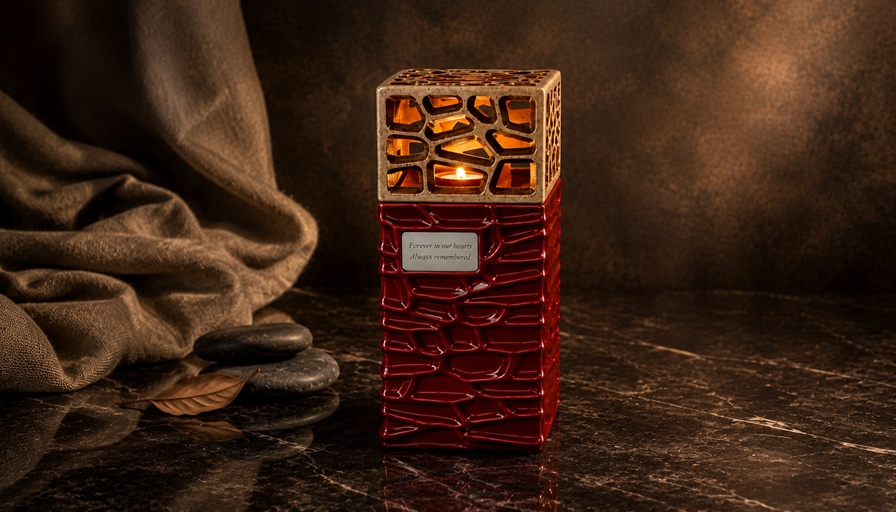
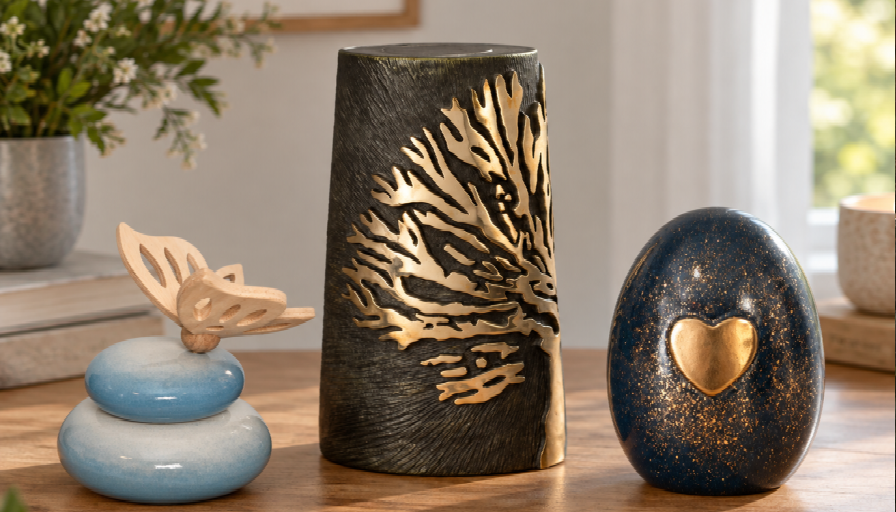
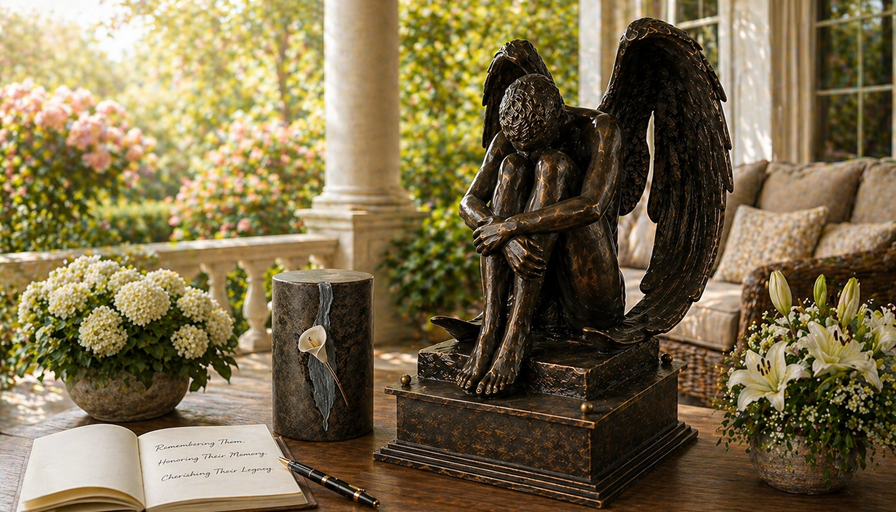
Contemporary cremation urns take a broader and more design-led approach. They do not always follow the familiar urn silhouette. Some have organic shapes, clean lines, abstract forms, matte finishes, or sculptural profiles. Others are designed to look more like a piece of ceramic art, a natural object, or a discreet memorial sculpture.
The materials can vary widely. Contemporary urns may be made from ceramic, glass, biodegradable materials, natural fibres, wood, stone, metal, or innovative composite materials. The focus is often less on decoration and more on shape, texture, symbolism, and how the urn relates to the space around it.
Contemporary urns often have the following characteristics:
- Minimalist, abstract, or sculptural forms
- Clean finishes and understated details
- Natural, organic, or innovative materials
- Symbolism expressed through shape, texture, colour, or concept
- A design that can blend into a modern home interior
A contemporary urn can be especially fitting when the person being remembered had a strong individual style. It may suit someone who loved modern design, art, nature, architecture, simplicity, or originality. It can also appeal to families who do not want the urn to feel overly formal or visibly traditional.
Some contemporary urns are intentionally subtle. They allow remembrance to be present without making the room feel like a formal memorial space. This can be comforting for families who want to keep a loved one nearby but prefer a design that feels personal and integrated into everyday life.

The emotional difference between traditional and contemporary urns
The difference between traditional and contemporary urns is not only about shape. It is also about emotional language.
A traditional urn often expresses remembrance through recognition. Its familiar form can bring a sense of order, dignity, and ceremony. It may feel appropriate when the family wants a design that clearly belongs within established funeral traditions.
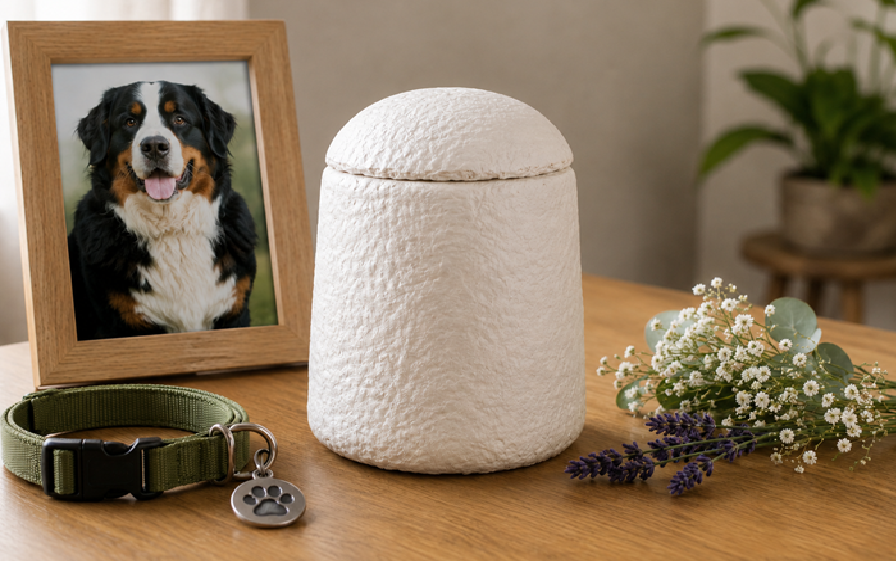
A contemporary urn often expresses remembrance through interpretation. Instead of saying “memorial” in a direct visual way, it may suggest memory through movement, simplicity, material, or symbolic form. For example, a rounded ceramic shape may feel gentle and protective. A biodegradable urn may express connection to nature. A sculptural urn may reflect creativity, individuality, or a life that did not fit standard categories.
This distinction matters because families do not all grieve or remember in the same way. Some find comfort in continuity. Others find comfort in choosing something that feels more personal and less expected.
A good urn choice does not follow a rule. It reflects a relationship.
How to choose between traditional and contemporary styles
When choosing between styles, it helps to begin with the setting rather than the product itself. Where the urn will be placed often determines which design feels most suitable.
Ask yourself the following questions:
- Will the urn be displayed at home?
- Will it be placed in a columbarium or memorial niche?
- Will it be buried?
- Will it be used during a funeral or memorial service?
- Should the urn be visible as a memorial object, or more discreet?
- Did the person prefer classic design, modern interiors, nature, art, or simplicity?
- Do several family members need to feel comfortable with the choice?
- Is there a wish to divide ashes among family members using keepsake urns?
If the urn will be used in a formal ceremony, a traditional urn may feel clear and appropriate. If it will be placed in a modern home, a contemporary urn may suit the surroundings better. If it will be kept in a private room, the emotional connection may matter more than whether the style is traditional or modern.
It is also worth considering whether the urn should reflect the person’s taste or the family’s living environment. Ideally, it does both. But when that is not possible, the most thoughtful choice is usually the one that feels most honest to the life being remembered.
Practical considerations beyond style
A beautiful urn still needs to be practical. Before making a decision, check the following details carefully.
Size and capacity
The urn must have enough capacity for the ashes it is intended to hold. Adult urns, keepsake urns, companion urns, and pet urns all differ in volume. If ashes will be divided among several relatives, a smaller main urn or several keepsake urns may be more appropriate.
Always check the listed capacity before ordering. In the United States, capacity is often shown in cubic inches. In the United Kingdom and Europe, litres are also commonly used.
Placement
An urn for home display may need a different design from one intended for burial or a columbarium. For a niche, measurements are especially important. The urn must fit the available space, including height, width, and depth.
For home placement, consider weight, stability, visibility, and whether the design suits the room where it will remain.
Material
Different materials have different qualities. Metal and stone often feel durable and substantial. Ceramic can offer refinement and artistic variation. Wood may feel natural and personal. Biodegradable urns are intended for a specific purpose, such as burial in soil or water, depending on the design.
If the urn will be buried, placed outdoors, or used for scattering, the material should be chosen with that purpose in mind.
Closure and handling
Some urns have threaded lids, others have removable lids or sealed closures. If the urn may be moved, transported, or placed in a public setting, a secure closure is important.
If ashes are transferred at home, families may prefer an urn that is simple to open and close. If a funeral director or crematorium will handle the transfer, the closure may be less of a concern, but it is still worth checking.
Personalisation
Both traditional and contemporary urns can often be personalised. Engraving, nameplates, symbols, dates, colours, or custom details may make the urn feel more connected to the individual.
Traditional urns often use visible engraving or plaques. Contemporary urns may include more subtle forms of personalisation, such as an inscription on the base, a discreet metal plate, or a custom finish.
Common misconceptions about urn styles
One misconception is that traditional urns are automatically more respectful. Respect does not come from the shape of the urn alone. It comes from the intention behind the choice, the care taken in selecting it, and the meaning it holds for the family.
Another misconception is that contemporary urns are less suitable for formal occasions. In reality, many contemporary urns are designed with great care and can be entirely appropriate for a funeral service, memorial ceremony, or home remembrance setting.
There is also a belief that modern urns are less durable. This depends entirely on the material and construction. A contemporary ceramic, metal, stone, or wooden urn can be just as lasting as a traditional one. At the same time, some contemporary urns are intentionally biodegradable and are not meant to last forever. That is not a weakness, but a different purpose.
A final misconception is that the family must choose one style category clearly. Many urns sit somewhere between traditional and modern. These designs can be especially helpful when one family member prefers a classic memorial object and another prefers something more understated.
Blending tradition and modern design
The choice does not always need to be traditional or contemporary. Many urns combine both qualities.
An urn may have a classic shape but a modern matte finish. It may use traditional bronze or ceramic in a cleaner, more minimalist way. It may include symbolic decoration without appearing ornate. It may have the proportions of a traditional urn but the subtle appearance of a modern interior object.
These hybrid designs can be a thoughtful solution for families who want familiarity without formality, or personal expression without losing a sense of ceremony.
They can also work well in homes where the urn needs to be both meaningful and visually balanced. A design that is too formal may feel out of place in a modern interior. A design that is too abstract may not feel clear enough for every family member. A blended style often creates a comfortable middle ground.
Traditional, contemporary, or something personal?
The best urn is rarely chosen by style category alone. It is usually chosen because something about it feels appropriate.
That may be the material. A wooden urn may suit someone who loved craftsmanship or nature. A marble urn may feel right for someone associated with strength and permanence. A ceramic urn may appeal because of its handmade character. A minimalist urn may suit someone who valued simplicity. A decorative traditional urn may be the right choice for someone whose life was closely connected to family, faith, or ceremony.
Rather than asking only, “Is this traditional or contemporary?”, it may be more useful to ask:
Does this urn feel like a fitting way to remember this person?
That question often leads to a clearer answer.
FAQ: Traditional and contemporary cremation urns
Is a traditional urn required for a funeral service?
No. A traditional urn is not required for a funeral or memorial service. Families may choose any suitable urn that fits the tone of the ceremony and any practical requirements set by the crematorium, funeral home, cemetery, or venue.
Can a contemporary urn be used for burial?
Yes, provided the material is suitable for burial and accepted by the cemetery or burial site. Some contemporary urns are made specifically for burial, including biodegradable designs. Others are intended for indoor display and may not be appropriate for ground burial.
Are contemporary urns suitable for display at home?
Yes. Many contemporary cremation urns are designed specifically for home display. They may resemble ceramic art, a sculptural object, or a subtle decorative piece, making them suitable for families who want remembrance to be present without a highly formal appearance.
Are traditional urns only suitable for religious families?
No. Traditional urns are used by both religious and non-religious families. Their appeal often lies in familiarity, dignity, and ceremonial presence rather than religious meaning alone. Some traditional urns include religious symbols, but many do not.
Can ashes be divided between different urns?
Yes. Many families choose one main urn and several keepsake urns so that ashes can be shared among close relatives. This can be especially helpful when family members live in different places or want their own personal memorial object.
Which urn style is best for a modern interior?
A contemporary or hybrid urn often fits most naturally into a modern interior. However, some traditional urns with clean lines, simple finishes, or natural materials can also work well. The best choice depends on the room, the placement, and the level of visibility the family prefers.
Can an urn be personalised?
Yes. Many urns can be personalised with a name, date, short inscription, symbol, or engraving. The options depend on the material and design. Metal, wood, stone, and some ceramic urns are often suitable for personalisation, although the method may vary.
A considered choice that reflects memory and setting
Choosing between a traditional and contemporary cremation urn is not about following the correct style. It is about finding the design that feels most appropriate for the person, the family, and the place where remembrance will continue.
A traditional urn may offer familiarity, ceremony, and a sense of continuity. A contemporary urn may offer individuality, subtlety, and a closer connection to modern living spaces. A hybrid design may bring both together in a balanced and thoughtful way.
Take time to compare different shapes, materials, colours, and finishes. Sometimes the right choice becomes clear only when several styles are viewed side by side. What matters most is that the urn feels respectful, suitable, and true to the memory it represents.
If you are unsure which style would suit your situation, you are welcome to contact us for personal guidance. We can help you compare options and choose an urn that feels fitting in both appearance and meaning.