Too Much Ash for the Urn, What Now?
After a cremation, families receive the ash of their loved one in a temporary container provided by the crematorium. The choice of a permanent urn often follows later. Sometimes it is only then that it becomes clear that not all of the ash fits into the selected urn. This can feel unsettling, especially when the urn was chosen with care.
This situation is more common than many people realise and can usually be resolved. Below, we explain why this happens, which options are available, and what to consider with each choice.
Why Does Not All the Ash Fit in the Urn?
Not every urn is designed to hold the full amount of ash. Capacity varies by model and intended use, such as a standard urn, a companion urn, or a keepsake urn.
The amount of ash depends on several factors, including:
- body weight and bone density
- the cremation process and post-cremation processing of bone fragments
- the coffin and any materials or personal items placed inside
As general guidelines:
- adults: about 3 to 3.5 litres, or roughly 180 to 220 cubic inches
- children: less, depending on age
- pets: strongly dependent on size and weight
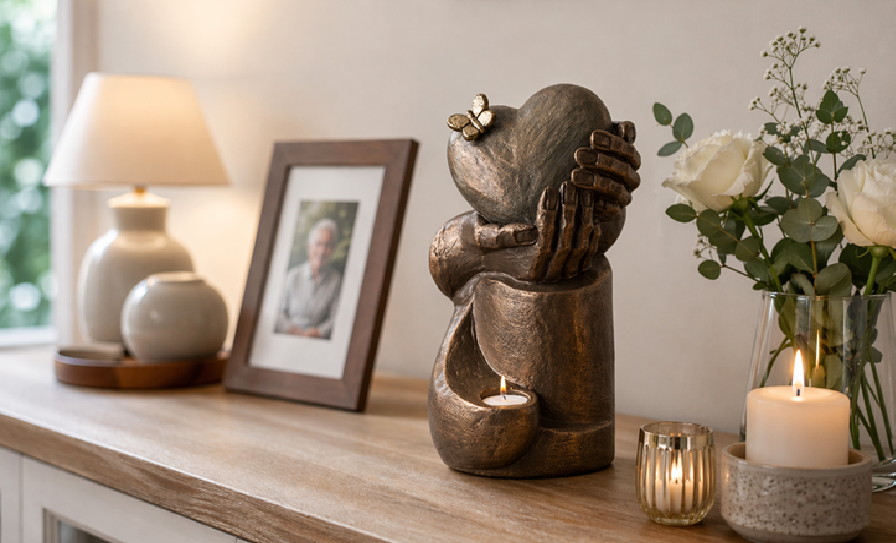
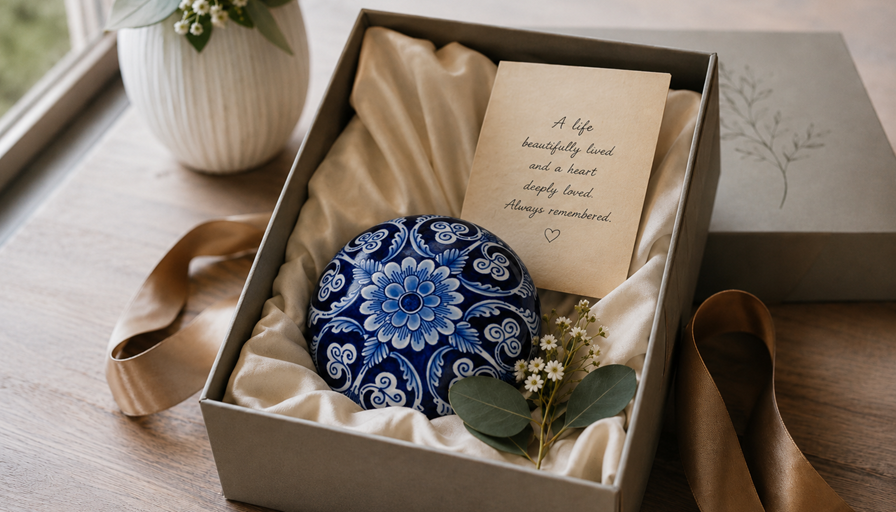
Design urns, keepsake urns, and sculptural urns often have a smaller capacity and are not always intended to hold the full amount of ash.
Option 1: Choosing a Larger Urn
The most straightforward solution is choosing an urn with sufficient capacity. Many urns are available in multiple sizes within the same design or collection.
This option is suitable if:
- you wish to keep all of the ash together
- the urn will have a permanent place, such as at home or in a columbarium
Through this link, you can find background information on the amount of ash produced after cremation, along with our urn size calculator.
Option 2: Dividing the Ash Between Multiple Urns
Dividing the ash is a conscious and personal choice for many families.
Common combinations include:
- one main urn holding most of the ash
- keepsake urns for children or close relatives
- an urn combined with cremation jewellery
This option allows multiple people to keep a tangible remembrance close.
Option 3: Keeping Part of the Ash and Scattering the Rest
Another option is to keep part of the ash and scatter the remaining portion.
For example:
- part placed in an urn or keepsake urn
- the remainder scattered in a meaningful location
This can be done shortly after cremation or at a later time. Ash can be safely stored for an extended period until you feel ready to take the next step.
Always check local regulations and any crematorium policies before scattering ashes, as rules can vary by location. For many families, scattering feels like the most fitting choice. Because legal requirements differ by country and by setting, we have written two clear guides outlining what to consider in the United States and in the United Kingdom.
Option 4: Temporary Storage in the Original Container
If you do not wish to decide right away, that is completely understandable. The ash can remain safely and respectfully in the original temporary container.
This gives you:
- time to reflect calmly
- space for emotions to settle
- flexibility to make a decision later
There is often no immediate need to determine a final destination.
Option 5: Compacting the Ash with a Small Amount of Water
In limited cases, a small amount of water is added to the ash to reduce volume. Ash consists largely of calcium-based compounds. Adding water allows trapped air between particles to escape, causing the ash to settle more compactly.
This method is used only:
- when there is a minor capacity shortfall
- with care and restraint
- preferably by a funeral professional or specialist
Once fully dry, the ash generally remains stable.
Important Warning
Compacting ash with water is not recommended if you may wish to transfer the ash later. Moisture can cause the ash to harden into a solid mass, making later removal difficult or impossible without damaging the urn.
This method is also not advised for outdoor placement. Frost and weather exposure increase the risk of damage. Residual moisture combined with cold can cause internal stress, leading to:
- discolouration
- cracks
- fractures
- breakage
This risk is especially present with:
- ceramic
- porcelain
- natural stone
- other porous materials
Therefore:
- avoid this method for outdoor use
- consider it only for indoor placement under stable conditions
- always consult a professional first
Option 6: Alternative and Symbolic Memorial Options
Beyond traditional urns, there are other ways to keep or commemorate part of the ash, such as:
These options are often combined with a different destination for the remaining ash.
Frequently Asked Questions (FAQ)
Is it a problem if not all of the ash is placed in one urn?
No. Dividing ash is a common and widely accepted choice. There is no general requirement to keep all of the ash together.
Can ash get wet?
Technically, ash can be moistened, but this is not standard practice and requires caution. It is not recommended for urns placed outdoors.
Can I choose a different urn later?
Yes. Ash can remain temporarily in the original container until you are ready to make a final decision.
Are there legal requirements for what I can do with the ash?
Rules vary by country, state, and local authority. Crematorium policies and local regulations may apply to storing, dividing, or scattering ash. A funeral director or crematorium can advise you on what is permitted where you live.
In Closing
Having too much ash for an urn is not a problem, but a moment to pause and consider what feels meaningful to you. There is no right or wrong solution, only a choice that fits your wishes.
Take your time, seek clear guidance, and choose an option that brings peace of mind. A respectful memorial does not need to be decided in haste.
If you would like help choosing between a full-size urn, a keepsake urn, or a companion urn, our blog “FAQ about buying urns, keepsake urns and companion urns” offers clear, practical answers.