How long can a crematorium hold ashes in Ireland?
There is no single collection period that you should assume applies to every crematorium in the Republic of Ireland. The practical arrangements depend on the crematorium, the funeral director and the instructions given when the cremation is arranged.
Some crematoria set a specific collection period. Dublin Cemeteries Trust, for example, currently states on its cremation application that ashes being collected by the applicant or an authorised representative must be collected within four weeks. The Island Crematorium in Cork states more generally that the crematorium or funeral director will retain the ashes for a short period so that the family has time to make appropriate arrangements.
This means that if you are not yet ready to decide what should happen to the ashes, the safest approach is to contact the crematorium or funeral director and agree what happens next rather than assuming the ashes will remain there indefinitely.
In short: ask when the ashes should be collected, whether they can be held for longer if necessary and who you need to contact if your plans change. You can also usually collect the ashes in their temporary container and choose their permanent destination later.
This guide applies to the Republic of Ireland. Cremation arrangements in Northern Ireland are separate and should be checked with the relevant crematorium or council.
You do not need to choose an urn before collecting the ashes
One distinction can remove much of the pressure: collecting the ashes and deciding their permanent destination are two separate decisions.
Cremated remains are normally released in a suitable temporary urn, casket or container. You therefore do not have to choose a decorative permanent urn simply because the ashes are ready to be collected.
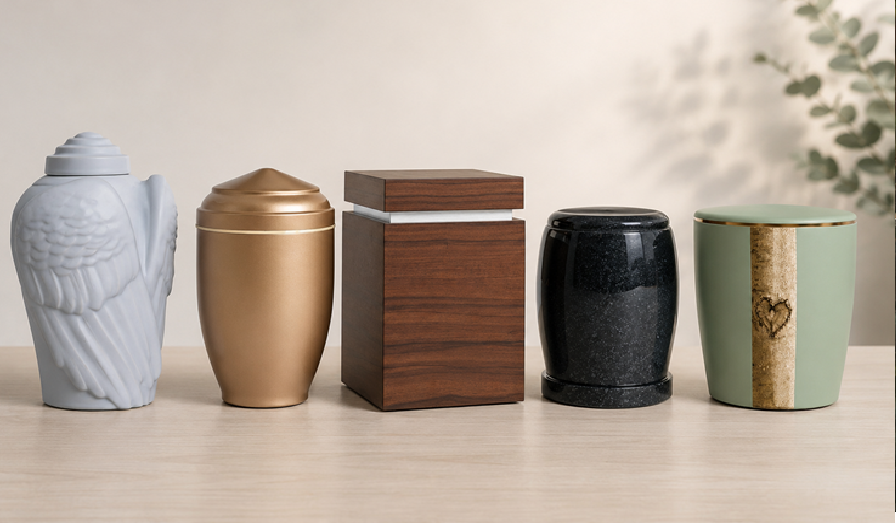
You can collect them first and later decide whether to keep all or most of the ashes in a cremation urn for ashes, retain a smaller portion in keepsake urns for ashes, divide some between relatives, arrange burial or interment, or use a scattering urn or scattering tube at a later date.
This can be particularly helpful if family members still need to discuss the options, the final resting place has not yet been arranged or you simply want more time before choosing an urn.
What should you ask the crematorium or funeral director?
If you know that you are not ready to collect the ashes or make a final decision, ask a few practical questions:
- When will the ashes be ready for collection?
- By what date should they normally be collected?
- Can they remain with you for longer if necessary?
- Who is authorised to collect the ashes?
- Will identification or written authorisation be required?
- What should I do if I need to change the arrangements?
These questions help separate two issues that are easily confused: when the ashes become available and how long they can remain in the care of the crematorium or funeral director.
How long do Irish crematoria hold ashes?
Published procedures show why it is better to check the individual crematorium than rely on a general rule.
| Example | Published arrangement | What it means in practice |
|---|---|---|
| Dublin Cemeteries Trust | Its current cremation application states that ashes being collected by the applicant or an authorised representative must be collected within four weeks. | If you need longer, contact the crematorium rather than assuming that the four-week period will automatically be extended. |
| The Island Crematorium, Cork | It states that the crematorium or funeral director will retain the ashes for a short period to allow the family to make appropriate arrangements. | The precise period should be confirmed directly because no fixed number of weeks is stated. |
These are examples of individual crematorium procedures, not a national Irish time limit. Another crematorium may follow a different collection process.
When are ashes ready for collection after cremation?
The date on which ashes become available is not the same as the deadline for collecting them.
The Island Crematorium states that ashes are generally available for collection after 24 hours. Mount Jerome Crematorium in Dublin states that ashes are normally available three to four working days after the cremation service. Other crematoria may use different timescales.
Your funeral director will normally be able to tell you when the ashes are expected to be ready and whether the funeral director or a family member will collect them.
Useful to know: if a crematorium says that ashes are available three or four days after cremation, this does not mean that you have only three or four days to decide what to do with them. Availability and the collection period are different things.
Can the funeral director keep the ashes while you decide?
Depending on the arrangements, the funeral director may collect the ashes from the crematorium on behalf of the family. The Island Crematorium, for example, specifically refers to either the crematorium or funeral director retaining the ashes for a short period while arrangements are made.
If the funeral director will hold the ashes, ask how long they can remain there and who will eventually be permitted to collect them. Do not assume that the crematorium's collection policy and the funeral director's own arrangements are identical.
This may be useful if relatives live abroad, a family grave still needs to be arranged or the family plans to hold a memorial or scattering ceremony at a later date.
Should you leave the ashes there or collect them first?
Either option can be practical. The more useful question is why you need extra time.
Leave them temporarily
This may be the simplest option if you only need a short period and the crematorium or funeral director has confirmed that the ashes can remain safely in their care.
Collect them first
This separates the collection arrangements from the permanent decision and gives you more time to choose an urn, burial place or scattering location.
Keep several options open
You can later decide to keep all the ashes together, divide a small amount between relatives, arrange burial or scatter some or all of them.
If your main reason for waiting is that you have not yet chosen a permanent urn, collecting the ashes first is often a practical solution. They can remain securely in their temporary container while you compare size, material, design and where the urn may eventually be placed.
Can you keep cremation ashes at home while you decide?
In practice, many families in Ireland keep cremation ashes at home after they have been released by the crematorium or funeral director. This can be a temporary arrangement while a later decision is made, rather than a permanent choice.
The Island Crematorium includes keeping ashes at home among the options available to families. If you do bring the ashes home, keep the temporary container somewhere dry, stable and secure. There is no need to transfer the ashes into another urn immediately.
For more detailed practical guidance, see our guide to keeping cremation ashes at home in Ireland.
What if you still do not know what to do with the ashes?
You do not have to answer every question at once. Start with what you already know about how much of the ashes you want to keep and where they may eventually go.
Keeping all or most of the ashes together
If the ashes will remain together, a full-size cremation urn is usually the relevant category. For one adult, many full-size urns have an internal capacity of approximately 3 to 3.5 litres, although the actual volume varies.
The crematorium or funeral director can give the most useful indication for the individual cremation. If you are unsure about capacity, use our urn size guide before choosing.
Keeping a smaller amount
If several relatives would each like a personal remembrance, the ashes can be divided. A main urn may hold most of the ashes while one or more keepsake urns hold smaller portions. Ashes jewellery is intended for only a very small symbolic amount.
Always check the stated capacity of an individual keepsake before ordering. A keepsake urn is not designed to hold the complete amount of ashes from an adult cremation.
Burial or interment
Ashes may be buried or interred in a cemetery, burial ground, family grave or other designated memorial setting, depending on the arrangements available.
Before buying the permanent urn, ask the cemetery, parish, local authority or other organisation responsible for the site whether there are requirements relating to urn dimensions, material or the way the interment must be arranged.
Scattering the ashes later
If you intend to scatter the ashes but have not yet chosen the date or place, they can be collected first and the scattering arranged later.
A scattering tube or scattering urn can make transporting and releasing the ashes more controlled. Before scattering, check who owns or manages the intended location and whether permission or other local requirements apply.
What if family members have not agreed yet?
A difference of opinion does not necessarily mean an immediate decision has to be forced. The ashes can often remain together while relatives discuss what should happen next.
It may also be possible to combine different choices. Most of the ashes might remain in a main urn or be interred, while a smaller amount is retained in keepsake urns or ashes jewellery. Part of the ashes could also be scattered later.
If there is uncertainty about who is authorised to collect the ashes, contact the crematorium or funeral director. The collection documents may specify the applicant or an authorised representative, and identification may be required.
Avoid choosing an urn simply because the ashes are ready
The most practical order is usually to decide how the ashes are likely to be used before choosing the permanent urn.
If all of the ashes will be kept together, capacity is important. If the urn will go into a family grave, cemetery or columbarium, external dimensions and material may also matter. If some ashes will be divided between relatives, a combination of a full-size urn and smaller keepsakes may be more appropriate.
Taking a little more time at this stage can prevent choosing an urn that is too small or unsuitable for its eventual location.
Frequently asked questions
How long will a crematorium hold ashes in Ireland?
There is no single collection period that you should assume applies to every crematorium in the Republic of Ireland. Dublin Cemeteries Trust currently specifies collection within four weeks when the applicant or an authorised representative is collecting the ashes, while other crematoria use different arrangements.
Do ashes have to be collected immediately after cremation?
No. Ashes are normally made available after the cremation process has been completed and prepared for collection. The timing varies by crematorium. Ask separately when they will be ready and by what date they should be collected.
Is four weeks the standard collection period throughout Ireland?
No. Four weeks is the collection period currently stated by Dublin Cemeteries Trust for ashes being collected by the applicant or an authorised representative. It should not be treated as a nationwide rule for every Irish crematorium.
Can a funeral director keep the ashes for me?
This may be possible. Funeral directors can collect ashes on behalf of families, and some may be able to retain them for a period while further arrangements are made. Ask the funeral director how long its own arrangement allows.
Do I need to buy an urn before collecting the ashes?
No. The ashes are normally returned in a suitable temporary container or casket. You can collect them first and choose a permanent urn later.
Can I keep the ashes at home while I decide?
In practice, ashes can be kept at home after they have been released to the family or authorised person. They can remain in the temporary container while you consider a permanent urn, burial, interment, sharing or scattering.
How soon after cremation are ashes ready in Ireland?
This depends on the crematorium. The Island Crematorium states that ashes are generally available after 24 hours, while Mount Jerome states that ashes are normally available three to four working days after the cremation service.
Can someone else collect the ashes?
This depends on the crematorium's procedure and the instructions given when the cremation was arranged. An authorised representative may be permitted to collect them, and identification or other authorisation may be required.
Can I collect the ashes now and decide what to do with them later?
Yes. Choosing a permanent urn, burial place or scattering location does not normally have to happen before the ashes are collected. Keeping them securely in their temporary container can give you more time to consider the options.
You can make the permanent decision later
If you are not ready to decide what should happen to the ashes, first establish when they need to be collected and whether the crematorium or funeral director can hold them for longer. If you need additional time, make contact rather than allowing the stated collection period to pass without new arrangements.
Remember that collecting the ashes does not mean deciding their permanent destination. They can remain securely in their temporary container while you consider whether they should later be kept together, divided between family members, buried, placed in a memorial setting or scattered.
When you are ready to consider those choices, our overview of urns for ashes, keepsakes and scattering options can help you compare the possibilities at your own pace.