Can cremation ashes be added to a full family grave in Ireland?
In some cases, yes. A family grave that is considered full for another coffin burial may still be suitable for the interment of cremated remains. However, the fact that an urn is smaller than a coffin does not automatically mean another burial is permitted.
In Ireland, the answer depends on the grave's previous burials, its physical capacity, the rights or permissions associated with the plot and the rules of the cemetery or graveyard.
The burial ground manager must confirm whether another interment can take place. This may be the local authority, a parish, a private cemetery operator or another organisation responsible for the burial ground.
The first step: Ask the cemetery or graveyard administrator to check the specific family grave. Explain that you want to inter cremated remains and that the grave has been described as full. Request confirmation of whether another ashes interment is possible and, if not, what prevents it.
What does it mean when a family grave is full?
Families are sometimes told that an older grave is full without being given a detailed explanation. Yet the word can describe several different circumstances.
One grave may have no remaining space for another coffin but still be suitable for ashes. Another may have unused physical space but be unavailable because the permitted interments have already been completed or the necessary burial rights cannot be established.
| Possible reason | What it means for an ashes interment |
|---|---|
| No space for another coffin | There may still be room for cremated remains, subject to approval. |
| The permitted number of interments has been reached | A further interment may be refused under the burial ground's rules. |
| Existing burials or memorial structures prevent safe excavation | Even a small urn may not be accepted. |
| Burial rights or permissions are unclear | The authority to arrange another interment must be established. |
| The burial ground restricts further interments | The manager must confirm whether any exception or permitted arrangement exists. |
This distinction matters because the right solution depends on the actual reason. A question about missing paperwork is different from a grave that cannot safely be opened.
Who decides whether another interment is allowed?
In the Republic of Ireland, local authorities operate many public burial grounds. Other cemeteries and graveyards may be managed by parishes, religious organisations, community groups or private operators.
The Department responsible for burial regulations confirms that local authorities manage the operation of their burial grounds, while parishes and local groups also operate burial grounds.
The appropriate contact therefore depends on the location of the grave. You may need to speak with the cemetery office, local authority burial grounds section, graveyard registrar, parish office or another appointed administrator.
For official background information, see the Irish Government's guidance on burial regulations.
What if the family grave is very old?
Older family graves can present practical difficulties. The original person who purchased or arranged the grave may have died decades ago. The family may no longer have the original documents, and the grave may have been used by several generations.
Where records are incomplete or the person entitled to authorise a further burial is unclear, the administrator may need additional information before approving an interment.
Depending on the burial ground's procedures, this could include identifying the original grave purchaser, reviewing burial records, checking existing rights or requesting documentation from relatives.
Do not assume that being the eldest child, nearest living relative or person arranging the funeral automatically establishes the right to use the grave. Ask the manager who can authorise the proposed interment.
Can ashes be buried above an existing coffin?
Some Irish cemeteries and graveyards permit cremated remains to be interred in graves that already contain coffin burials. Whether this is possible in a particular family grave must be confirmed locally.
The burial ground manager may need to consider the depth and position of previous burials, any existing vault or grave structure, the condition of the ground and whether excavation can be carried out safely.
There is no single number of additional urns that can be assumed to apply to every family grave in Ireland.
For example, a grave that contains two coffin burials does not necessarily have the same remaining capacity as another grave with two burials. Its dimensions, layout, history and the burial ground's rules may be different.
Remember: The external size of an urn does not establish whether another burial is allowed. Even if the container appears small enough, the cemetery or graveyard must first approve the interment.
How to check whether ashes can still be interred
When a family grave is said to be full, it is worth following a few practical steps before making a final decision about the ashes.
Step 1. Identify the grave and burial ground
Try to find the cemetery or graveyard name, grave number, section and the names of relatives already buried there. Approximate dates of previous burials can also help the administrator locate the record.
If you do not have the grave number, the cemetery office or local authority may be able to help identify the plot from existing records.
Step 2. Ask for the grave record to be reviewed
Explain that you wish to inter cremated remains in the existing family grave. Ask whether previous burials, available space and the burial ground's regulations allow another interment.
If the administrator says the grave is full, ask whether this means no further coffin burials or no further interments of any kind.
Step 3. Confirm who must give permission
The person entitled to authorise the interment may not be the person currently arranging the funeral. Ask what permissions and documentation are necessary, particularly if the original grave purchaser has died.
Step 4. Confirm the procedure and any fees
If another ashes interment is allowed, request details of the application, opening and closing arrangements, urn requirements, fees and any restrictions concerning an inscription or existing memorial.
Ask for written confirmation before purchasing a burial urn or finalising the ceremony.
What if the graveyard refuses another interment?
A refusal can be upsetting, especially when the intention is to keep a loved one close to parents, a spouse or other relatives already buried there.
Before making another arrangement, ask why the application cannot be approved. The answer determines whether there is anything further to investigate.
Can the decision be reviewed?
If the refusal concerns unclear records or missing authorisation, ask whether submitting further documents would allow the request to be reconsidered.
If the burial ground has a formal review or complaints procedure, the administrator can explain how it works.
However, further documentation cannot overcome every restriction. If another interment is physically unsafe or prohibited under the applicable regulations, the cemetery may be unable to approve it.
Can additional burial rights be purchased?
Not automatically. Paying an additional fee does not necessarily create more burial capacity or remove restrictions attached to a particular grave.
Some burial grounds may offer arrangements for additional cremated-remains interments, but these depend on the operator's rules and the individual grave.
Ask what is permitted rather than assuming an additional payment will make another burial possible.
What if a family grave is in an old or closed graveyard?
Ireland has many long-established graveyards where generations of families are buried. Some are still actively managed for new interments, while others have restrictions on the use of existing graves or no longer accept new burials.
The age of a graveyard does not by itself determine whether ashes can be interred in a family grave.
For an older burial ground, ask who currently manages it, whether further interments are permitted, whether the particular grave can be identified and whether any additional restrictions apply.
Historic memorials, protected features, existing structures and the condition of the burial ground may also affect what work is permitted.
If a family grave is in a churchyard, contact the parish or organisation responsible for it. Do not assume that the procedures used by a local authority cemetery apply to every churchyard.

What are the alternatives when the family grave cannot be used?
If the burial ground confirms that no further ashes interment is possible, there may still be ways to keep a loved one's resting place close to the existing family grave.
A separate cremation plot nearby
Ask whether the cemetery has a designated area for cremated remains and whether a plot is available near the family grave.
A dedicated cremation plot can provide a separate and clearly recorded resting place while maintaining a connection with relatives buried elsewhere in the same cemetery.
Another grave in the same cemetery
Where a separate ashes plot is unavailable, the administrator may be able to explain whether another suitable grave space exists. Availability, eligibility and costs depend on the burial ground.
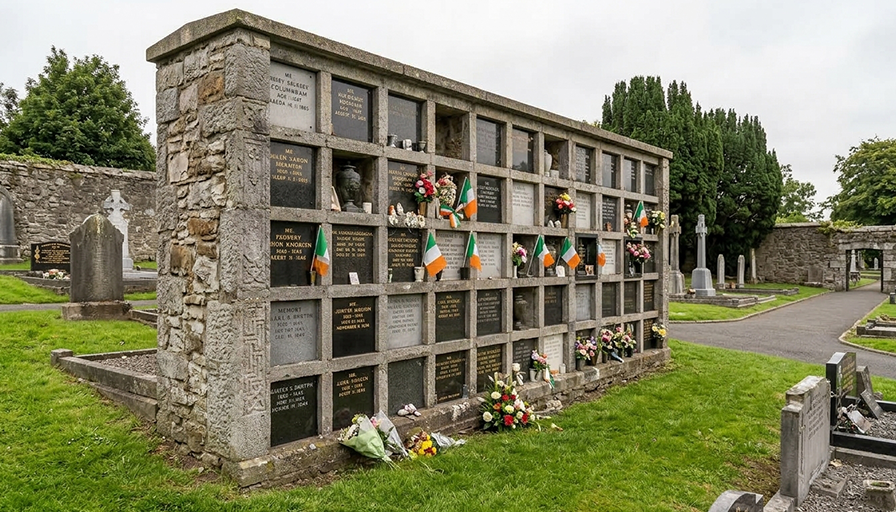
A columbarium niche
Some Irish cemeteries and crematoria provide columbarium niches for cremation urns. If one is available, check its internal dimensions, permitted urn materials, placement terms and memorial arrangements before making a decision.
This is an alternative to ground burial rather than a way of adding another interment to a full family grave.
Another place of remembrance
Some burial grounds or crematoria have designated gardens of remembrance, memorial areas or other facilities for cremated remains. Not every cemetery offers these options, so ask what is available locally.
For a wider explanation of cemetery options, our guide to urns and ashes in Irish cemeteries explains how different resting places, urn requirements and local procedures compare.
What if the family grave is in another county?
Families in Ireland do not always live near the graveyard where previous generations are buried. A relative may wish to inter ashes in a family grave in another county, even when the funeral or cremation has taken place elsewhere.
The important question remains whether the burial ground responsible for that particular grave permits another interment.
Contact the relevant administrator directly or ask your funeral director to assist. Do not assume that rules in one county will be the same in another.
It can help to establish the requirements before arranging transport of the ashes, ordering an urn or setting a date for a family gathering at the graveside.
Choosing an urn after the graveyard gives permission
If another ashes interment is approved, ask the administrator whether a particular type of urn or ashes container is required.
Some burial grounds may accept different materials, while others may specify a suitable container, external dimensions or particular burial arrangements.
Before ordering, confirm:
- the maximum permitted urn dimensions, if any;
- whether a container is required and which materials are acceptable;
- whether biodegradable urns are permitted or preferred;
- whether the cremated remains can be interred in their existing container;
- who is responsible for placing the urn in the grave;
- whether an existing headstone inscription can be updated.
Once the requirements are known, you can consider a suitable urn. Our biodegradable urns for ashes include designs made for natural decomposition, although suitability for a particular cemetery burial must always be confirmed with the graveyard manager.
It is better to choose an urn that meets the approved burial arrangements than to purchase one first and discover that it cannot be used.
Questions to ask the cemetery or graveyard
When contacting the administrator, the following questions can help you obtain the information needed to make a decision.
- Is this family grave full for coffin burials only, or for all further interments?
- Can cremated remains still be interred in the grave?
- Who currently holds the relevant burial rights or authority to give permission?
- What documentation is needed if the original grave purchaser has died?
- Can the grave be safely opened for another ashes interment?
- Are there limits on the number of urns or sets of ashes?
- What urn dimensions, materials or container requirements apply?
- What are the opening, closing and administration fees?
- Can an additional inscription be added to the family headstone?
- If the grave cannot be used, are there suitable spaces nearby?
Where possible, ask for the decision and any urn requirements to be confirmed in writing. This can be useful when coordinating arrangements between family members, a funeral director and the burial ground.
Before arranging the interment: Confirm three things: that another burial is permitted, that the person making the arrangements has the necessary authority and that the proposed urn or ashes container meets the graveyard's requirements.
Frequently asked questions
Can ashes be buried in a family grave that is already full in Ireland?
Sometimes. A grave that cannot accommodate another coffin may still be suitable for cremated remains. However, the cemetery or graveyard manager must approve the interment after considering the grave record, physical capacity, burial rights and applicable rules.
How many urns can be buried in one grave in Ireland?
There is no single number that should be assumed for every Irish family grave. The permitted number depends on the burial ground's regulations, the particular plot and previous interments. Ask the administrator to confirm the position for the specific grave.
Can ashes be buried in a family grave if the original grave owner has died?
It may still be possible, but the person authorised to arrange a further interment may need to be identified. The burial ground manager can explain which records, permissions or supporting documents are required.
Can relatives open a family grave themselves to bury an urn?
Do not open an existing cemetery or graveyard plot without permission. The burial ground manager must confirm and arrange the approved interment procedure, including any excavation requirements.
Can a grave be reopened if previous relatives are already buried there?
Possibly, provided another interment is authorised and can be carried out safely. Reopening a grave for an approved additional burial is not the same as disturbing or removing previously interred remains, which raises separate requirements.
Does a smaller or biodegradable urn make another burial more likely?
Not necessarily. An urn's size or material cannot override the burial ground's rules or the rights attached to a grave. The administrator must first confirm that another interment is allowed.
What if the family grave is in a parish graveyard?
Contact the parish or other organisation responsible for the burial ground. The procedure may differ from that of a local authority cemetery, particularly if the graveyard is historic, restricted or no longer accepts new interments.
A family resting place, even when space is limited
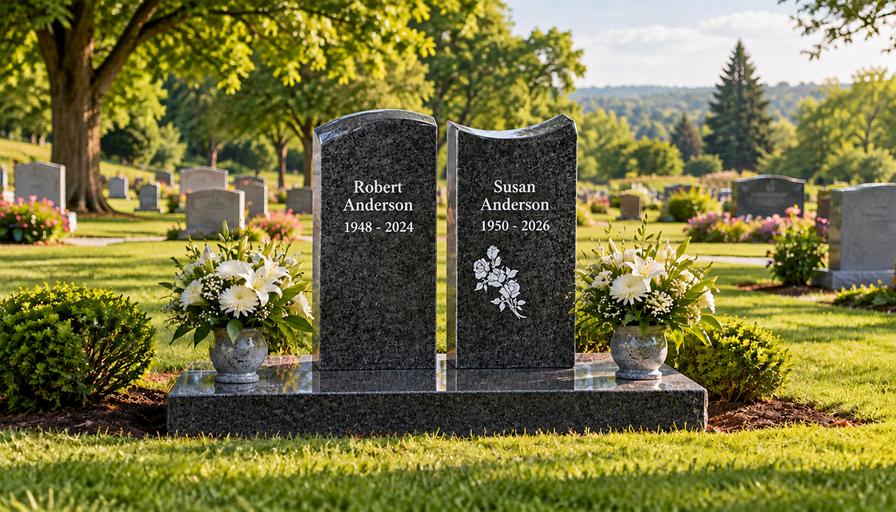
For many families, the wish to bury cremation ashes in an existing grave is about keeping loved ones together. The grave may already hold a spouse, parents or grandparents, and returning to that familiar place can feel important.
If you have been told that the grave is full, it is worth finding out exactly what this means before making another decision. In some cases, another ashes interment may still be permitted. In others, the condition of the grave, the burial rights or the rules of the burial ground will make it impossible.
When the original grave cannot be used, a nearby cremation plot or another memorial space may offer a way to preserve that connection.
Whatever the outcome, confirm the arrangements with the cemetery or graveyard before selecting an urn. If you need help choosing a suitable urn once the burial requirements are known, you can contact legendURN for guidance.
About this guidance: This article concerns the Republic of Ireland. Burial ground regulations, local authority bye-laws, parish procedures and individual cemetery policies may differ. For a grave in Northern Ireland, contact the relevant local council, cemetery or burial authority, as different legal and administrative arrangements apply.