Urns and ashes in cemeteries: a clear guide for families in Ireland
After cremation, families often need to decide where the ashes should be kept, buried or remembered. Some people keep ashes at home. Others scatter them privately. Many families choose a cemetery, graveyard, burial ground, cremation plot, memorial garden or columbarium niche because it creates a known and lasting place of remembrance.
This choice is not only emotional. It is also practical. The place you choose can affect the size, material and type of urn you need. A columbarium niche may have strict measurements. A family grave may require permission from the grave owner, local authority or cemetery manager. A memorial garden may have its own plaque rules. A burial ground may only accept certain materials.
For that reason, it is best to confirm the location and local rules before buying an urn. This helps prevent a difficult situation later, such as discovering that an urn is too large, unsuitable for burial or not accepted by the cemetery, graveyard or burial ground.
Where can ashes be placed after cremation in Ireland?
In Ireland, the options for cremation ashes can vary by cemetery, graveyard, crematorium, local authority, parish or burial ground manager. Common options include:
- burial of ashes in an existing family grave;
- burial in a new cremation ashes plot or urn plot;
- placement in a columbarium niche or urn wall;
- interment in a memorial garden or Garden of Remembrance;
- private scattering, where appropriate and permitted;
- keeping the ashes at home;
- dividing the ashes between a main urn, keepsake urns or ashes jewellery.
Not every option is available everywhere. Some burial grounds have dedicated areas for cremated remains. Others may allow ashes to be placed in an existing family grave. Some crematoria and cemeteries offer memorial gardens or columbarium walls, while smaller graveyards may have fewer options.
Quick answer: ashes in Ireland can often be buried in a cemetery or graveyard, placed in a family grave, interred in a cremation plot, kept in a columbarium niche or remembered in a memorial garden. The urn must fit the local rules for size, material, closure, inscription and placement.

Why local cemetery and graveyard rules matter
Families sometimes choose an urn first and contact the cemetery afterwards. This can cause problems. A beautiful urn may be too large for a niche, unsuitable for underground burial, made from a material the burial ground does not allow or difficult to seal in the required way.
Local rules may cover:
- maximum urn dimensions;
- the number of urns allowed in one grave, plot or niche;
- whether the urn must be biodegradable;
- whether metal, ceramic, wood, stone or other materials are accepted;
- whether ashes must be placed in an urn or may be interred differently;
- burial depth and grave opening requirements;
- who has the right to authorise the interment;
- plaque, marker, inscription and memorial wording rules;
- whether flowers, vases or grave decorations are allowed.
These rules protect the burial ground, the cemetery records, the grave owner’s rights, long-term maintenance and future family access. They also help ensure that the resting place remains clear and traceable for years to come.
Burial of ashes in an existing family grave
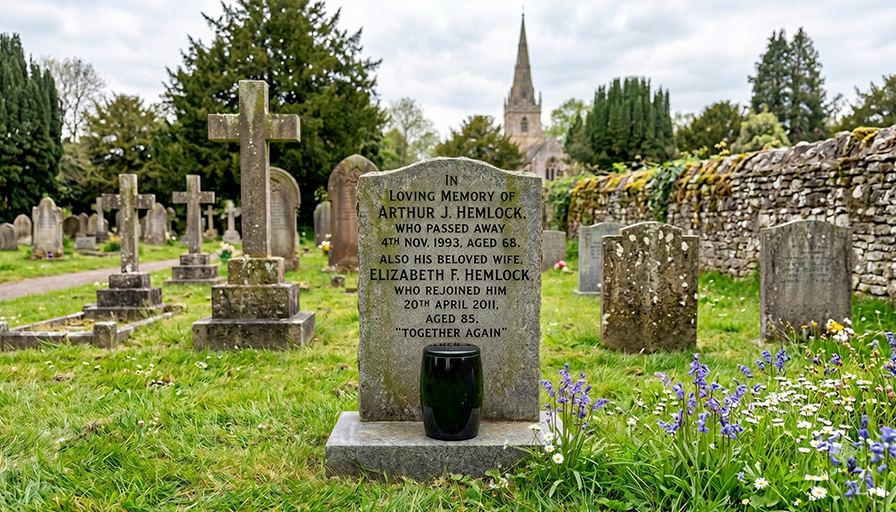
For many families, placing ashes in an existing family grave is a meaningful choice. It keeps relatives together in one known place and may feel more personal than choosing a new plot. In Ireland, this option is often considered when there is already a family grave available.
However, an existing grave is not automatically available for cremation ashes. The cemetery or graveyard manager will usually need to check the grave rights, available space, previous burials, local rules and permission from the person entitled to authorise the interment.
Before buying an urn for a family grave, ask:
- Can cremation ashes be placed in this grave?
- Who holds the burial rights or permission for the grave?
- How many sets of ashes can be placed there?
- Is there a maximum urn size?
- Which materials are allowed?
- Must the urn be biodegradable or sealed?
- Can a new inscription be added to the existing memorial?
- Who opens and closes the grave?
- What fees apply?
If the grave is older, historic or managed by a parish or local community group, the rules may be different from those in a local authority cemetery. Always check before ordering a full-size urn, outdoor urn or custom-made urn.
Cremation ashes plots and urn plots
Some cemeteries and crematoria offer dedicated plots for cremated remains. These may be called ashes plots, cremation plots, urn plots or small memorial plots. They are usually smaller than traditional graves and may have specific rules about the type of urn and memorial that can be used.
An ashes plot may allow one full-size urn, two urns for partners or a small number of urns for family members. In some places, ashes are interred in a container supplied or approved by the cemetery. In others, families may provide their own urn if it meets the local requirements.
Ask the cemetery or crematorium:
- Is this a private plot or a shared memorial area?
- How many urns can be placed there?
- What urn size is accepted?
- Are biodegradable urns required?
- Can a plaque, headstone or flat marker be placed?
- Are flowers or grave decorations permitted?
- Can additional ashes be added later?
This information is important before choosing the urn material. A natural stone urn, bronze urn, ceramic urn, wooden urn or biodegradable urn may each be suitable in different settings, depending on the local rules.
Columbarium niches and urn walls in Ireland
A columbarium is a wall, structure or building with individual niches for cremation urns. It may be part of a cemetery, crematorium, memorial garden or burial ground. The niche is usually sealed with a plaque, door or front panel.
The most important detail is the internal size of the niche. A full-size urn may have the correct capacity for the ashes but still be too tall, too wide or too deep for the space. This is one of the most common reasons families need to change urns after purchase.
Before buying an urn for a columbarium niche, ask:
- What are the internal height, width and depth of the niche?
- Is the niche intended for one urn or more than one?
- Can a companion urn or keepsake urn be placed there?
- Does the urn need to be a specific shape?
- Will the niche be sealed with a plaque, door or stone panel?
- Are personal items allowed inside the niche?
- Who supplies or approves the inscription?
- Are there wording limits or plaque design rules?
If the niche is small, choose the urn based on external measurements first and design second. This prevents the emotional and practical difficulty of transferring ashes later.
Memorial gardens and Gardens of Remembrance
Many crematoria and cemeteries in Ireland offer memorial garden options for cremated remains. These areas may be quieter and more landscaped than a traditional grave. Some offer individual plaques, shared headstones, garden spaces or columbarium walls.
Rules can vary considerably. One memorial garden may allow a small individual plaque, while another may only allow a shared memorial feature. Some places may inter ashes in a specific container supplied by the crematorium or cemetery. Others may allow a family-selected urn if approved in advance.
Before choosing an urn or memorial item, ask:
- Are ashes buried in an urn, a cemetery-supplied container or directly in the ground?
- Can the family choose the urn?
- Is the exact location individually marked?
- What wording is allowed on the plaque?
- Can flowers, vases or personal objects be placed nearby?
- Can ashes be retrieved or moved later?
- How long does plaque installation usually take?
These details matter because a memorial garden may feel natural and simple, but it can still have very specific rules about urns, plaques and personal tributes.
Churchyards, graveyards and older burial grounds
In Ireland, families may use words such as cemetery, graveyard, churchyard and burial ground in slightly different ways. The practical rules depend on who manages the place. It may be a local authority, a parish, a religious body, a private cemetery or a local community group.
Older or historic graveyards can have stricter requirements. There may be rules about grave reopening, memorial wording, headstone style, kerbing, vases, flowers or the placement of individual items. Some graveyards may have limited space or may no longer allow new interments except in existing family graves.
Before buying an urn for a churchyard or older burial ground, ask:
- Is the burial ground open for cremated remains?
- Can ashes be placed in an existing family grave?
- Are urns accepted or must ashes be interred in another way?
- Who gives permission?
- Are there inscription or headstone restrictions?
- Are grave decorations allowed?
- Are there heritage or conservation rules?
Do not assume that a rule from one cemetery applies to another. Even within the same county, requirements may differ.
What kind of urn can be used in a cemetery or graveyard?
There is no single urn that is suitable for every cemetery setting. The right urn depends on the final place, the local rules and the way the ashes will be interred or displayed.
| Setting | What to check before buying |
|---|---|
| Existing family grave | Grave rights, available space, grave opening, allowed urn size, accepted materials and inscription rules. |
| Cremation ashes plot | Maximum urn size, number of urns allowed, burial depth, biodegradable requirements and marker rules. |
| Columbarium niche | Internal niche measurements, urn shape, plaque closure, wording limits and whether more than one urn can fit. |
| Memorial garden | Whether family urns are accepted, whether the location is individually marked and what plaque or flower rules apply. |
| Churchyard or older graveyard | Permission, conservation rules, headstone restrictions, inscription requirements and whether ashes may be added to an existing grave. |
Outdoor urns, burial urns and biodegradable urns
An urn used in a cemetery or graveyard may need different qualities from an urn kept indoors. Underground burial, outdoor placement and niche placement each place different demands on the urn.
Common choices include:
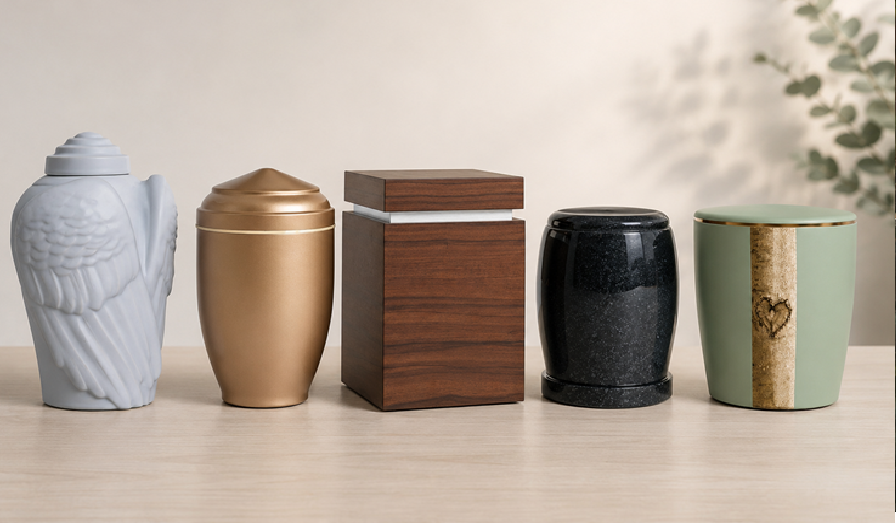
- biodegradable urns for natural burial or gradual return to the earth;
- ceramic urns for burial where the cemetery accepts them;
- wooden urns for a natural appearance and possible burial use depending on the model;
- natural stone urns for weight, durability and a permanent memorial character;
- bronze or stainless steel urns for long-lasting memorial placement where rules allow them;
- compact columbarium urns when niche dimensions are limited.
Always check both the product description and the local burial ground requirements. A material that is suitable in one cemetery may not be accepted in another.
Browse: outdoor urns for ashes.
Questions to ask before buying an urn in Ireland
Before buying an urn for cemetery, graveyard, columbarium or memorial garden placement, contact the cemetery, crematorium, graveyard manager, local authority or burial ground office. These questions can prevent stress later:
- Can ashes be placed in the chosen cemetery, graveyard, family grave or memorial garden?
- Is the location an existing grave, new ashes plot, columbarium niche or shared memorial area?
- Who has the legal or practical right to authorise the interment?
- Are there maximum urn dimensions?
- Which materials are allowed?
- Must the urn be biodegradable?
- Is a sealed urn required?
- Can more than one urn be placed in the grave, plot or niche?
- Can part of the ashes be kept separately in a keepsake urn?
- What plaque, marker or inscription rules apply?
- Are flowers, vases, grave decorations or personal items allowed?
- What documents are required?
- Who opens and closes the grave or niche?
- What fees, maintenance arrangements or waiting times apply?
These questions are especially important before buying a large urn, custom-made urn, outdoor urn, natural stone urn or bronze urn.
Urn size: why measurements matter
Urn capacity and external dimensions are not the same thing. An urn may have enough internal volume for the ashes but still be too large for a columbarium niche, too wide for a memorial space or unsuitable for the planned burial plot.
For one adult, many full-size urns have a capacity of around 3 to 3.5 litres. The exact amount of ashes can vary, so it is always wise to check with the crematorium or funeral director. If ashes are divided among several relatives, the main urn may not need to hold all of the ashes.
Useful guide: read more about how much ash is left after cremation and what size urn you need.
When ashes are shared among family members
Many families choose a combination. Most of the ashes may be placed in a cemetery or graveyard, while a small portion is kept by a partner, child, sibling or close family member. This can be done with a small keepsake urn or ashes jewellery.
This can be comforting when one person wants a permanent place in a family grave and another wants a private remembrance at home. It can also help when family members live in different parts of Ireland or abroad.
Before the interment, ask the funeral director or crematorium whether a small portion of ashes can be separated for keepsakes. It is usually easier to arrange this before the main urn is sealed or interred.
Browse: keepsake urns for ashes and ashes jewellery.
What happens during the interment of ashes?
The exact process differs by cemetery, graveyard, crematorium and local authority area, but it often follows a similar pattern:
- The family chooses the cemetery, graveyard, family grave, plot or niche.
- The cemetery or graveyard manager confirms permission, documents, fees and rules.
- The urn is checked for size, material and suitability.
- An interment date is arranged.
- A short service or private moment may be held.
- The urn is placed in the grave, plot, niche or memorial setting.
- The grave, niche or memorial is closed or sealed.
- The relevant records are updated.
- A plaque, inscription or marker may be added later.

Grave decorations and memorial items
If ashes are placed in a cemetery, graveyard, ashes plot or memorial garden, families sometimes want to add flowers, a vase, a plaque, a small memorial stone or another grave decoration. This can make the place feel personal, but it must fit the local rules.
Some burial grounds allow vases and seasonal flowers. Others only allow approved plaques or shared memorial features. Older graveyards and churchyards may have stricter rules about materials, wording and decoration. Always check before buying a memorial item for a grave, niche or ashes plot.
Browse: grave decorations and memorial items.
Common mistakes families can avoid
- Buying an urn before checking cemetery or graveyard rules.
- Choosing a standard urn for a small columbarium niche.
- Forgetting to ask who holds the burial rights.
- Assuming that all urn materials are accepted for burial.
- Not checking whether a biodegradable urn is required.
- Forgetting to reserve a small portion of ashes for keepsakes.
- Buying grave decorations before checking local rules.
- Not asking about plaque, marker or inscription restrictions.
- Assuming ashes can easily be moved later.
Frequently asked questions
Can ashes be buried in a family grave in Ireland?
Often yes, but this depends on the cemetery or graveyard rules, the burial rights and available space. Always ask the cemetery, graveyard manager or local authority before buying an urn for an existing family grave.
Can ashes be placed in a churchyard or older graveyard?
Sometimes, but rules can differ by burial ground, parish, local authority or cemetery manager. Some places may require ashes to be placed in a designated area, and memorial or inscription rules may be stricter than families expect.
What size urn do I need for a columbarium niche?
You need the internal height, width and depth of the niche before choosing the urn. A full-size urn may hold the ashes correctly but still be too large for the niche.
Do cemeteries in Ireland accept biodegradable urns?
Many cemeteries accept biodegradable urns, especially for burial or natural memorial areas, but rules vary. Always confirm this with the cemetery, graveyard manager or local authority before ordering.
Can ashes be divided before cemetery interment?
Often yes. A small portion of ashes can sometimes be kept in a keepsake urn or ashes jewellery while the main urn is placed in the cemetery. Arrange this before the main urn is sealed or interred.
Can ashes be moved later?
Sometimes, but moving ashes from a cemetery, graveyard or niche may require permission and paperwork. It is better to choose the location and urn carefully from the start.
Can grave decorations be placed near an ashes plot?
Possibly, but rules vary. Some areas allow flowers, vases or small decorations, while others only allow approved plaques or shared memorial features.
Should I buy the urn before contacting the cemetery?
It is better to contact the cemetery, crematorium, graveyard manager or local authority first. Once you know the size, material and placement rules, choosing a suitable urn becomes much easier.
Final thought: choose the place first, then the urn
When ashes will be placed in a cemetery or graveyard, the most practical advice is simple: choose or confirm the place first, then choose the urn. A family grave, columbarium niche, ashes plot, churchyard, older graveyard or memorial garden can each have different requirements.
Once you know the local rules, choosing the urn becomes easier. You can compare size, material, capacity, closure, durability and personalisation with confidence. This helps ensure that the urn is not only beautiful, but also suitable for the place where it will become part of a lasting memory.
If you are unsure, start with our urns for ashes and keepsakes, check our urn size guide, view outdoor urns, explore grave decorations, or read more in our advice hub.