What happens when cremation ashes are not collected?
If cremation ashes are not collected, they will normally remain in the care of the crematorium or funeral director for a period of time. They are not treated as ordinary waste. Crematoria have procedures for identifying and handling cremated remains and will generally follow the instructions provided by the person who arranged the cremation.
If ashes remain uncollected, what happens next depends on the crematorium's procedures, the original instructions and any arrangements made with the funeral director. This is particularly important in Ireland because there is no single national retention period that applies to every crematorium.
In short: if you believe ashes are still waiting to be collected, contact the crematorium or funeral director directly. Ask whether the ashes are still being held, what identification or authorisation is required, whether a collection deadline applies and what procedure will be followed if they remain uncollected.

If you have forgotten to collect ashes, what should you do?
Contact the crematorium or funeral director who arranged the cremation, even if several months or years have passed. The ashes may still be in their care. If they are no longer being held, records may help establish what happened to them.
Provide as much identifying information as possible, including:
- the full name of the person who died;
- their date of death, if known;
- the approximate date and location of the cremation;
- the name of the funeral director involved;
- your relationship to the person who died; and
- any cremation, funeral or arrangement reference you still have.
The crematorium or funeral director can then check its records and explain whether the ashes are still available for collection. You may be asked to provide identification or evidence that you are authorised to receive them.
If the ashes have already been interred, scattered or otherwise placed, ask what happened to them, when this occurred and whether the location was recorded. Once ashes have been scattered, recovering them will generally not be possible.
How long will a crematorium keep uncollected ashes in Ireland?
There is no single period that applies to every crematorium in Ireland. The collection period can depend on the crematorium's own procedures and on the instructions recorded when the cremation was arranged.
Citizens Information notes that there is currently no specific legislation relating to cremation in Ireland. In the absence of specific cremation legislation, a number of Irish crematoria have developed codes of ethics and operational procedures that they follow.
You can read the general information on cremation in Ireland from Citizens Information.
The practical consequence for families is important: do not assume that an article describing the procedure at one Irish crematorium automatically applies to every other crematorium. Check the documentation from the cremation and ask the provider directly.
Do some Irish crematoria set a collection deadline?
Yes. Individual crematoria can set collection procedures and deadlines as part of their arrangements with the applicant.
For example, the current Dublin Cemeteries Trust application form states that where the applicant or their representative is to collect the ashes, they must be collected from the crematorium within four weeks. Identification is also required when the ashes are collected.
This four-week period should not be interpreted as a nationwide Irish rule. It is an example of the procedure used by Dublin Cemeteries Trust crematoria. Another crematorium may have different arrangements.
If your ashes are being held elsewhere, check the crematorium's own paperwork, website or code of practice rather than assuming the same four-week period applies.
Who decides what happens to the ashes?
The instructions provided when the cremation was arranged are particularly important. The person applying for the cremation will normally indicate what is to happen to the cremated remains, such as collection by the family, collection by the funeral director or placement through the crematorium.
The Code of Ethics used by several Irish crematoria states that cremated remains should be disposed of or released according to the instructions of the applicant for cremation.
This is one reason why the original cremation paperwork should be kept. It can help clarify who was expected to collect the ashes and what instructions were given.
You can read an example in the Mount Jerome Crematorium Code of Ethics.
What happens if the ashes remain uncollected?
There is no single national procedure that can be stated for every Irish crematorium. The outcome depends on the provider's code of practice, the original instructions and any subsequent contact with the applicant or family.
For that reason, families should not assume either that ashes will be stored indefinitely or that they will automatically be scattered after a fixed number of weeks.
If a collection deadline has passed, contact the crematorium before making any assumptions. Ask whether the ashes are still being held and what options remain available.
If the ashes were left with a funeral director rather than at the crematorium, contact the funeral director directly and ask what instructions were recorded and what arrangements can now be made.
Why are cremation ashes sometimes left uncollected?
It can be easy to interpret uncollected ashes as a sign that nobody cared enough to collect them. In practice, the circumstances are often much more complicated.
Several relatives may each believe that somebody else is responsible. Contact details may have changed. The person who originally arranged the funeral may have died, moved away or become unable to collect the ashes.
Distance can also be a factor. A relative may live in another part of Ireland or overseas and be unsure whether somebody else can collect the ashes on their behalf.
Sometimes the delay is deliberate. A family may not yet know whether to keep, bury or scatter the ashes, or the person responsible may simply not feel ready to make another permanent decision soon after the funeral.
Whatever the reason, it is better to stay in contact with the crematorium or funeral director. Collecting the ashes does not mean that you need to decide immediately what their permanent resting place will be.
Do you need to buy an urn before collecting the ashes?
No. You do not normally need to have chosen a permanent decorative urn before collecting cremation ashes.
Ashes can be supplied in a suitable temporary container. The precise type of container and collection procedure will depend on the crematorium or funeral director.
You can keep the ashes safely in their temporary container while considering what you eventually want to do. Collecting the ashes and choosing a permanent memorial are two separate decisions.
Once the ashes are safely in your care, you can decide whether to keep them together, divide a portion among relatives, arrange burial or interment, scatter them or combine more than one form of remembrance.
What can you do with the ashes after collecting them?
You do not have to make a permanent decision immediately. The most suitable option will depend on your family's wishes, where the ashes will eventually be placed and whether other relatives would like to keep a portion.
Keep all of the ashes together
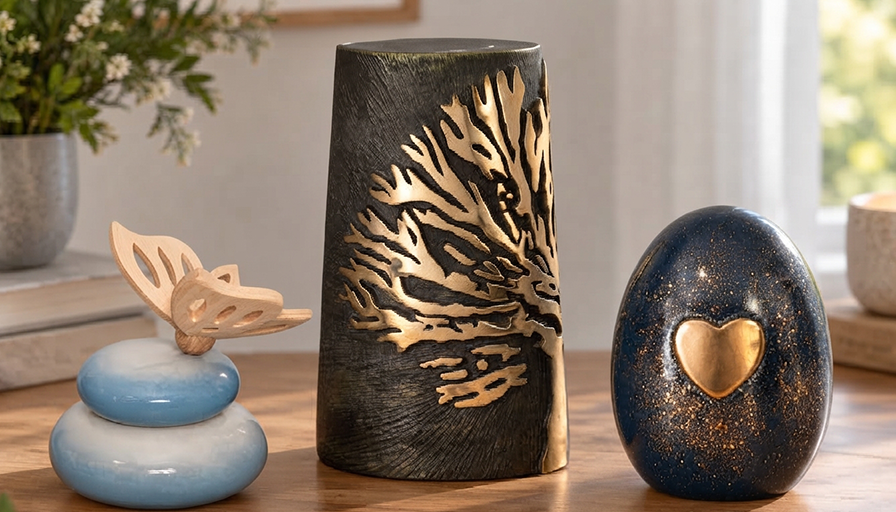
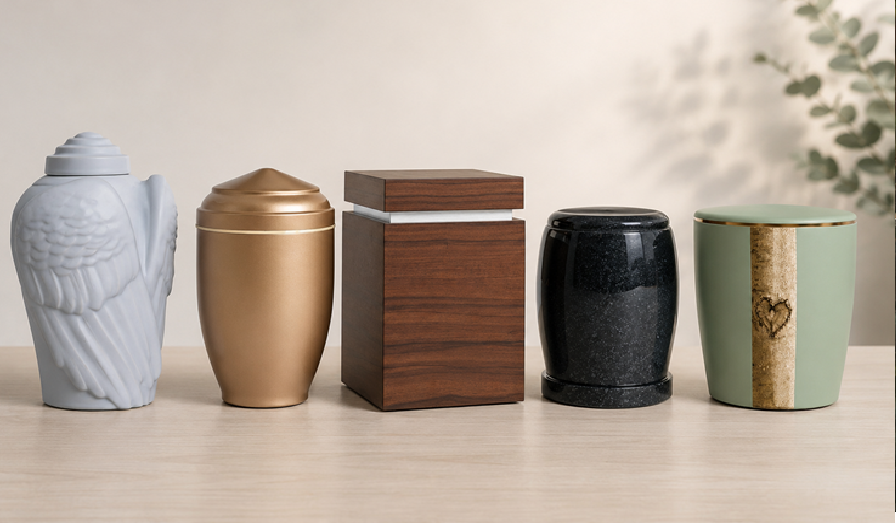
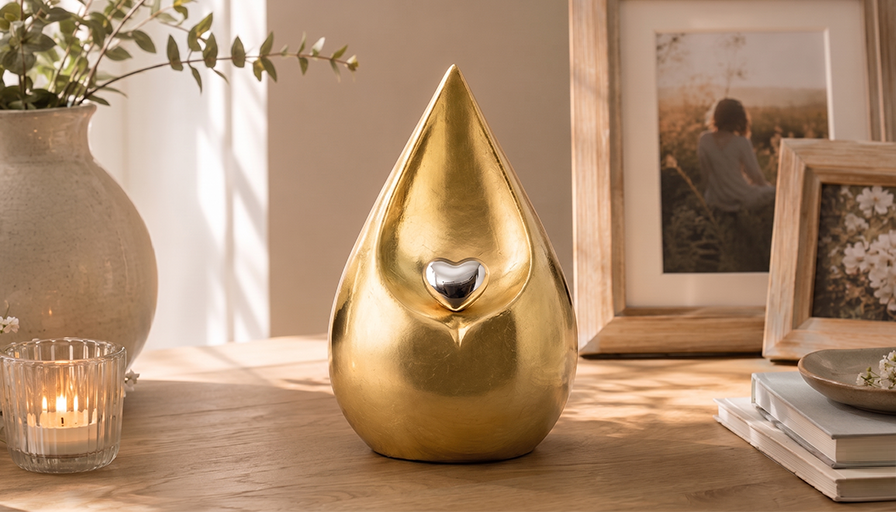
A full-size cremation urn is intended to hold all or most of the cremated remains of one adult, provided its internal capacity is sufficient.
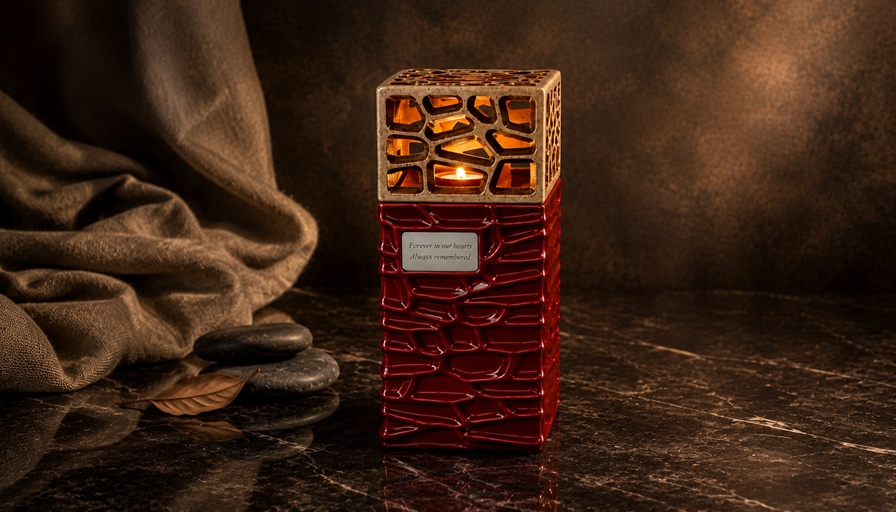
If the urn will eventually be placed in a cemetery, grave or columbarium, check any size or material restrictions before choosing it. The external dimensions can sometimes be just as important as the internal capacity.
Divide the ashes between family members
Families sometimes decide that one person will keep the main urn while other relatives each receive a smaller portion.
Keepsake urns are intended for a smaller quantity of ashes rather than the full amount. This can be particularly helpful when relatives live in different parts of Ireland or in different countries.
Keep a very small amount close
Another possibility is ashes jewellery. These pieces generally hold only a very small symbolic amount of cremated remains. The remainder can stay in a main urn or be buried or scattered separately.
You therefore do not need to divide all of the ashes in order for several forms of remembrance to be possible.
Inter the ashes
Ashes can be interred in a family grave where this is permitted or placed in another suitable memorial location such as a columbarium. Crematoria may also offer their own options for the interment of cremated remains.
Check the requirements before buying an urn, particularly if it will be placed in a niche or another space with fixed dimensions.
Scatter the ashes
Families may also choose to scatter cremation ashes at a meaningful location. If the ashes are to be dispersed somewhere other than private land, permission should be obtained from the appropriate authority or landowner where necessary.
It can also be worth considering whether you want to retain a small portion before scattering. Once all of the ashes have been scattered, recovering them will generally not be possible.

Can somebody else collect cremation ashes for you?
Often this may be possible, but you should always check with the crematorium before sending somebody else to collect the ashes.
The provider needs to make sure the remains are released to the correct person. Identification and authorisation may therefore be required.
Some cremation application forms allow the applicant to name a representative who is authorised to collect the ashes. If another person needs to collect them and was not originally named, ask the crematorium what written permission or identification is required.
If distance is the problem, do not assume that you need to travel to the crematorium yourself. Contact the provider first and ask what alternatives are available.
What if family members disagree about who should receive the ashes?
A disagreement between relatives can make collection more complicated. A crematorium or funeral director should not be expected to resolve a family dispute simply according to which relative asks first.
The cremation application, instructions originally given and any authority recorded with the funeral director or crematorium can all be important.
If there is a genuine dispute, ask the organisation holding the ashes what documentation it requires before releasing them. Where the legal right to possession or control of the ashes is contested, independent legal advice may be appropriate.
What if the ashes were left uncollected many years ago?
Contact the original crematorium or funeral director even if a considerable amount of time has passed. The ashes may still be in storage, and if they are not, records may help establish what happened.
If the funeral director has closed or changed ownership, try contacting the crematorium where the cremation itself took place.
Ask whether the records show when the ashes were collected, transferred, interred, scattered or otherwise dealt with. If they were placed in an identifiable cemetery or memorial location, further records may be available.
Do not assume that the passage of many years makes an enquiry pointless. Even where the ashes are no longer held, identifying records may still answer important questions for the family.
Common mistakes to avoid when ashes are awaiting collection
The main mistake is assuming that no action is necessary because a crematorium will automatically keep the ashes indefinitely. Collection policies vary between Irish crematoria.
It is also worth avoiding these practical mistakes:
- ignoring letters, emails or calls from the crematorium or funeral director;
- forgetting to update your contact details if you move;
- assuming that a collection period used by one crematorium applies throughout Ireland;
- assuming you need to buy a permanent urn before collecting the ashes;
- buying an urn for a cemetery or columbarium before checking any size restrictions;
- sending another person to collect the ashes without checking the identification and authorisation requirements; and
- discarding cremation documents and other paperwork that may be useful later.
If you are unsure what to do with the ashes afterwards, it is usually better to arrange their collection safely first and give yourself time to make the longer-term decision.

Frequently asked questions about uncollected cremation ashes in Ireland
Will a crematorium throw away uncollected ashes?
Cremation ashes are treated with care and respect rather than as ordinary refuse. What ultimately happens to uncollected ashes depends on the instructions given and the procedures of the crematorium concerned. Contact the crematorium directly if you need to know what will happen in a particular case.
How long can I wait before collecting ashes?
There is no single national collection period that applies to every crematorium in Ireland. Check the cremation paperwork or contact the crematorium. Some providers set their own collection periods; for example, the current Dublin Cemeteries Trust form specifies four weeks for ashes that are to be collected by the applicant or their representative.
Can I collect ashes after several years?
Possibly. If the ashes are still being held and you are authorised to receive them, collection may still be possible. If they are no longer there, ask the crematorium or funeral director whether its records show what happened to them.
Can a crematorium or funeral director charge for storing ashes?
Any storage arrangements or charges can depend on the provider and the terms agreed when the cremation was arranged. Ask the organisation holding the ashes whether a fee applies rather than assuming storage is free or unlimited.
What happens if nobody in the family wants the ashes?
Contact the crematorium or funeral director and explain the situation. They can tell you which options are available and what instructions they require. It is better to make an arrangement than simply to leave the ashes uncollected.
Do I have to decide what to do with the ashes before collecting them?
No. You can collect cremation ashes and decide later whether you want to keep them together, transfer them into an urn, divide them among relatives, inter them or scatter them.
Can I bring my own urn to the funeral director or crematorium?
Often, yes. Ask the funeral director or crematorium beforehand whether they can transfer the cremated remains into an urn you have chosen. Check the urn's capacity and opening to make sure it is suitable.
Can another family member collect the ashes?
Possibly. The crematorium may require the person to be named as an authorised representative, or it may ask for identification or written permission. Always check before arranging collection.
Who should I contact first about old uncollected ashes?
Start with the crematorium where the cremation took place or the funeral director who arranged it. Give them the name of the person who died and as much information about the cremation as possible.
Where can I find official information about cremation in Ireland?
Citizens Information provides general information about cremation in Ireland. For collection periods and procedures, also check the paperwork and guidance supplied by the specific crematorium where the cremation took place.
Collect the ashes first and decide what comes next when you are ready
If ashes are still waiting at a crematorium or funeral director's premises, the most useful first step is to make contact. Ask whether they are still being held, what identification or authorisation is required and whether any collection deadline or other procedure applies.
You do not need to have every memorial decision settled before collecting them. Keeping the ashes safely in their temporary container can give you time to consider whether they will eventually be kept together, divided among relatives, placed in an urn, interred or scattered.
When you are ready to make that decision, consider how much of the ashes you wish to keep, where they will eventually be placed and whether there are any size or material requirements. A cremation urn for ashes may be appropriate for keeping the remains together, while a smaller keepsake or piece of ashes jewellery can hold a symbolic portion.
The important distinction is that collecting cremation ashes does not commit you to a permanent choice. It simply places them safely in your care while you consider what form of remembrance feels appropriate.
If you feel certain information is missing or you have questions after reading this guide, please feel free to contact us via the contact form.