Can you keep cremation ashes at home in Ireland?
Yes, many families in Ireland choose to keep cremation ashes at home in an urn, keepsake urn or another memorial item. For some, this brings comfort and a continued sense of closeness. For others, it is a temporary choice while the family decides whether the ashes should later be scattered, buried, divided, placed in a cemetery or kept in another meaningful way.
This page has been written specifically for families in Ireland. It replaces the UK-focused approach that can feel confusing on an Irish website. The practical and emotional questions may be similar, but crematorium procedures, funeral director arrangements, cemetery rules and local requirements can differ.
Is it allowed to keep cremation ashes at home in Ireland?
In Ireland, keeping ashes at home is generally a personal and practical choice after cremation. The ashes are usually made available through the crematorium or funeral director, and families may then decide how they wish to remember the person who has died.
Because procedures can differ, it is important not to assume that every crematorium, funeral director, cemetery, local authority, churchyard or memorial location follows exactly the same approach. If you plan to scatter, bury, place, divide, transport or send ashes later, always check the relevant requirements before making final arrangements.
If you are in Northern Ireland, the position may be different from the Republic of Ireland because funeral and cremation procedures follow Northern Ireland and UK arrangements. In that case, check with the funeral director, local council, crematorium or cemetery before deciding what to do with the ashes.
Why do families in Ireland keep ashes at home?
Keeping an urn at home can offer a quiet and personal form of remembrance. Some families choose it because they feel comforted by having their loved one nearby. Others prefer to take time before choosing a final place for the ashes.
Common reasons include:
- Closeness: an urn at home can feel personal and comforting.
- Time to decide: families do not always want to choose a final destination immediately.
- Family sharing: a small amount of ashes can be placed in keepsake urns or ashes jewellery.
- Flexibility: ashes may later be scattered, buried or placed in a cemetery, columbarium or memorial area.
- Personal remembrance: a home memorial can be shaped around the person’s life and character.
There is no single right answer. Some people find an urn at home comforting, while others prefer a cemetery, churchyard, columbarium, garden memorial or scattering ceremony. What matters is that the choice is respectful and manageable for the family.
Choosing an urn for home in Ireland
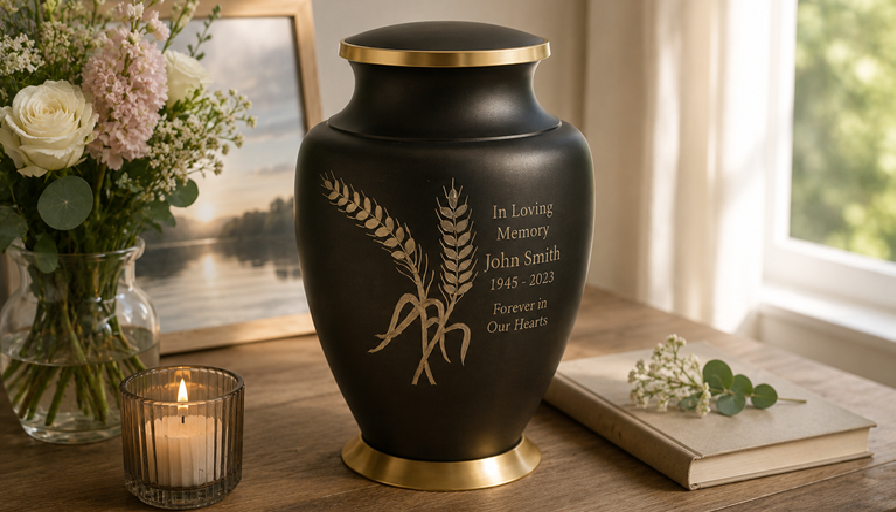
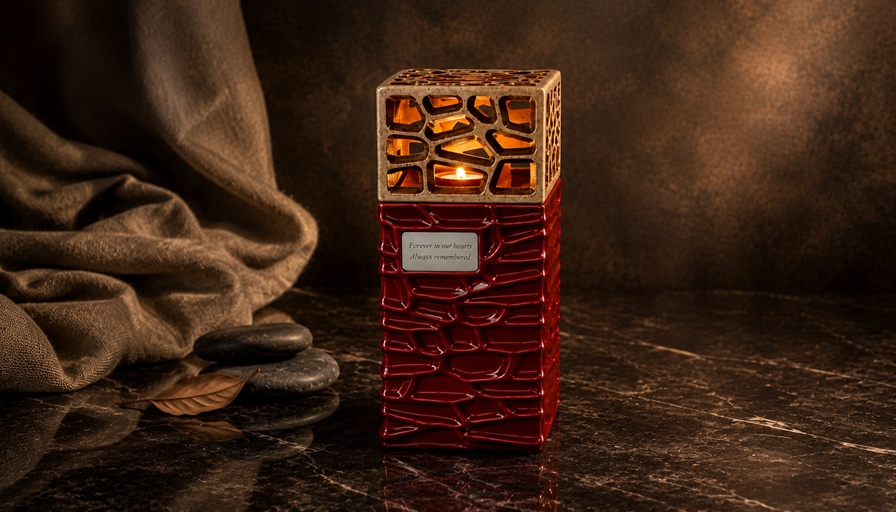
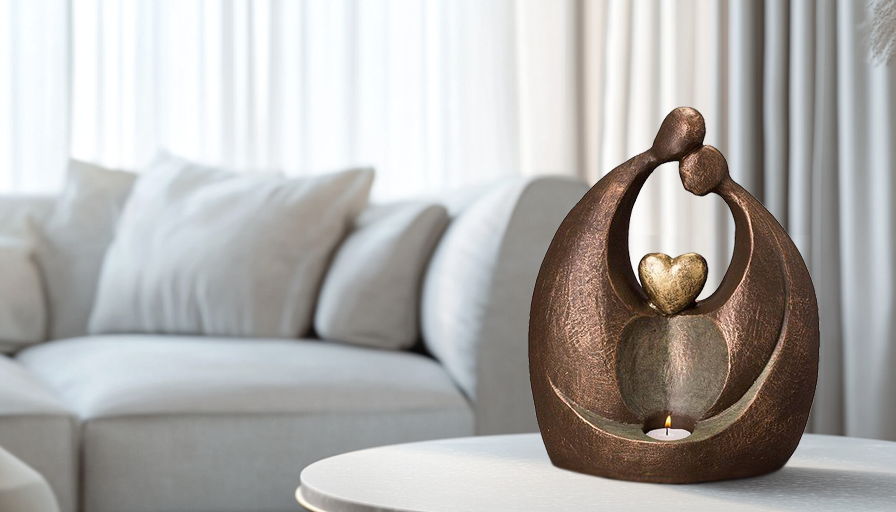
If you keep ashes at home, the urn should fit both the amount of ashes and the place where it will be kept. Some families prefer a decorative urn that is visible in the home, while others choose a discreet design that blends into the interior.
When choosing an urn, consider:
- Capacity: the urn should have enough volume for the ashes.
- Material: ceramic, wood, bronze, metal, glass, stone and biodegradable urns all have different qualities.
- Closure: check whether the urn has a screw lid, sealable lid, bottom closure or another closing method.
- Placement: choose a stable and respectful place in the home.
- Future plans: think about whether the urn may later be moved, buried, scattered or placed elsewhere.
You can compare urns for ashes, keepsake urns and ashes jewellery if you want to explore different ways of keeping ashes close.
Where can you place an urn at home?
The placement of an urn is personal. Many families choose a mantelpiece, shelf, cabinet, remembrance table, bedroom, study or quiet corner with a photograph, candle or flowers. Others prefer to keep the urn somewhere private.
Practical points to consider include:
- place the urn on a stable surface;
- avoid moisture, strong heat and direct sunlight where possible;
- choose a location that feels respectful and safe;
- consider children, pets and visitors;
- talk with close family members about what feels comfortable.
A home memorial does not need to be elaborate. A simple urn and a small photograph can be enough. The best place is the one that feels calm, respectful and suitable for your family.
What if family members feel differently?
It is common for family members to have different feelings about keeping ashes at home. One person may find it comforting, while another may prefer scattering, burial or a fixed memorial place. These differences should be handled gently.
Where possible, discuss the options together. A shared solution may help. For example, the main urn can be kept at home while a small amount of ashes is placed in keepsake urns or ashes jewellery for other relatives. Alternatively, the urn can be kept at home temporarily until a later ceremony is arranged.
Keepsake urns and ashes jewellery
Keeping ashes at home does not always mean placing all ashes in one urn. Some families choose a main urn and smaller remembrance items. Keepsake urns can hold a small amount of ashes, while ashes jewellery can hold a symbolic amount in a pendant, bracelet, ring or charm.
This can be helpful when relatives live in different places or when several people want a personal remembrance item. It can also be combined with later scattering, burial, cemetery placement or another memorial choice.
Can you change your mind later?
Yes. Keeping ashes at home can be temporary or permanent. Some families keep an urn at home for a period of time and later choose a different destination. Others keep the urn at home indefinitely because it feels right.
Later options may include:
- scattering ashes in a meaningful place, where appropriate and respectful;
- burying ashes in a cemetery, family plot, churchyard or another permitted place;
- placing an urn in a columbarium, urn wall or memorial area;
- dividing a small amount into keepsake urns or ashes jewellery;
- choosing a memorial product or garden remembrance place.
For wider guidance, visit our cremation urns advice hub or view our urns for ashes.
Long-term practical considerations
If you keep ashes at home, it may help to think about the future. This does not need to be decided immediately, but writing down your wishes can prevent uncertainty later.
- Future moves: consider how the urn will be packed and transported safely if you move house.
- Documents: keep cremation and funeral documents in a safe place.
- Family wishes: make sure someone knows what should happen to the ashes later.
- Future placement: check cemetery, crematorium, funeral director or local requirements before arranging burial, scattering or placement.
- Northern Ireland: if you are arranging a cremation or ash destination in Northern Ireland, check local council, crematorium or funeral director procedures.
Finally: a personal choice, made respectfully
Keeping cremation ashes at home in Ireland can be a meaningful and comforting choice. It gives families time, privacy and a personal way to remember someone they love. For some families, it becomes a permanent home memorial. For others, it is one stage before a later scattering, burial or memorial placement.
Choose an urn that fits the ashes, the home and the person being remembered. If the ashes may later be moved, divided, scattered, buried or placed in a cemetery or columbarium, check the relevant procedures first.
Since 2007, legendURN has helped families choose urns for ashes, keepsake urns, ashes jewellery, pet urns and memorial products with care and understanding. If you need help choosing an urn for home, please contact us and we will be happy to help you find a suitable and respectful memorial item.