How to Choose the Right Pet Cremation Urn
The right pet cremation urn is one that fits your pet’s ashes correctly, suits the place where it will be kept, and feels personally meaningful without becoming overwhelming or impractical. Most people choose an urn by considering four main factors:
- The size required for the ashes
- The material and durability of the urn
- Where the urn will be placed or stored
- The emotional and visual style that feels appropriate
Some families prefer a decorative urn that becomes part of the home, while others choose something discreet and private. There is no single correct approach. The most suitable choice is usually the one that feels calm, fitting, and sustainable for everyday life.
Start With the Correct Urn Size
One of the most important practical considerations is choosing the correct capacity. Pet cremation urns are generally measured in cubic inches, and the required size is based on your pet’s pre-cremation body weight.
As a general guideline, one pound of body weight equals approximately one cubic inch of ashes. For example, a dog that weighed 40 pounds will usually require an urn with at least 40 cubic inches of capacity.
It is usually advisable to choose a slightly larger urn rather than one that is too small. Cremation remains can vary slightly depending on bone structure and cremation method.
General Pet Urn Size Guide
- Small pets and cats: 10-40 cubic inches
- Medium dogs: 40-80 cubic inches
- Large dogs: 80-150+ cubic inches
- Horses or very large animals: specialty urns or custom memorials
If the ashes will be shared between family members, smaller keepsake urns may also be appropriate. These allow several people to keep a small portion of ashes separately while the main urn remains with the household.
Consider Where the Urn Will Be Kept
Before focusing on appearance, it helps to decide where the urn is likely to live long-term. This often influences the best material, shape, and size more than people initially expect.
For Display in the Home
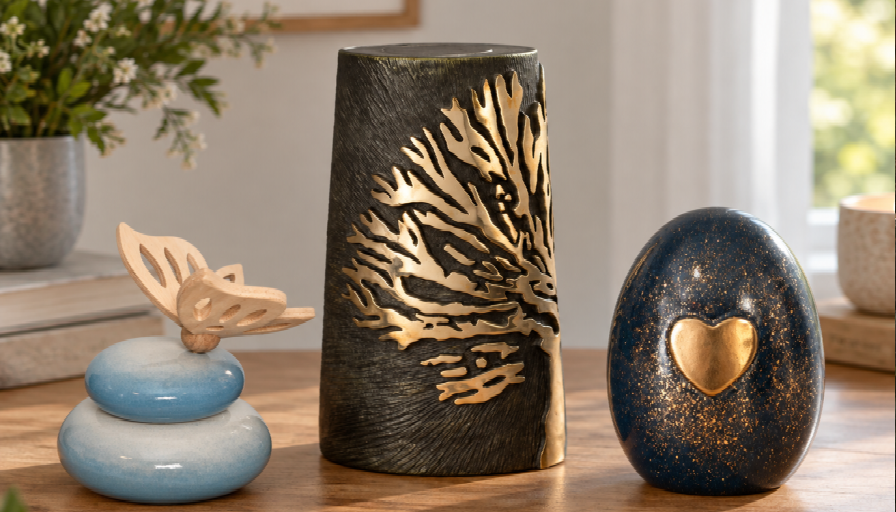
Many people keep a pet urn in the living room, bedroom, hallway, or a dedicated memorial space. In these cases, visual harmony matters. A handcrafted ceramic urn, wooden urn, or modern metal design often blends naturally into the interior without drawing excessive attention.
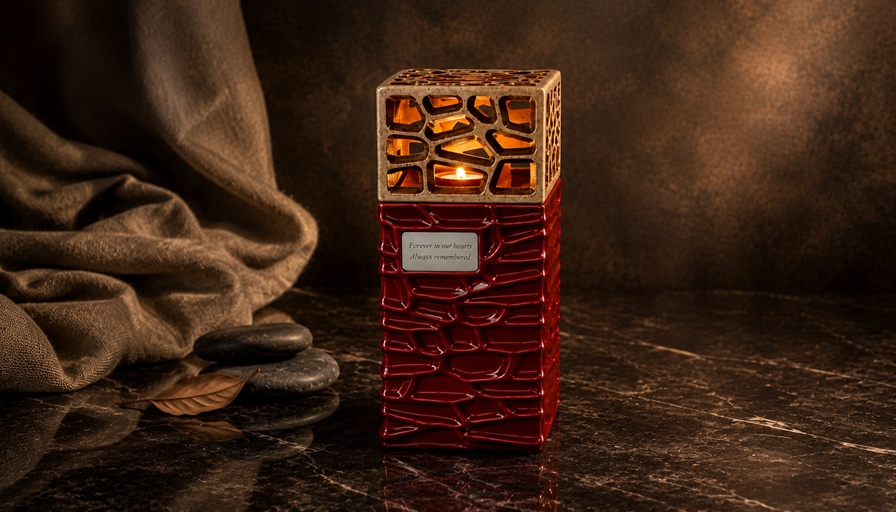
Some families prefer subtle designs that resemble decorative objects rather than traditional memorial pieces. Others find comfort in visible paw prints, engraved names, or symbolic artwork.
For a Private or Discreet Space
Not everyone wishes to display an urn openly. Some prefer to keep it in a cabinet, memory chest, or quiet personal space. Simpler designs with secure closures are often preferred for this purpose.
Compact urns can also be easier to move during house changes or travel.
For Outdoor Placement
If the urn will be placed in a garden, memorial area, or outdoor niche, weather resistance becomes especially important. Materials such as natural stone, bronze, or high-quality metal tend to withstand moisture and temperature changes better than untreated wood or delicate ceramics.
Outdoor memorial urns should also have a secure sealing mechanism to protect the contents.
Understanding Different Pet Urn Materials
The material of an urn affects not only its appearance, but also its weight, durability, texture, and overall atmosphere. Different materials tend to suit different personalities, interiors, and memorial preferences.
Wooden Pet Urns
Wooden urns often feel warm, understated, and timeless. They are commonly chosen for home display because they integrate naturally into furniture and living spaces.
Popular woods include oak, walnut, bamboo, and maple. Some designs feature engraved paw prints, names, or photo compartments.
Wooden urns are generally best suited for indoor use unless specifically treated for outdoor conditions.
Ceramic and Porcelain Urns
Ceramic urns and porcelain urns are appreciated for their handcrafted appearance and artistic character. They often feel personal and calming rather than formal.
Glazed finishes, soft colours, and organic shapes make ceramic urns especially suitable for contemporary homes. However, because ceramics can be fragile, they may not be ideal in households with small children or active pets.
Metal Pet Urns
Metal urns are durable, secure, and available in many styles, from traditional brass finishes to minimalist modern designs.
They are often selected for their long-term reliability and protective qualities. Aluminium and brass urns are particularly common because they are relatively lightweight while remaining strong.
Metal urns also tend to work well for travel or transportation if relocation may become necessary later.
Stone and Marble Urns
Stone urns convey permanence and stability. Their natural textures and weight often provide a sense of grounding that some families find comforting.
Marble and granite urns are especially suitable for outdoor memorial settings or more formal remembrance spaces.
Because every natural stone piece differs slightly in pattern and colour, these urns often feel unique without requiring decorative embellishment.

Should You Choose a Personalized Pet Urn?
Personalization can add meaning when done thoughtfully. For some people, a simple engraved name and date provide enough connection. Others prefer photo urns, engraved messages, paw prints, or symbolic motifs.
The most effective personalization is usually subtle rather than excessive. A carefully engraved name or small quote often ages more gracefully than highly decorative or heavily sentimental designs.
Common personalization options include:
- Pet name and dates
- Paw print engraving
- Breed silhouette
- Photo compartments
- Short memorial message
- Hand-painted artwork
If several family members are involved, it can help to choose a design that feels universally respectful and calming rather than overly specific to one person’s grief experience.
Keepsake Urns and Shared Memorial Options
Not every family wants a single large urn. In many households, ashes are divided among relatives or combined with other memorial items.
Keepsake urns are smaller urns designed to hold a symbolic portion of ashes. These are often chosen when adult children live separately or when several people shared a close bond with the pet.
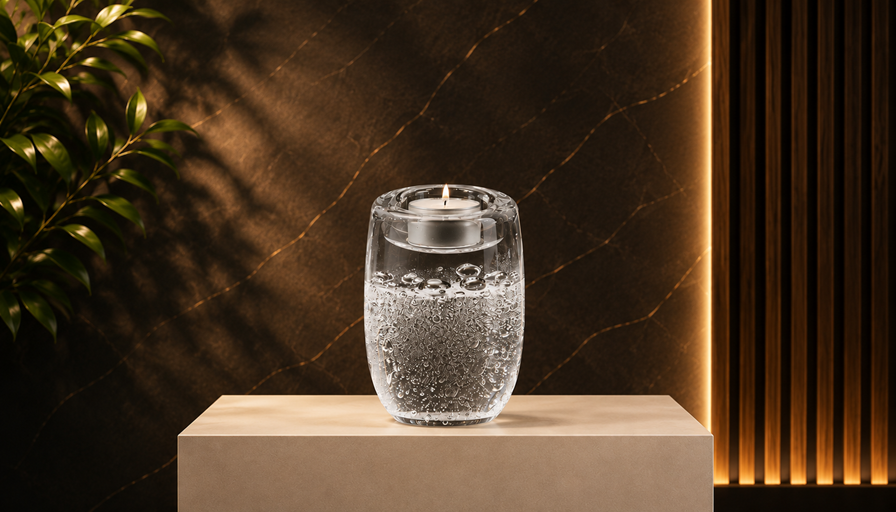
Some families also combine cremation ashes with memorial jewellery, glass art, or decorative remembrance objects.
These options can be particularly meaningful when a pet was central to family life over many years.
Common Mistakes to Avoid When Choosing a Pet Urn
Many people feel pressure to make the “perfect” choice immediately after loss. In reality, it is often better to focus first on practicality and emotional comfort rather than urgency.
Choosing an Urn That Is Too Small
This is one of the most common issues. Always verify the required capacity before purchasing. When uncertain, sizing slightly upward is usually safest.
Selecting Based Only on Appearance
An urn may look beautiful online but feel impractical in daily life. Consider weight, placement, fragility, and maintenance alongside design.
Overly Decorative Designs
Extremely elaborate memorial products can sometimes feel emotionally overwhelming over time. Many families later appreciate simpler designs that integrate naturally into the home.
Ignoring Closure Security
Especially in homes with children or pets, a secure closure system matters. Threaded lids or sealed bases generally provide greater reassurance.
Making a Rushed Decision
It is acceptable to take time before choosing a permanent urn. Temporary containers provided by crematoriums can often be used while considering long-term options.
Indoor Memorials vs Outdoor Memorials
Some people immediately know whether they want an indoor or outdoor memorial, while others decide gradually.
Indoor Memorial Spaces
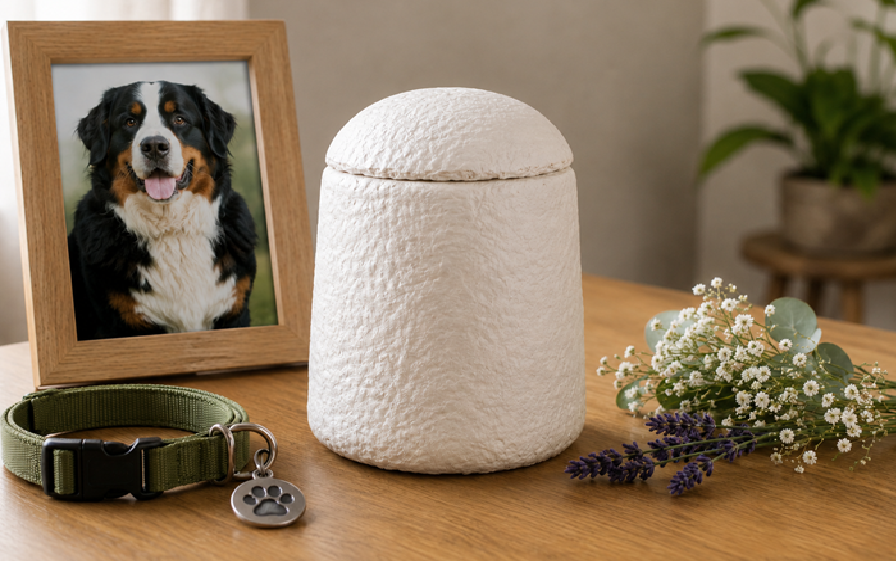
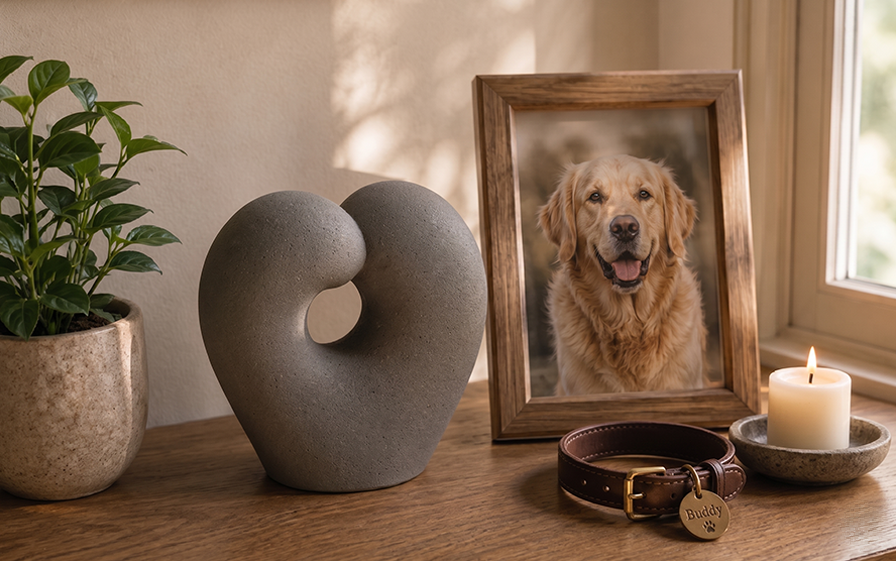
Indoor memorials often become part of daily routine and quiet remembrance. A shelf with photographs, a candle, or a collar beside the urn can create a calm and personal atmosphere without becoming visually dominant.
For indoor settings, aesthetic compatibility with the home usually matters more than extreme durability.
Outdoor Memorial Spaces
Outdoor memorials can provide a dedicated place for reflection, especially for dogs or pets who spent significant time outdoors.
Garden memorial urns, stones, plaques, or planted remembrance spaces are common choices in both the USA and UK.
When selecting an outdoor urn, consider:
- Weather resistance
- UV exposure
- Waterproof sealing
- Ground stability
- Long-term maintenance
Pet Cremation Urns for Different Types of Pets
Although dogs and cats are the most common companions memorialized with urns, many families also seek memorials for rabbits, birds, horses, reptiles, and other beloved animals.
Smaller pets may suit compact ceramic or keepsake urns, while larger animals often require custom sizing or more durable materials.
Some people also prefer species-specific symbolism, such as bird motifs, horse imagery, or minimalist animal silhouettes. Others intentionally avoid literal imagery and instead focus on colours, materials, or shapes that feel emotionally fitting.
How Funeral and Cremation Practices Differ Between the USA and UK
Pet cremation practices are broadly similar across the USA and UK, although there are some practical differences.
In the USA, larger homes and private outdoor spaces often make garden memorials and larger display urns more common. In the UK, more compact living arrangements sometimes lead people toward smaller urns, keepsakes, or discreet memorial designs.
Both regions increasingly favour personalized memorials that feel integrated into the home rather than overtly traditional.
Individual cremation services are also widely available in both countries, allowing ashes to be returned separately rather than communally cremated.
What Makes an Urn Feel “Right” Over Time?
People often worry about making the wrong decision, but long-term satisfaction usually depends less on trend or decoration and more on emotional compatibility.
The urn that continues to feel appropriate years later is often one that:
- Fits naturally within the home
- Feels calm rather than emotionally overwhelming
- Reflects the pet’s presence without exaggeration
- Offers practical durability
- Supports remembrance quietly and consistently
For many families, understated memorials become the most enduring because they remain comforting without constantly demanding attention.

Frequently Asked Questions About Pet Cremation Urns
How large should a pet urn be?
A general guideline is one cubic inch of urn capacity per pound of body weight before cremation. Choosing a slightly larger urn is usually recommended when uncertain.
Can pet ashes be divided between family members?
Yes. Many families choose keepsake urns or memorial jewellery so multiple people can keep a small portion of ashes.
Are pet urns sealed?
Most quality urns include secure closures such as threaded lids, bottom panels, or sealing systems. Closure type varies by material and design.
Which urn material lasts the longest?
Stone, metal, and high-quality hardwood urns generally offer excellent long-term durability. Outdoor placement may require additional weather resistance.
Can a pet urn be kept outside?
Yes, but outdoor urns should be made from weather-resistant materials such as stone, granite, bronze, or protected metals.
Should I choose a personalized urn?
Personalization is entirely optional. Many people appreciate subtle engraving or a photo compartment, while others prefer a simpler design.
What is a keepsake urn?
A keepsake urn is a smaller urn designed to hold a symbolic amount of ashes rather than the full cremation remains.
Can I travel with a pet urn?
Yes, although lightweight and securely sealed urns are generally easier for transport. Airline requirements may vary for air travel.
Choosing With Practicality and Meaning in Balance
A pet cremation urn does not need to be elaborate to feel meaningful. In many cases, the most comforting choice is one that quietly reflects the role a pet held within everyday life.
Taking time to consider size, placement, material, and emotional tone usually leads to a decision that feels more natural and lasting. Whether the urn becomes part of a visible memorial space or remains in a more private setting, the goal is often the same: preserving connection in a way that feels steady, respectful, and sustainable over time.
For those exploring memorial options further, it can also be helpful to compare different urn materials, personalization possibilities, or keepsake alternatives before making a final decision.
If you feel certain information is missing or you have questions after reading this post, Please feel free to contact us via the contact form.