Average cremation urn prices in Ireland
Anyone looking for a cremation urn soon notices that prices can vary widely. A simple ashes container may cost under €100, while a handmade ceramic, bronze or natural stone urn can cost several hundred euros or more. The difference is usually explained by material, size, finish, personalisation, craftsmanship and where the urn will be kept. In this guide, we explain the average cost of a cremation urn in Ireland, what affects the price and how to compare urns in a calm and practical way.
As a broad indication, a simple cremation urn or ashes container in Ireland may cost under €100. Many full-size urns for ashes fall somewhere between around €175 and €600, depending on material, size and finish. Handmade, bronze, natural stone or custom-made urns can cost €600, €850, €1,400 or more. Mini urns, keepsake urns and ashes jewellery usually have their own price range because they are designed for a smaller portion of ashes.
These figures are only a guide. Prices can change due to material costs, stock, delivery, exchange rates, personalisation and workshop time. The right urn is not automatically the most expensive urn, and a lower-priced urn is not automatically a poor choice. What matters most is whether the urn has the correct capacity, suits the place where it will be kept and feels appropriate for the person you are remembering.
| Type of urn or memorial item | Indicative Ireland price range | Typical use |
|---|---|---|
| Simple urn or ashes container | Often under €100 to around €150 | A modest or temporary solution, or a simple urn for keeping ashes. |
| Full-size urn for one adult | Often around €175 to €600 | Keeping all of the ashes of one adult at home, in a niche or another memorial place. |
| Ceramic, wooden or metal design urn | Often around €275 to €800 | A more decorative urn with a specific style, shape, colour or finish. |
| Bronze, natural stone or handmade art urn | Often around €600 to €1,400+ | A lasting memorial object, often chosen for craftsmanship, durability or artistic value. |
| Custom-made urn | Often from around €850, usually by quotation | A personal design based on shape, symbolism, colour, image, hobby, profession or memory. |
| Mini urn or keepsake urn | Often around €40 to €225 | Keeping a small symbolic amount of ashes, often shared among family members. |
| Ashes jewellery | Often from around €60 to several hundred euros | Keeping a very small amount of ashes close in a pendant, ring, bracelet or charm. |
A full-size cremation urn between €175 and €600 can be seen as a normal middle range in Ireland. Within this range, there is usually a wide choice of materials, shapes and styles. Someone looking for a very simple solution may spend less. Someone looking for a handmade, bronze, stone or bespoke memorial should expect a higher budget.
What do we mean by an average cremation urn?
When people ask what an average urn costs, they usually mean a full-size urn suitable for the cremation ashes of one adult. This is different from a keepsake urn, mini urn or piece of ashes jewellery, which holds only a small symbolic amount of ashes.
A full-size adult urn often needs a capacity of around 3 to 4 litres. The exact amount of ashes can vary from person to person, so it is always sensible to check the capacity shown on the product page. The funeral director or crematorium may also be able to confirm how much ash is available.
An average urn is therefore not only about price. It is mainly about practical suitability: capacity, dimensions, material, placement and the way the urn will be used.
Why do cremation urn prices differ so much?
The price of a cremation urn is mainly determined by material, size, finish, design and personalisation. A simple metal urn made in larger numbers will usually cost less than a hand-painted ceramic urn, a bronze urn or a natural stone urn that requires more specialist work.
The purpose of the urn also matters. An urn used mainly for temporary keeping or later scattering does not always need to be expensive. An urn that will be displayed for many years at home, placed in a columbarium niche or used as a permanent memorial object may require more attention to material, durability, finish and appearance.
For many families, an urn is not just a product. It is a lasting memorial object. The price can therefore reflect not only the material value, but also the craftsmanship, design, finishing process and personal meaning.
For more background on how urn prices are built up, you can also read our advice page about what affects cremation urn prices.
Material as an important price factor
Material has a major influence on the price. Each material has its own production process, appearance and practical qualities. The best material is not always the most expensive one. It depends on where the urn will be kept, how visible it will be and what kind of atmosphere feels right.
Metal urns
Metal urns can be relatively affordable and strong. Brass, aluminium and stainless steel urns are available in many shapes, colours and finishes. Stainless steel often has a clean, modern appearance and can be suitable for long-term keeping.
Ceramic urns
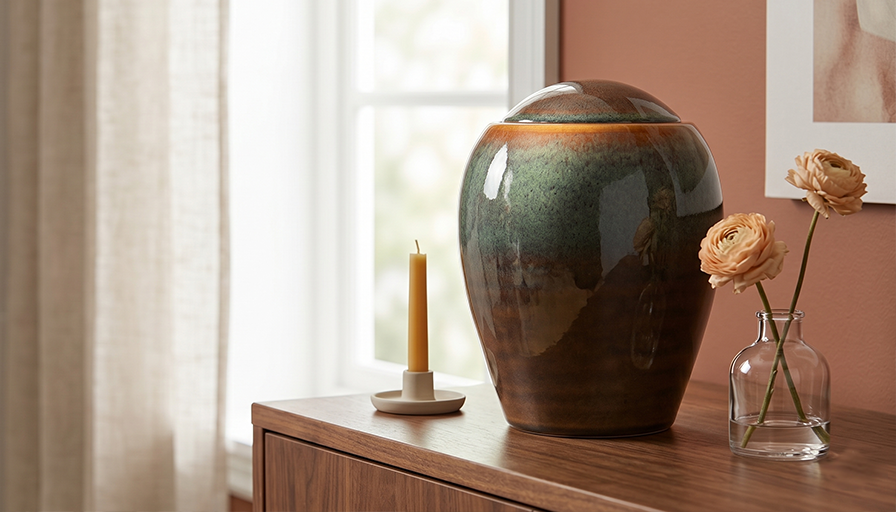
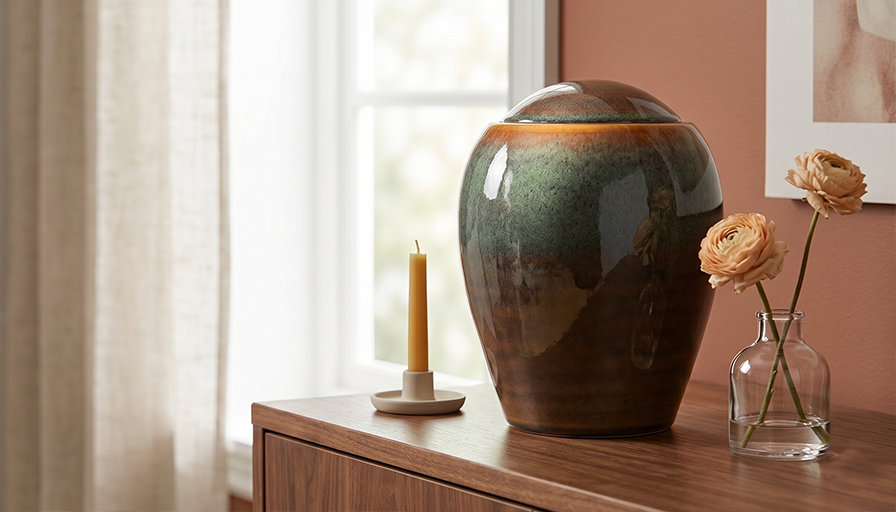
Ceramic urns are often chosen for their warm and handcrafted character. They may be shaped, glazed and fired by hand. A simple ceramic urn can be affordable, while a handmade or hand-painted ceramic urn may fall into a higher price range because of the time and skill involved.
Wooden urns
Wooden urns can vary strongly in price. A simple wooden urn may be a modest choice, while special woods, refined joints, inlay work or hand-finishing can increase the cost. Wood is often chosen for its natural warmth and the possibility of engraving.
Natural stone urns
Natural stone urns, such as marble or granite urns, are often more expensive because of the weight, cutting, hollowing, polishing and natural variation of the stone. Each urn has its own colour tones and pattern, which can make it feel unique.
Bronze urns
Bronze urns are usually in a higher price segment. Bronze is heavy, durable and valuable. It requires specialist casting or careful finishing. Bronze is often chosen when the urn is intended to be both a resting place for ashes and a sculptural memorial object.
Biodegradable urns
Biodegradable urns can vary in price. Some are simple and modestly priced, while others are designed for specific uses, such as burial in the ground, water burial or natural memorial settings. The material, shape and intended use all influence the price.
Is a cheap urn a poor choice?
No. A lower-priced urn is not automatically a poor choice. Sometimes a simple urn is exactly right. This may be the case when the person who died valued simplicity, when the ashes will later be scattered, or when the urn is only needed temporarily until a final decision is made.
It is important, however, to understand why an urn is inexpensive. Is it smaller? Is the material simpler? Is the finish more basic? Is it only suitable for indoor use? Is the capacity clearly stated? A low price is not a problem as long as the urn suits its purpose.
When comparing urns, look beyond the price. Check the capacity in litres, the dimensions, the material, the filling opening, the closure and whether the urn is suitable for the place you have in mind. This is especially important for outdoor placement, a niche, a columbarium or an urn monument.
When does a more expensive urn make sense?
A more expensive urn can make sense when you are looking for something beyond a basic solution. This may involve handwork, a special design, durable materials, artistic finishing or extensive personalisation.
A handmade urn takes more time and craftsmanship. A ceramic urn may need to be shaped, dried, fired and finished. A bronze urn requires a different production process from a simple metal urn. A natural stone urn must be cut, hollowed, polished and checked carefully.
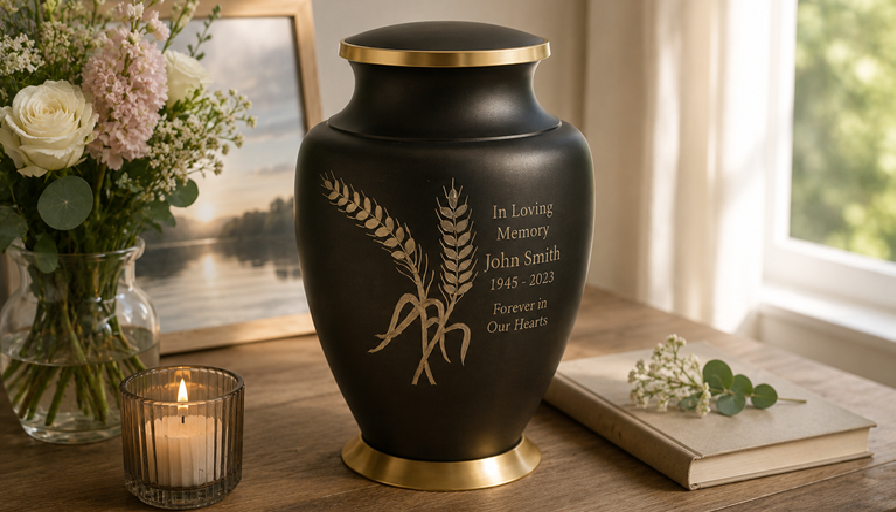
Personalisation can also increase the price. This may include a name, date, short text, symbol, fingerprint, image element or a custom colour or shape. For some families, this personal detail makes the urn more meaningful. In that case, the additional cost is not only technical, but also emotional.
What does urn personalisation cost?
The cost of personalisation depends on the technique and the product. A simple name and date may be straightforward, while a longer text, special symbol, hand-painted element or fully custom-made design requires more time and preparation.
Personalisation can make an urn more personal, but it is not always necessary. Sometimes the shape, colour or material already feels appropriate. In other cases, a short inscription or subtle symbol can help make the urn feel closer to the person being remembered.
A helpful question is not only: what does personalisation cost? A better question is: does this personalisation truly add meaning to this urn and this memory? If the answer is yes, even a small detail can make a meaningful difference.
The place of the urn also affects the choice
Where the urn will be kept can affect both the price and the material choice. An urn that will stand indoors does not need to meet the same requirements as an urn for outdoor placement, a columbarium niche or an urn monument.
For indoor placement, many materials can be suitable, including ceramic, wood, brass, glass, porcelain and natural stone. For outdoor placement, it is more important to consider weather resistance, moisture, frost and fading. Not every urn is made for outdoor use.
If the urn will be placed in a niche or columbarium, always check the dimensions. An urn may have the right capacity but still be too tall, too wide or too deep for the available space. For burial or placement in an urn monument, material and closure can also be important.
Do you have to choose an urn immediately?
In many cases, you do not have to choose a decorative urn immediately after the cremation. The ashes may first be returned in a temporary container or simple ashes box. This gives families time to think about what feels right.
Some people choose a full-size urn soon after the cremation. Others first decide whether the ashes will be kept at home, scattered, buried, divided among family members or placed in a columbarium. It is often easier to choose the right urn once the final destination of the ashes is clear.
If you are unsure, take time to compare capacity, material, appearance and practical use. A carefully chosen urn does not need to be chosen in a hurry.
One urn or several keepsakes?
Not every family chooses one large urn. Sometimes the ashes are divided between several memorial items. For example, there may be one main urn for a partner, together with keepsake urns for children, siblings or close family members. Ashes jewellery is also often chosen when someone wants to keep a very small amount of ashes close.
This can affect the total cost. One urn costing €400 may be less expensive than a combination of a larger urn, several keepsake urns and pieces of ashes jewellery. At the same time, that combination may feel more appropriate for the family.
It is therefore helpful to first decide what should happen to the ashes. Will all ashes be kept in one place? Will some be scattered? Do several people want to keep a small part? Only after that can you decide what budget makes sense.
How do you choose an urn within your budget?
Choosing an urn within a budget begins with practical clarity. First decide how much ash the urn needs to hold. Then consider where the urn will be kept. After that, you can compare material, style and price range.
For many families, a budget of around €175 to €600 is realistic for a full-size urn for one adult. Within this range there is usually a good choice of materials and designs. Someone looking for a very simple solution may spend less. Someone looking for a handmade or exclusive urn should expect a higher budget.
When comparing urns, pay attention to:
- the capacity in litres;
- the external dimensions;
- the material;
- the closure or filling opening;
- whether the urn is suitable for indoor or outdoor use;
- whether engraving or personalisation is possible;
- the expected delivery time;
- the style and appearance;
- the reliability and clarity of the supplier.
An urn does not have to be expensive to be meaningful. But it does need to be right in practical use, material and feeling.
What is a normal price for a good cremation urn?
A normal price for a good full-size cremation urn in Ireland is often around €175 to €600. In this range, you can usually find urns suitable for the full ashes of one adult, with clear product information and a material choice that suits the intended use.
Below €175 you will mostly find simple urns, smaller models or basic containers. These can be perfectly suitable, but check the capacity carefully. Above €600, you are more likely to find design urns, handmade urns, natural stone, bronze or special finishes.
From around €850 to €1,400 or more, the urn is often in a more exclusive segment. This may include artistic designs, custom-made urns, bronze pieces or natural stone memorials where design value and personal meaning play a larger role.
Frequently asked questions about cremation urn costs
How much does an average cremation urn cost in Ireland?
A full-size cremation urn in Ireland often costs around €175 to €600. A simple urn may cost less, while handmade, bronze, natural stone or custom-made urns can cost significantly more.
How much does a cheap urn cost?
A simple urn or ashes container may cost under €100 to around €150. Always check capacity, material, finish and whether the urn is suitable for the place where it will be kept.
Why are some urns so expensive?
More expensive urns are often made from costlier materials, such as bronze, natural stone or high-quality ceramic. Handwork, design, personalisation and smaller production numbers can also increase the price.
Is an urn required after cremation?
No, a decorative urn is not always required. Ashes can also be scattered, buried, placed in a simple container or divided between several keepsakes. An urn is mainly chosen when the ashes will be kept, displayed or placed in a specific memorial setting.
Can I choose an urn later?
Yes, in many cases you can choose an urn later. The ashes may first be returned in a temporary container while the family decides what feels right. This can make it easier to choose a suitable urn without pressure.
What mainly affects the price of an urn?
The price of an urn mainly depends on the material, capacity, finish, design and personalisation. A simple metal or ceramic urn is usually less expensive than a handmade urn made from bronze, natural stone or glass.
How many litres should an adult urn hold?
For one adult, many full-size urns have a capacity of around 3 to 4 litres. The exact amount of ashes can vary, so always check the capacity and ask the crematorium or funeral director if you are unsure.
Is €400 a normal price for an urn?
Yes, an urn of around €400 is within a normal middle range in Ireland. At this level, you can often find a well-finished urn with suitable capacity for one adult and clear product information.
How much does a keepsake urn cost?
A keepsake urn often costs around €40 to €225, depending on material, size, finish and personalisation. Keepsake urns are usually used to hold a small portion of ashes.
Is an outdoor urn more expensive than an indoor urn?
Not always, but often it can be. An outdoor urn must be more resistant to moisture, frost, sunlight and temperature changes. Durable materials such as bronze, natural stone or stainless steel may increase the price.
Should I check the dimensions before buying an urn?
Yes. Capacity is important, but external dimensions matter too. This is especially true if the urn will be placed in a niche, columbarium, urn monument or specific memorial space.
Conclusion: what does a cremation urn cost?
A full-size cremation urn in Ireland often costs around €175 to €600. Simple urns can be available under €100 to around €150, while handmade, bronze, natural stone or personalised urns can cost €600, €850, €1,400 or more. Custom-made urns are usually priced individually because the design, materials and amount of work differ from case to case.
The price is mainly determined by material, size, finish, design, personalisation and where the urn will be placed. Still, the most important question is not only what an urn costs, but which urn feels right for the person being remembered and for the family choosing it.
A suitable urn does not have to be the most expensive choice. It is about the balance between practical suitability, quality, appearance and meaning. When those elements come together, an urn becomes more than a product. It becomes a tangible form of remembrance, carefully chosen for someone who is missed.