Choosing a Metal Urn: Practical Guidance for Home Display, Burial and Columbarium Placement
Choosing an urn often begins with a practical question, but it rarely stays practical for long. Families are not only looking for a container for ashes. They are looking for something that feels secure, dignified and appropriate for the place where their loved one will be remembered.
A metal urn can be a fitting choice when durability, long-term protection and a refined appearance are important. It may be kept at home, placed in a columbarium niche, buried in a cemetery or churchyard where permitted, or used alongside smaller keepsake urns shared among family members.
In short: a metal urn is usually most suitable when you want a strong, lasting and carefully finished ashes urn for home display, niche placement, traditional burial or shared remembrance. The best choice depends on where the urn will be placed, how much capacity is needed, which finish feels appropriate and whether personalisation is desired.
If you are still comparing materials and designs, you can also explore our main collection of metal urns for ashes.

When Is a Metal Urn the Right Choice?
A metal urn may be the right choice when the ashes need to be kept safely for many years. Compared with more fragile materials, metal is less likely to chip, crack or break during normal handling. This can be reassuring if the urn may be moved, transported, placed in a niche, or kept in a home where it may occasionally be handled.
Metal also offers a wide range of visual styles. Some urns have a classic ceremonial appearance, while others are discreet, sculptural or contemporary. This makes metal suitable for families who want strength and protection without choosing something that feels too formal, heavy or traditional in appearance.
For many people, the appeal lies in the balance between reliability and personal expression. A metal urn can feel protective and permanent, while still allowing room for colour, shape, engraving and symbolic detail.
What Should You Consider Before Choosing a Metal Urn?
Before selecting a metal urn, it helps to answer a few practical questions. These questions make it easier to compare different designs and reduce the chance of choosing an urn that looks suitable but does not fit the intended setting.
| Question | Why it matters |
|---|---|
| Where will the urn be placed? | An urn for home display may be chosen differently from an urn intended for a columbarium niche, cemetery plot or churchyard burial. |
| How much capacity is needed? | A full-size adult urn, companion urn, keepsake urn and pet urn all serve different purposes. |
| Does the urn need to fit fixed measurements? | Columbarium niches, memorial walls and cemetery requirements may have strict limits for height, width and depth. |
| Which finish feels appropriate? | Polished, brushed, matte, coloured and hand-finished surfaces all create a different visual impression. |
| Is personalisation desired? | Some metal urns can be engraved directly, while others are better suited to a plaque, base or separate nameplate. |
| Will the urn be handled or moved? | Weight, shape, closure and stability become more important if the urn needs to be transported or placed later. |
What Is a Metal Urn?
A metal urn is a cremation urn made from materials such as brass, aluminium, stainless steel, bronze, copper, Corten steel or a blended alloy. These materials are valued for their strength, stability and ability to hold a wide range of finishes.
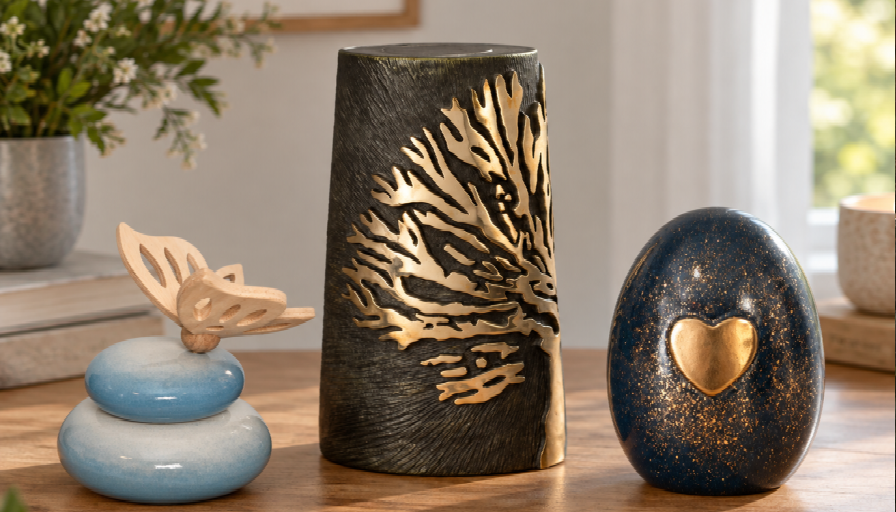
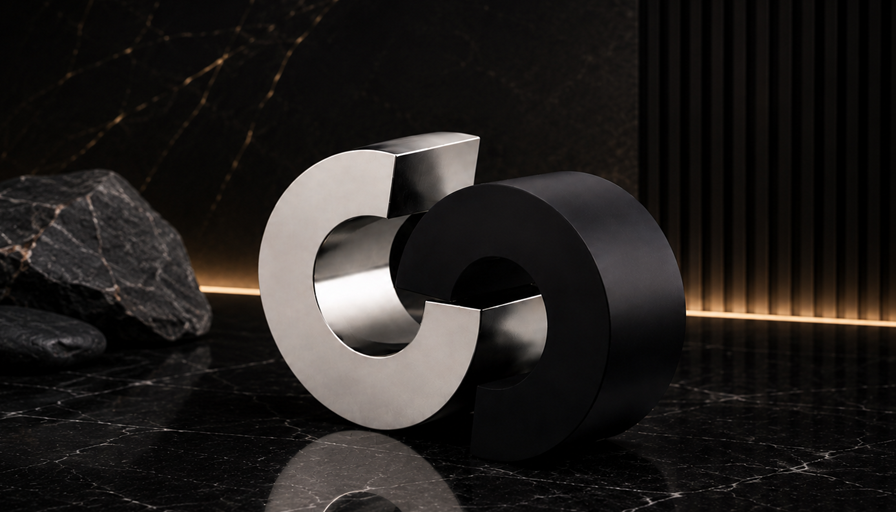
Some metal urns are polished or brushed. Others are painted, enamelled, engraved, sculpted, lacquered or hand-finished. This gives families a broad choice, from traditional vase-shaped urns to modern home memorials that look more like decorative vessels or small sculptures.
The most important point is not simply that the urn is made from metal, but whether its size, finish, closure and shape are suitable for the place where it will be kept.
Metal Urns for Home Display
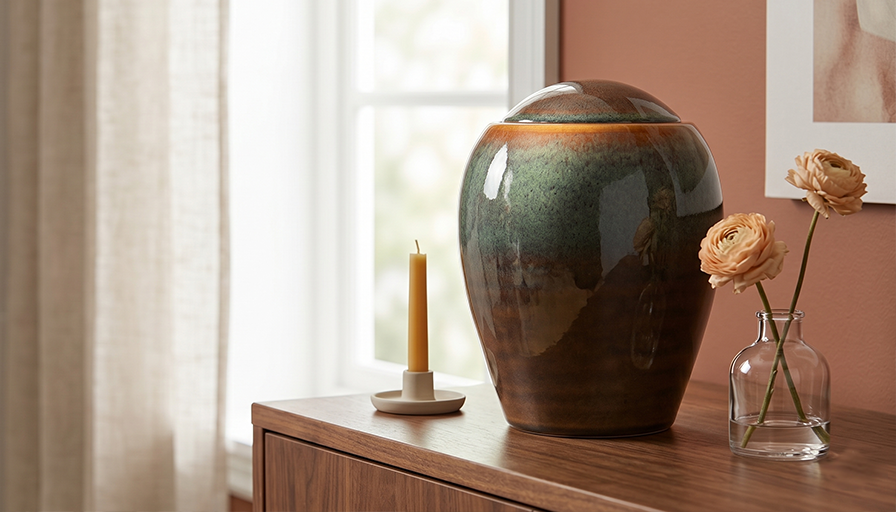
Many families choose a metal urn because they want to keep the ashes at home. In this setting, the urn becomes part of a private living space. Some people prefer a visible memorial on a mantelpiece, shelf, cabinet or sideboard. Others want the urn to blend quietly into the interior.
For home display, the finish and shape are often just as important as the material itself. A polished urn may catch the light and become a focal point. A brushed or matte finish usually feels more understated. A sculptural urn may look like an art object, while a classic vessel shape may feel more traditional.
It can help to imagine the urn in the exact place where it will stand. Consider the colours in the room, the amount of natural light and whether the urn will be displayed with a photograph, candle, flower, keepsake or piece of memorial jewellery. The surrounding space often makes the right finish easier to recognise.
Metal Urns for Columbarium Placement
A columbarium niche, urn wall or memorial niche can be a suitable place for a metal urn, but measurements should always be checked before ordering. Even when an urn appears compact online, the niche may have fixed internal limits for height, width and depth.
Metal urns are often suitable for columbarium placement because they are stable, protective and available in many compact shapes. However, not every sculptural urn will fit every niche. Wide bases, curved shapes, raised lids and decorative details can all affect whether the urn can be placed correctly.
Before choosing an urn for a columbarium, ask the crematorium, cemetery or memorial site for the exact internal dimensions of the niche. If the niche will also contain a plaque, flowers, a photograph or another object, allow space for those items as well.
Metal Urns for Burial in the UK
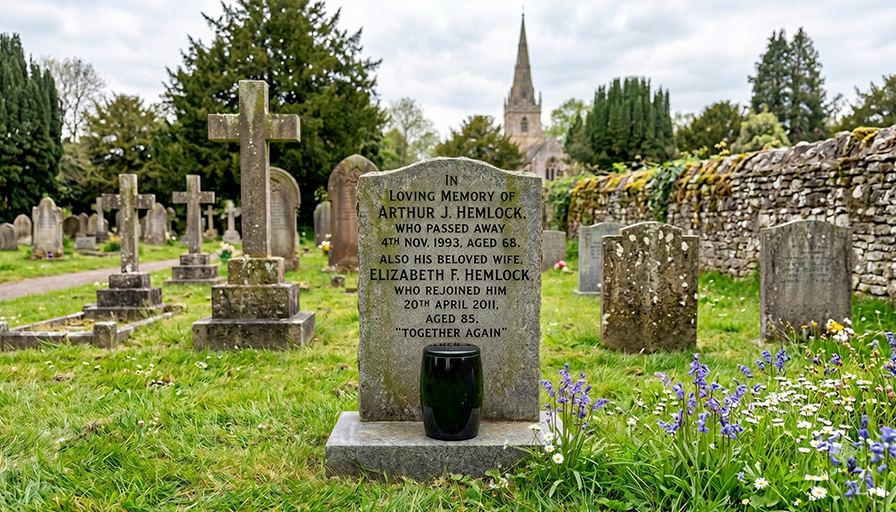
Some metal urns can be used for burial, depending on the cemetery, churchyard, crematorium garden or burial ground. In the UK, requirements can vary by location. One site may accept a metal urn for a cremated remains plot, while another may prefer a particular type of container or ask for additional protection.
Metal is usually chosen for preservation rather than natural return. This means it is different from biodegradable urns, which are designed for natural burial, woodland burial or water burial. If the intention is an eco-conscious burial, a biodegradable urn may be more appropriate.
For traditional burial in a cemetery or churchyard, a metal urn can provide strength and long-term protection. However, you should always confirm the site’s requirements before making a final decision. Ask whether metal urns are accepted, whether an outer container is required and whether there are any size restrictions for the plot.
Which Type of Metal Feels Most Suitable?
Metal urns can be made from several different materials, each with its own appearance, weight and character. The choice is not only technical. It also affects how the urn feels in the room, in the hand and in the memorial setting.
| Metal | Appearance and feel | Often chosen for | Points to consider |
|---|---|---|---|
| Brass | Classic, refined and reassuring in weight. | Traditional home memorials, engraved urns and decorative finishes. | Can feel more substantial than lighter metals. |
| Aluminium | Light, modern and versatile. | Contemporary interiors, coloured finishes and lighter urn designs. | May feel less heavy than brass or bronze. |
| Stainless steel | Clean, minimal and discreet. | Modern memorials, understated design and corrosion-resistant finishes. | Can feel cooler in appearance than bronze, brass or copper. |
| Bronze | Rich, deep and timeless. | Premium memorials, sculptural urns and designs with a sense of permanence. | Often heavier and may sit in a higher price range. |
| Copper | Warm, distinctive and expressive. | Families who appreciate colour depth and a material with natural character. | The surface may change over time, depending on the finish and environment. |
| Corten steel | Architectural, weathered and sculptural. | Contemporary memorials with a natural rust-toned appearance. | Best chosen when the weathered look is intentional and understood. |
How the Finish Changes the Character of the Urn
The finish of a metal urn can change its entire character. A polished surface often feels formal and reflective. A brushed finish is usually softer and less prominent. A matte surface can feel modern, quiet and restrained. Hand-applied finishes may give each urn slight individual variation.
Colour also plays an important role. Silver, pewter and stainless steel tones often suit modern interiors. Gold, bronze and copper tones can feel warmer and more traditional. Black, white, blue, green or deep red finishes may be chosen for personal meaning, interior harmony or a connection with the person being remembered.
For practical use, it is worth considering care as well as appearance. Polished finishes may show fingerprints more quickly. Matte and brushed finishes are often easier to place discreetly in a home. Painted, enamelled or lacquered surfaces should be handled gently and cleaned only according to the care instructions.

How to Choose the Correct Size
Capacity is one of the most important practical details when choosing any urn. A full-size urn is intended to hold the ashes of one person. A companion urn is larger and designed for the ashes of two people. A keepsake urn holds only a small portion of ashes.
As a general guide, an adult urn is usually selected when all the ashes of one adult need to be kept together, while a keepsake urn is only suitable for a small symbolic portion. Your funeral director, crematorium or cremation provider can usually advise on the approximate amount of ashes after cremation.
If you are choosing a narrow, sculptural or unusually shaped urn, it is especially important to compare the listed capacity with the amount of ashes that need to be placed inside. A beautiful urn should also be practical enough for its intended purpose.
| Type of urn | Purpose | Important note |
|---|---|---|
| Adult urn | Usually intended to hold all the ashes of one adult. | Always check the listed capacity before ordering. |
| Companion urn | Designed to hold the ashes of two people. | Often chosen by partners, spouses or families planning ahead. |
| Keepsake urn | Holds a small portion of ashes. | Suitable when ashes are shared among relatives or partly scattered. |
| Pet urn | Designed for the ashes of a pet. | Capacity depends on the pet’s weight and the cremation process. |
When a Keepsake Metal Urn May Be Helpful
A keepsake urn can be helpful when several family members wish to keep a small portion of ashes. It may also be chosen when part of the ashes will be scattered, buried or placed elsewhere, while a small amount is kept at home.
Metal keepsake urns are often chosen because they feel secure despite their smaller size. Some families choose a keepsake urn that matches the main urn. Others prefer each family member to select a design that feels personal to them.
This can be a practical and meaningful solution when relatives live in different homes or different countries. It allows remembrance to be shared without changing the central memorial choice.
Personalising a Metal Urn
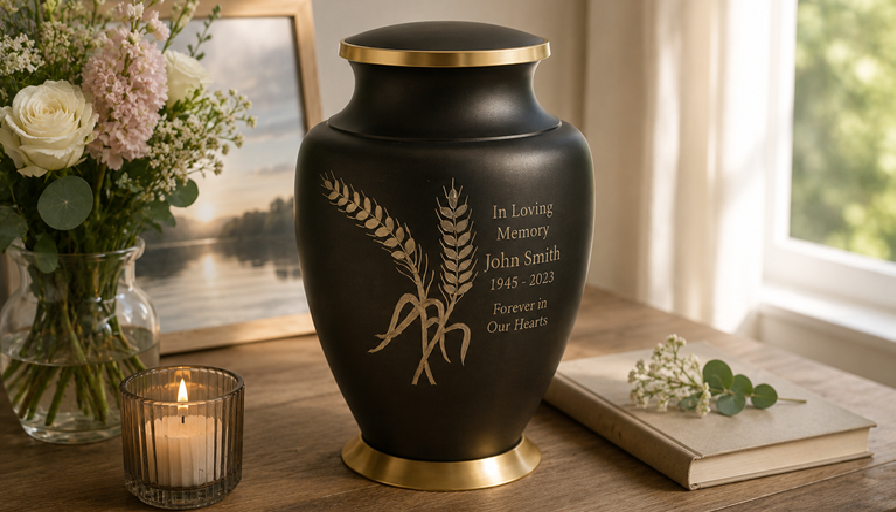
Personalisation can make a metal urn feel more connected to the person it represents. The detail does not need to be elaborate. A name, dates, initials, a short phrase or a small symbol may be enough.
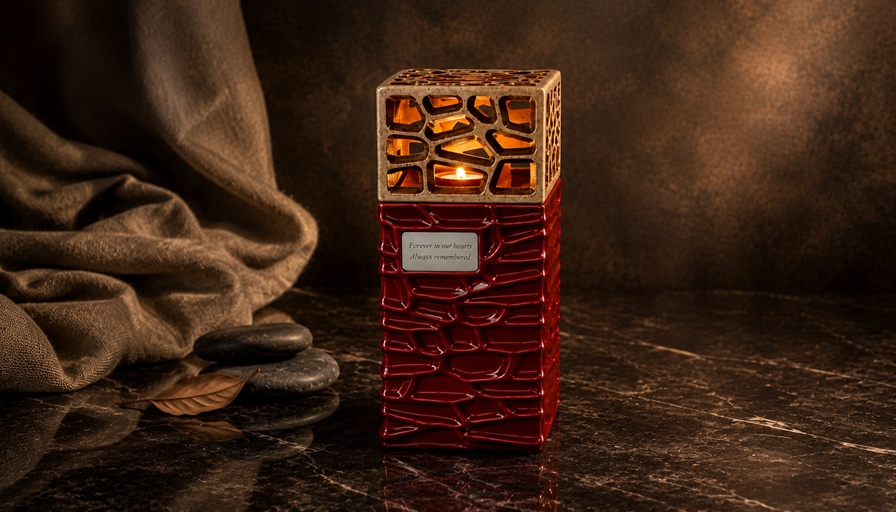
Many metal urns can be personalised through engraving. Depending on the design, the engraving may be placed directly on the urn, on a small plaque, on a base or on a matching accessory. Common symbols include a heart, tree, bird, cross, flower, star or infinity sign.
When choosing words, short inscriptions often work best. They remain clear, balanced and timeless. If the urn has a curved, textured or highly decorative surface, ask in advance whether direct engraving is possible or whether a plaque would give a cleaner result.
Metal Urns and Memorial Jewellery
Some families combine a metal urn with memorial jewellery. A pendant, ring, bracelet or charm may hold a tiny portion of ashes, a fingerprint, a name engraving or another personal detail.
This can be meaningful for someone who wants a private form of remembrance rather than a visible memorial at home. It can also complement the main urn without replacing it.
The urn and jewellery do not have to be made from the same metal. A subtle connection through colour, symbol, engraving or style is often enough.

How to Care for a Metal Urn
Most metal urns are easy to care for. A soft, dry cloth is usually enough for regular dusting. Avoid harsh cleaning products, abrasive cloths, solvents or chemicals unless the care instructions specifically allow them.
If the urn has a painted, enamelled, lacquered or hand-finished surface, gentle care is especially important. These finishes are often designed for beauty as well as protection, but they should not be scrubbed.
For an urn kept at home, choose a stable surface away from moisture, strong heat and places where the urn could be knocked accidentally. If the urn is displayed with candles, keep flame and heat safely away from the urn and nearby objects.
Common Mistakes to Avoid
One common mistake is choosing an urn based only on appearance without checking capacity. Even a beautiful urn must be suitable for the amount of ashes it needs to hold.
Another mistake is forgetting to check niche or burial requirements. A columbarium niche may have strict internal dimensions. A cemetery, churchyard or crematorium garden may also have rules about accepted materials, outer containers or plot sizes.
It is also worth thinking about the finish in daily life. Highly polished surfaces may show fingerprints more easily than matte or brushed surfaces. Very decorative shapes may need more space than expected.
Finally, consider whether other close relatives may want to be involved. If several people wish to keep part of the ashes, keepsake urns or memorial jewellery may provide a respectful shared solution.
Planning Ahead With a Metal Urn
Some people choose an urn while arranging their own funeral wishes. This can give loved ones practical guidance later and help ensure that the memorial reflects personal preferences.
If you are planning ahead, consider where the urn should eventually be placed. Home display, burial, niche placement and shared remembrance all lead to different practical decisions. It may also be helpful to record preferences about engraving, keepsake urns, scattering or memorial jewellery.
Clear wishes cannot remove the emotion of loss, but they can reduce uncertainty for the people who will one day have to make decisions.
FAQ About Choosing a Metal Urn
When is a metal urn a good choice?
A metal urn is often a good choice when durability, long-term protection and a refined appearance are important. It can be suitable for home display, columbarium placement, traditional burial where permitted, or shared remembrance through keepsake urns.
Can I keep a metal urn at home?
Yes. Many metal urns are designed for home display. They can be placed on a shelf, cabinet, mantelpiece or private memorial table, depending on the design and the family’s preference.
Can a metal urn be placed in a columbarium niche?
Often, yes. The most important step is to check the internal niche measurements before ordering. Compare the niche height, width and depth with the urn dimensions. Also allow space for any plaque, flowers or personal items that may be placed with it.
Can a metal urn be buried?
Some metal urns can be buried, but cemetery and churchyard rules vary. Always check whether the burial site accepts metal urns and whether an outer container or specific size is required.
Is a metal urn suitable for a natural burial?
Usually not. Metal is generally chosen for preservation rather than biodegradability. For natural burial, woodland burial or water burial, a biodegradable urn is usually more appropriate.
Can a metal urn be engraved?
Many metal urns can be engraved, either directly on the urn or on a separate plaque. The best method depends on the material, shape and finish.
Which finish is easiest to care for?
Matte and brushed finishes are often less likely to show fingerprints than highly polished finishes. Painted, enamelled and lacquered finishes should be cleaned gently according to the care instructions.
What is the difference between a full-size metal urn and a keepsake metal urn?
A full-size metal urn is intended to hold all the ashes of one person, while a keepsake metal urn holds only a small portion. Keepsake urns are often chosen when ashes are shared among family members or partly scattered.
What should I check before ordering a metal urn?
Check the urn’s capacity, dimensions, closure, material, finish and suitability for the intended setting. If the urn is for a niche or burial, confirm the requirements with the cemetery, crematorium, churchyard or memorial site first.
A Durable Choice, Guided by Place and Purpose
A metal urn offers more than strength. It can provide a lasting and secure place for ashes while still allowing room for personal taste, symbolism and interior style. For some families, the right choice is a simple brushed urn for home display. For others, it may be a bronze sculpture, a stainless steel design for a niche, or several keepsake urns shared among relatives.
The most suitable urn is the one that fits both the practical setting and the way you wish to remember. By considering placement, capacity, finish, personalisation and long-term care, you can choose a metal urn with more confidence and less pressure.
You may also wish to compare our full collection of metal urns for ashes, including brass, aluminium, stainless steel, bronze, copper and Corten steel designs.
If you are unsure which metal urn is most suitable, our team can help you compare size, material, finish and placement options with care. Please contact us via the contact form for personal guidance.