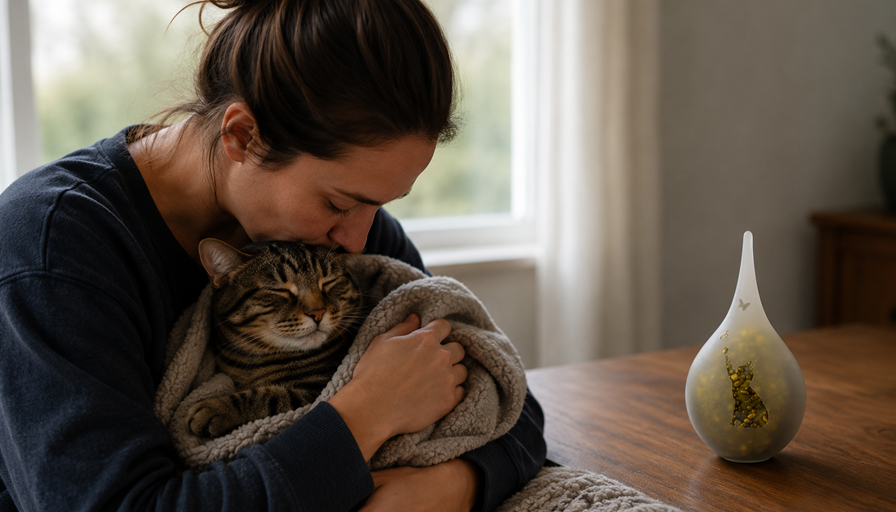
What Should You Do When Your Cat Dies?
If your cat has just passed away, begin by taking a quiet moment before making practical decisions. If your cat died at home, place them gently on a clean blanket or towel in a cool, peaceful room and contact your veterinarian for guidance. Your vet can explain the next steps, aftercare options and any local considerations around cremation or burial.
If your cat passes away at a veterinary practice, the staff will usually guide you through the available choices. Although it may feel as if everything must be decided immediately, most practices understand that owners need time to think.
Important: If you are unsure whether your cat has passed away, if the death was sudden or unexplained, or if there may be a risk to another pet or person, contact your veterinarian immediately for advice.

First Steps After Your Cat Passes Away
The first hours after losing a cat can feel unreal. A simple step-by-step approach can help you act calmly while still giving yourself space to grieve.
Take a moment
You do not need to rush immediately. Sit quietly, breathe and give yourself time before making calls or decisions.
Place your cat carefully
Gently wrap your cat in a clean towel or blanket and place them in a cool, quiet room while you contact your vet.
Contact your veterinarian
Your vet can explain what to do next and help you arrange cremation, burial or another form of aftercare.
Keep meaningful items
You may want to keep a collar, toy, blanket, photograph, paw print or small lock of fur as a personal reminder.
Consider aftercare
Common options include individual cremation, communal cremation, home burial where permitted or a pet cemetery.
Take time if you can
Many decisions do not need to be made instantly. Ask what time you have before choosing a permanent memorial.
The First Few Hours After Your Cat Dies at Home
If your cat died at home, gently wrap them in a clean towel or blanket. Place them in the coolest suitable room of the house while you wait for advice from your veterinarian or cremation provider. In warm weather, or if there will be a delay, ask your vet what temporary measures are appropriate.
It can also help to decide whether you want to keep any small personal items before cremation or burial. A collar, favorite blanket, toy, photograph, paw print or small lock of fur can later become part of a memory box or memorial space.
Practical note: If your cat passed away unexpectedly, avoid moving them more than necessary until you have spoken with your vet. This is especially important if there may have been poisoning, infectious disease, trauma or another unclear cause.
Should You Contact Your Vet?
In almost every situation, yes. Your veterinarian can confirm what should happen next, explain the available aftercare options and answer practical questions. They may also advise whether any local rules apply if you are considering home burial.
Most veterinary practices work with professional pet crematoriums or aftercare providers. If you are not ready to decide immediately, ask which options are available, how much time you have and whether your cat can remain safely at the practice while you think.
Understanding Your Cat Aftercare Options
One of the first decisions involves choosing how your cat will be cared for after passing. The right option depends on whether you want the ashes returned, whether you prefer a burial, and how you would like to remember your cat later.
| Option | What it usually means | When it may be suitable |
|---|---|---|
| Individual cremation | Your cat is cremated separately, and the ashes are returned to you. | If you want to keep the ashes, scatter them or place them in a pet urn, keepsake or memorial jewelry. |
| Communal cremation | Several pets are cremated together, and individual ashes are usually not returned. | If you do not wish to keep the ashes or prefer a simpler aftercare option. |
| Home burial | Your cat is buried on private property where local rules allow it. | If burial at home is legally and practically possible, and the property is suitable. |
| Pet cemetery | Your cat is buried in a dedicated pet cemetery or memorial site. | If you want a permanent place to visit and home burial is not possible or preferred. |
Individual Cremation or Communal Cremation?
Individual Cremation
With individual cremation, your cat is cremated separately, allowing the ashes to be returned to you. This is often chosen by owners who wish to keep a lasting memorial at home, scatter the ashes in a meaningful location or divide a small amount between keepsakes.
Communal Cremation
In communal cremation, several pets are cremated together, and individual ashes are usually not returned. This option is often more affordable and may be preferred when owners do not wish to keep the ashes.
Before deciding, ask the provider exactly what is included. Terms can vary, so it is important to understand whether ashes will be returned, how they will be presented and whether any certificate or temporary container is included.
Can You Bury Your Cat at Home?
Some families choose to bury their cat at home where local rules allow it. Regulations can differ by country, state, region, county, municipality and property type. Before arranging a home burial, check local guidance, property rules and environmental considerations, especially if you rent, live in an urban area or are close to water sources.
If burial is important to you but home burial is not possible, a pet cemetery may offer a dedicated memorial space. Your veterinarian or local pet cremation provider may be able to tell you which options are available nearby.
How Much Ash Will a Cat Leave?
This is a common question for owners considering a cat urn. As a practical guide, many adult cats require an urn capacity of around 0.3 to 1 litre, depending on their size and weight. Larger cats may need more space, while kittens or very small cats may require less.
If you are unsure which urn size is appropriate, ask the crematorium or check the urn capacity before ordering. Choosing a little extra capacity is usually safer than choosing an urn that is too small.
Choosing a Cat Urn Without Feeling Rushed
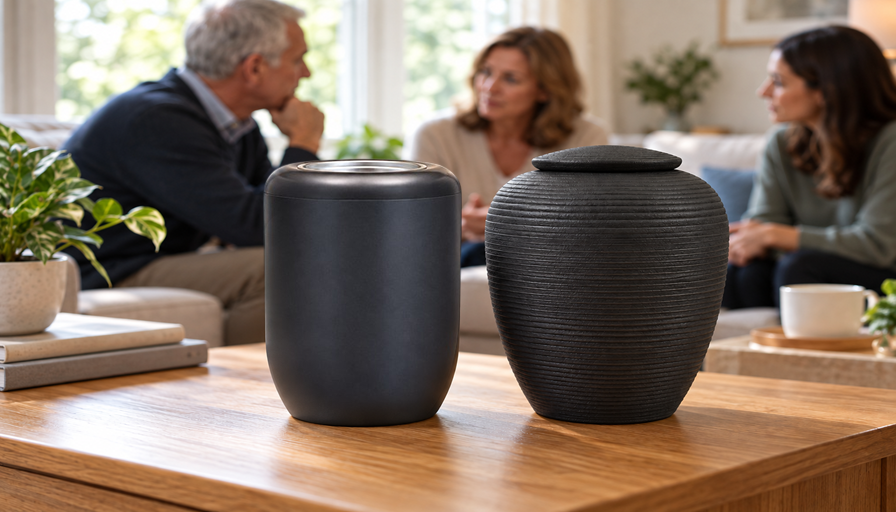
A cat urn is not simply a container. For many families, it becomes part of a quiet place of remembrance within the home. Still, you do not need to choose the final urn immediately.
Some people prefer something discreet that blends naturally into their living space. Others choose a design that reflects their cat's personality, color, character or the relationship they shared. If you are still comparing options, you can view the wider collection of pet urns, including different materials and styles.
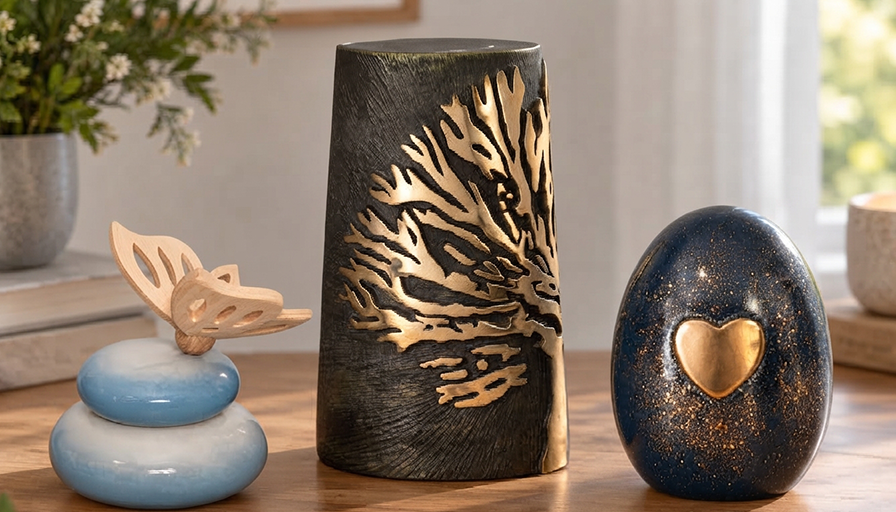
Popular choices include ceramic cat urns, wooden pet urns, metal urns, heart-shaped keepsakes and small keepsake urns designed to hold a symbolic portion of ashes. Keep this choice simple at first: size, material, placement and personal meaning are usually more important than choosing something elaborate.

Would Memorial Jewelry Be a Better Choice?
Some owners prefer carrying a small part of their cat's memory with them instead of displaying an urn at home. Memorial jewelry can contain a very small amount of ashes and is available as pendants, bracelets, rings or other discreet designs.
For many people, this offers quiet reassurance during daily life while allowing the remainder of the ashes to stay safely at home, in a pet urn or in another memorial location. If you are considering this option, compare the size, material, filling method and care instructions before ordering.
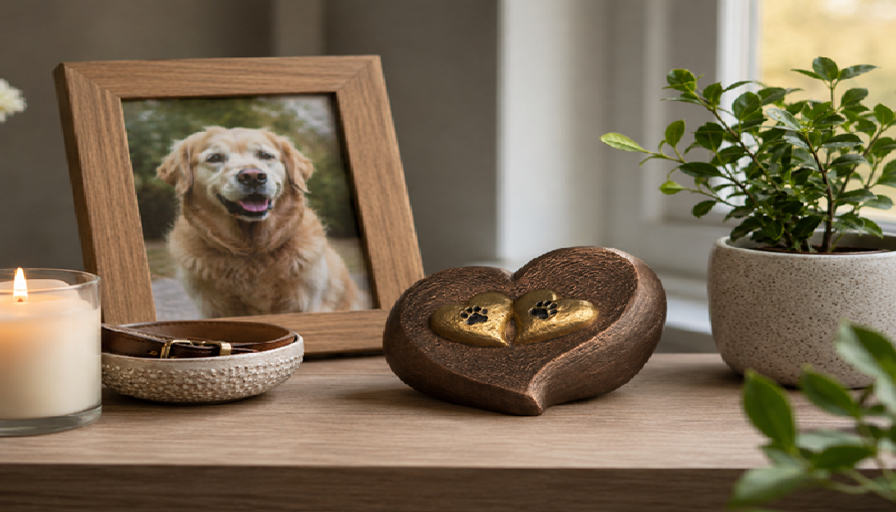
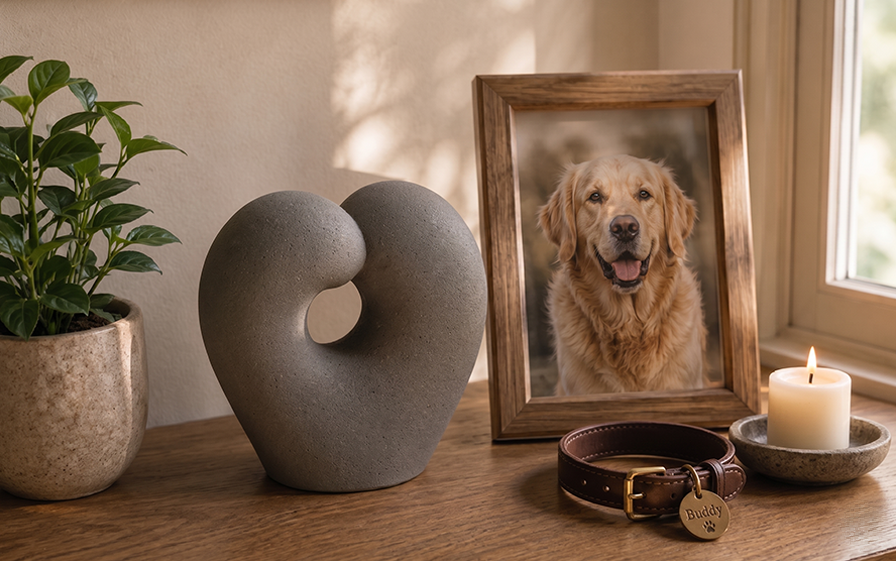
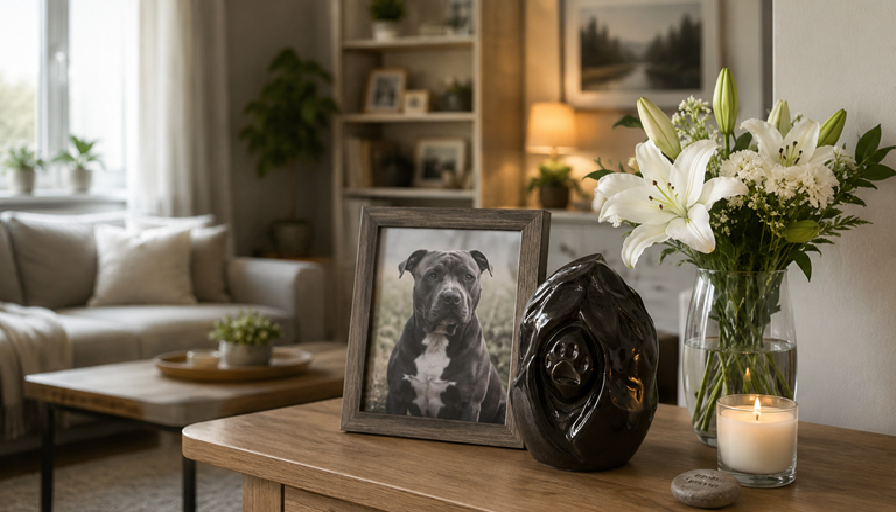
Creating a Meaningful Memorial at Home
A memorial space does not need to be elaborate. Often, the simplest arrangements become the most comforting. You might include:
- your cat's urn or keepsake urn
- a favorite photograph
- a small plant or flowers
- a collar, tag or favorite toy
- a paw print, fur clipping or sympathy card
- a candle used during moments of remembrance
Many people find that having one dedicated place to remember their cat provides comfort without becoming overwhelming. It can be a shelf, side table, bookcase, memory box or a quiet corner of the room.
Should You Scatter Your Cat's Ashes?
Some owners decide not to keep the ashes permanently. Scattering ashes may feel appropriate if your cat loved a particular garden, woodland path, outdoor space or another meaningful location.
Before doing so, always check whether scattering is permitted at the location. Rules and permissions may differ for private land, public land, managed parks, protected natural areas, beaches, cemeteries and memorial sites.
Some families choose to scatter only part of the ashes while keeping the remainder in a keepsake urn or piece of memorial jewelry. This can combine a symbolic farewell with a continuing personal remembrance.
Helping Children Understand the Loss
If children were close to your cat, involving them gently in the farewell can be helpful. Simple activities such as drawing pictures, writing letters, planting flowers or choosing a photograph for a memorial space can provide a healthy way to express their feelings.
Use clear, honest language suited to their age. Phrases that sound softer to adults can sometimes confuse children. It is often better to say that the cat has died than to use unclear wording that may make children anxious or uncertain.
Supporting Other Pets in the Household
It is not uncommon for another cat or dog to notice that a companion is no longer present. Some pets appear quieter for a few days, while others maintain their normal routines.
Keeping feeding times, walks and daily routines consistent can provide reassurance. Extra attention, calm surroundings and familiar activities are often all that is needed while they adjust. If another pet stops eating, becomes very withdrawn or shows worrying changes, contact your veterinarian.
Common Feelings After Losing a Cat
Did I wait too long?
Many owners reflect on medical decisions after losing a pet. These thoughts are natural, but they are often based on hindsight rather than the information available at the time. If you are struggling with uncertainty, speaking with your veterinarian about your cat's condition may provide reassurance.
Should I keep the ashes forever?
Not necessarily. Some families keep the ashes permanently. Others scatter them after several months or even years. There is no deadline for making this decision, and many people find it helpful to take their time.
Is it too soon to think about another cat?
There is no standard timeline. Some households welcome another cat relatively quickly, while others prefer to wait much longer. A new companion should never feel like a replacement. It is the beginning of a different relationship when the time feels right.
Frequently Asked Questions
What should I do immediately if my cat dies at home?
Take a quiet moment, place your cat on a clean towel or blanket in a cool room and contact your veterinarian for advice. Your vet can explain aftercare options and help you decide what to do next.
How long can I keep my cat at home before cremation?
It is best to arrange veterinary or cremation guidance as soon as possible, ideally the same day. If there will be a delay, keep your cat in a cool, quiet place and ask your veterinarian what temporary measures are suitable.
Can I bury my cat in my garden?
Home burial may be possible in some places, but rules vary by location and property type. Always check local regulations, rental agreements, environmental guidance and any restrictions before making arrangements.
What size urn does a cat need?
Many adult cats require an urn capacity of around 0.3 to 1 litre, depending on weight and size. Larger cats may need more space. If you are unsure, ask the crematorium or check the urn capacity before ordering.
Can family members share the ashes?
Yes. Many families divide a small amount of ashes between keepsake urns or memorial jewelry so each person can have a personal reminder. The remainder can stay in a larger cat urn if desired.
Can I keep a paw print or fur clipping?
Yes. Many owners keep a paw print, lock of fur, collar, tag or favorite toy. Ask your vet or cremation provider what is possible before cremation or burial takes place.

A Lasting Way to Remember Your Cat
Although the practical arrangements may only take a few days, the memories of your cat often remain part of everyday life for many years. Choosing an individual cremation, a carefully selected urn, a small keepsake or a quiet memorial corner can all become meaningful ways to honor the companionship you shared.
If you decide to keep your cat's ashes, select a memorial that reflects their personality and your own way of remembering. Whether you prefer a full-size urn, a keepsake urn for a small portion of ashes or memorial jewelry that allows you to carry part of their memory with you, choosing something that feels personal is often more important than choosing something elaborate.
You do not need to make every memorial decision immediately. Take the time you need. A thoughtful choice often feels right long after the difficult first days have passed.
You can explore our collection of cat urns, view the wider range of pet urns or choose a small keepsake or memorial jewelry if you would like to preserve a symbolic part of your cat's ashes.
If you need help choosing a memorial for your cat, please contact us via the contact form.